New remixes by (who else) Mr. Steven Wilson.
Emerson, Lake & Palmer, also known as
ELP, are a sporadically active English
progressive rock supergroup.
[1] They found success in the 1970s and have sold over forty million albums
[2] and headlined large stadium concerts. The band consists of
Keith Emerson (keyboards),
Greg Lake (bass guitar, vocals, guitar) and
Carl Palmer (drums, percussion). They are one of the most popular
[3] and commercially successful progressive rock bands.
The ELP sound is dominated by the
Hammond organ and
Moog synthesiser of the flamboyant Emerson. The band's compositions are heavily influenced by
classical music in addition to
jazz and – at least in their early years –
hard rock.
Many of their pieces are arrangements of, or contain quotations from,
classical music, and they can be said to fit into the sub-genre of
symphonic rock.
However, Lake ensured that their albums contained a regular stream of
simple, accessible acoustic ballads, many of which received heavy radio
airplay.
[4] Lake, besides providing vocals, bass guitar, electric guitar and lyrics, also produced the band's first five albums.
Their debut album was simply titled
Emerson, Lake & Palmer,
and was released in late 1970. It was mostly a collection of solo
pieces. Keith Emerson contributed a series of treatments of classical
pieces (such as Bach's French Suite No. 1 in D minor, BWV 812 and
Bartok's 'Allegro Barbaro'), Carl Palmer provided a drum solo (called
"Tank") and Greg Lake provided two ballads, beginning with the folky, extended work "
Take a Pebble". It was the ballad,
"Lucky Man", which was a song Lake wrote when he had his first guitar at the age of 12,
[18]
that brought the band to prominence. It received heavy radio play in
the UK and Europe, and also became a surprise hit in America.
[19] The commercial success of "Lucky Man", combined with a strong performance at the
Isle of Wight festival (released on CD in 1997 as
Live at the Isle of Wight Festival 1970), brought ELP rapidly to prominence.
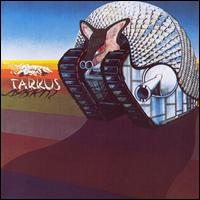
Tarkus, released in 1971, was their first successful
concept album,
described as a story about "reverse evolution". Combining a side-long
song with an assortment of hard rock songs, an instrumental and even
some comic songs, it was quickly cited as landmark work in progressive
rock. The epic "
Tarkus",
recorded in just 4 days, is a seven-part rock suite which incorporates a
number of complex time signatures. The breadth and complexity of the
music combined with the series of
William Neal
paintings incorporated into the sleeve art helped to cement ELP's
reputation as being on the forefront of progressive rock music.




 Posts
Posts


