Showing posts with label Hammond organ. Show all posts

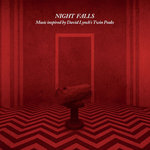
30 June 2026: Huis "Despite Guardian Angels"; "Night Falls: Music Inspired by David Lynch's Twin Peaks"

Be sure to follow KMXT FreeForm Radio on Facebook and Bandcamp and Spotify.  

You can now listen to the livestream of the show through the KMXT app; it's available through the Mac App Store or Google Play. The stream is also available at www.kmxt.org

Please support FreeForm Radio and KMXT by going to www.KMXT.org and pledging your support.

The music you hear on tonight's show is available on the artists' Bandcamp pages and websites. (links below) 

                    We urge you to support the musicians you hear on FreeForm Radio 

I am also hosting Rural Electric, so tune in for some great country music from 7-9 before FreeForm! 


Huis biography
Founded in Québec, Canada in 2009

Huis ("home doors" in french, and "house" in dutch) is a five member musical project from Québec officially formed by Pascal LAPIERRE (keyboards) and Michel JONCAS (bass) at the end of 2009, after an oustanding and inspiring trip in the Netherlands.

At that time, they decided to put on tape (read hard drive!) some ideas they had in mind since a long time. Over time, three other talented musicians, William REGNIER (drums), Sylvain DESCOTEAUX (vocals) and Michel ST-PERE, this last musician from the band MYSTERY (guitars) joined the band, each one bringing a special touch to Huis' sound.

The music is a well crafted progressive rock with a symphonic touch and the use of Hammond, Moog and Mellotron takes us back to the old prog rock sound of the 70's. The guitar playing of St-Pere brings a big influence of the Neo-Prog band MYSTERY and many others Neo-Prog bands that put the melody and vocals upfront with strong compositions skills. The band has released is first studio album in January 2014, " Despite Guardian Angels". 

Reviewed by Marc on 30 Jan 2014


First album from this Canadian Neo Prog band. Huis is made up of french speaking Canadians, but listening to Sylvain Descôteaux on lead vocals, this band could easily pass for a Manchester or Liverpool based group.

The most well known (at least to me) member of Huis is Michel St-Père, leader of Mystery, a band that has a gained an international reputation, partly because of ex-Yes Benoit David on lead vocals. Because of that, there are some excellent guitars to be heard on Despite Guardian Angels, but this is certainly not the only positive point of this excellent CD. Pascal Lapierre on keyboards also takes on a prominent role, having a constant presence in the music and offering a number of interesting solos. The rythm section (i.e. Michel Joncas and William Régner) is impeccable and Descôteaux's vocals are just great, his powerfull yet very melodic voice being better than the great majority of lead singers of today's most well known Neo Prog bands.

The compositions on Despite Guardian Angels are all very good, very symphonic in nature, alternating powerfull pieces with more melodic and emotional ones. If I were to pick a band as an acceptable reference, it would be late 90's or early 00's Arena, and Despite Guardian Angels compares easily with their best CDs.

Those wanting to hear some great Neo Prog should certainly seek out this new album by Huis. In my humble opinion, Despite Guardian Angels is one of the best Neo Prog album to come out in quite a while. Don't miss it. 

My highest recommendation indeed.


Night Falls is a literary anthology inspired by the universe of Twin Peaks, created by David Lynch and Mark Frost. The book brings together eight original short stories that explore the emotional, symbolic, and metaphysical territory it has carved into the collective imagination. At the heart of Twin Peaks lies a fragile balance between familiarity and unease, between everyday rituals and the presence of something deeply unsettling beneath the surface. Night Falls embraces this tension, moving through small towns, isolated landscapes, domestic interiors, dreams, and thresholds where reality begins to fracture. The writers approach Twin Peaks as a condition of perception. Their stories resonate with themes that have long defined the work of Lynch and Frost: duality, hidden violence, trauma, the instability of time, and the uneasy coexistence of innocence and corruption. Some narratives lean toward psychological introspection, others toward the uncanny or the metaphysical, yet all share a sensitivity to atmosphere, rhythm, and suggestion rather than explanation. Night Falls extend the resonance of Twin Peaks into new and independent fictional forms. It invites the reader to remain within ambiguity, to accept disorientation, and to listen carefully to what emerges when the lights fade and the night begins to speak.

Stories by: J. Edwin Buja, Michael F. Housel, Chris McAuley, Nora B. Peevy, RDJ Armstrong, Niyyah Ruscher-Haqq, Erica Ruppert, Can Wiggins.

Curated by Raffaele Pezzella
Edited by Chris McAuley

This compilation continues a path that Unexplained Sounds Group has been developing over time, following the earlier CD project inspired by Eraserhead. While that release focused on the cinematic origins of David Lynch’s language, this new work turns its attention to Twin Peaks, the television series created by Lynch and Mark Frost that profoundly reshaped the relationship between narrative, sound and perception on the small screen. First broadcast in 1990, Twin Peaks initially aired for two seasons between 1990 and 1991, before returning in 2017 with a third season that radically redefined the boundaries of television storytelling. From the outset, the series introduced an unprecedented fusion of crime drama, soap opera, surrealism and metaphysical horror, filtered through Lynch’s authorial vision as director and Frost’s narrative architecture. What began as an apparently familiar small-town mystery gradually evolved into an increasingly unstable universe, dissolving linear narration and pushing television into territories that were previously unthinkable. Across its three seasons, Twin Peaks expanded into a complex exploration of dreams, alternate realities, fragmented identities and temporal dislocation, transforming the medium of television into a space for long-form experimentation and subconscious...  more

credits

released June 18, 2026

REVIEWS

Bad Alchemy
Unexplained Sounds Group – Eighth Tower Records (Naples)
With Night Falls. Music Inspired by David Lynch's Twin Peaks (USG117), Raffaele Pezzella deepens the reverence for the thrill of David Lynch's fantastical cinema already demonstrated with The Eraserhead (USG110). Five of the fellow devotees were already involved the first time around: Craig Varian, with 400 Lonely Things as "Dark New Age for the New Dark Age" and his hauntological fondness for the Green Man and for Thoreau, lets 'Butterfly' drift through melancholic guitar loops. Kabra darkens the Red Room with 'Black Soil' and lets a Haunted Ballroom and Skull Island echo through the walls. Mark Hjorthoy in Vancouver, together with David Strother in Olympia, WA, sets 'A Rabbit In The Moon' spinning with trembling guitar strings. Oubys, the USG-seasoned Wannes Wolf in Hasselt, lays mournfully plucked flowers on the grave of Julee Cruise (1956–2022) with 'For Julee'. And Richard Bégin — the professor of Media & Film Studies in Montreal, fascinated by H.R. Giger, William Gibson, Philip K. Dick, ESP and Gysin's Dreamachine, and a perennial USG guest — offers 'Dale Cooper's Doppelgänger', humming, distorted and sorrowful. Joel Gilardini, the drone-loving, doomsterish guitarist in Zurich, already a fellow reader of J.G. Ballard and Neuromancer and a contributor to tributes to Dario Argento and Dreamachine, is now also Lynched with 'Traces to Nowhere'. David Kovacs, a Hungarian between fog and facts, between night and dawn, unsettles and seduces on 'Dreaming in a Grey Lodge' with knocking sounds, bass strokes, and dreamlike guitar tones. Mario Lino Stancati, the éminence grise of USG and Eighth Tower, ranging from Burroughs, Cronenberg, Dante, Dracula, Fulci, Hellraiser to Lovecraft, Poe and Tarkovsky, is naturally here too, with 'Fire Walks Through Wires' — demonic yet with thundersheet irony. Paolo L. Bandera (of Sshe Retina Stimulants), another node in Pezzella's network, has infernally orchestrated 'Agente Atomico Episodico' as a ghost-train revue with gurgling voices. Yousef Kawar, oscillating in New York between guitar rock and dark ambient, tilts once more toward the dark side with 'Whispers in the Black Lodge'. Rapoon takes us with 'Snoqualmie Falls' to the original locations in Washington, elegiacally stirring strings and keys. Zuleika AvTes, who came from Brazil to London, shows as Glass Isle — with her whispers and stippling on 'Haze' — that Lynch fascinates women too, as of course he does. Pierre Laplace in Lille, once singer-guitarist in Vera Clouzot (with Peter Orins on drums), then the male half of The Sandman's Orchestra and finally alone as Beyond the Ghost, draws 'The Velvet Curtain' closed with billowing strings, reverberant piano tones, glockenspiel, and a frail JazzNoir trumpet.
badalchemy.de


Weird Bones
The real triumph of ‘Night Falls’ is that it doesn’t pretend to offer clarity. Each artist approaches the material like someone walking into a room where the lights keep changing colour – you adjust, you squint, you shrug, you keep going. The compilation honours the series by refusing to sand down its edges or explain its logic. It just lets the unease breathe.
weirdbones.co.uk/a-bit-peaky-twin-peaks-reimagined/

Bizzarrechats
bizarrechats.blogspot.com/2026/06/eighth-towers-night-falls-music.html
bizarrechats.blogspot.com/2026/06/eighth-towers-night-falls-stories.html

Our thanks to Raffaele Pezzella (Sonologyst) for a complimentary copy of this release.
Curated and mastered by Raffaele Pezzella.
Layout by Matteo Mariano.
Published by Unexplained Sounds Group
Cat. Num. USG117
© 2026 All rights reserved
experimental ambient ambient music avant-garde drone improvisation musique concrete sound art Italy

Unexplained Sounds Group Italy

Global Network Of Aural Disorientation founded and curated by Raffaele Pezzella

Subsidiaries:

eighthtowerrecords
...  more

c


24 March 2026: Black Widow - "Demons of the Night Gather to See Black Widow Live"; Celtic Pink Floyd

 Be sure to follow KMXT FreeForm Radio on Facebook and Bandcamp and Spotify.  

You can now listen to the livestream of the show through the KMXT app; it's available through the Mac App Store or Google Play. The stream is also available at www.kmxt.org

Please support FreeForm Radio and KMXT by going to www.KMXT.org and pledging your support.

The music you hear on tonight's show is available on the artists' Bandcamp pages and websites. (links below) 

                    We urge you to support the musicians you hear on FreeForm Radio 

I am also hosting Rural Electric (Mostly Country Music) from 7-9 pm this week.


Review by ZowieZiggy
PROG REVIEWER

4 stars

An unknown release of a little known band that I quite enjoy. A good old band I should say. The Sacrifice show live from Black Widow released in 2007. It comes as a dual work: one CD and one DVD. The CD for the car and the DVD for each home playing of course.

Before I talk about the content, let's have some historical facts about this very good band which hasn't been very fortunate in their career to say the least. The liner notes that go along with this release is of important historical matter. They are written by Clive Jones (sax & flute) and the information below mostly come out of it (but not only).

It speaks about the genesis of the band which is well known from the devoted fans: the Pesky Gee story, the pre-release of Sacrifice in 69 with Kay Garret on the vocals and the split of the band.

What is less known is that the band thought of a full show about the Sacrifice album and wanted it very much to be as satanic as the lyrics. They asked the guidance of Alex Sanders (who was incidentally voted king of the witches in '65) to construct the show and make sure that it was as authentic as possible.

After a few shows, the press was quite shocked and titled don't let your kids see this show. This led to a huge publicity for the band who were playing full house concerts. Still, the confusion came to the minds of the people. Two bands with the word black in their names, both managed by the same person (Pat Meehan). It was the start of the problems for Black Widow.

The second (and probably the most important one) is that Sacrifice was released the same week as Bridge Over Troubled Water (Simon & Garfunkel). The latter one sold so much, that the record company (CBS) only pressed BOTW for three weeks to supply the demand and so was the Sacrifice album lamentably . sacrificed. It had climbed to the 32nd spot of the chart.

Their supporting US tour was cancelled because of the murdering of Sharon Tate. To have a band promoting some black magic on stage was not really to the liking of the American authorities. And guess which band replaced them? Sabbath!


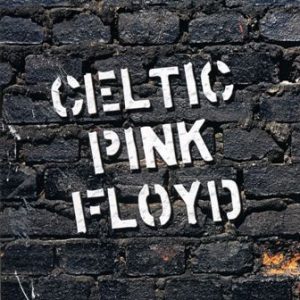
In 2010, Damon and Brian Stout combined their love of Celtic music with their passion for Pink Floyd to create a sonic offspring, the aptly named Celtic Pink Floyd.

Growing up in Jackson, Michigan – which is, interestingly, a sister city to Carrickfergus, Ireland – the duo were immersed both in their Scottish-Irish ancestry, and in various forms of musical study.

The brothers began their journey as pre-schoolers, learning violin and by the age of 7, and taking piano lessons with a Julliard-trained neighbour. Later, they picked up the French horn and trombone, performing with a German-based touring band as teenagers.

“A few years later came jazz, rock and other concert bands,” notes Damon via email. “Additionally, with more influences around, we put together a few garage bands playing for parties, talent shows or whoever would have us. A life in music – with no backup plan, of course – ensued.”


The idea for Celtic Pink Floyd, he explains, arose by chance.

“It was while hearing ‘On the Turning Away’ (from Pink Floyd’s 1987 album, A Momentary Lapse of Reason) one morning that the light bulb first went on. It is essentially a folk song, and arranging it to Celtic instruments sounded like an interesting idea.”

That led the Stouts to a closer examination of Floyd’s music, unveiling more Celtic influences.

Within a year, the band of brothers had released their debut, eponymous recording, which included classic Floyd tunes ‘Another Brick in the Wall’, ‘Wish You Were Here’, and ‘Comfortably Numb.’

“We thought it might be interesting to take those existing Celtic undertones and expand them to create a 12-track album,” says Damon.

“It is hard to go wrong with an iconic band like Floyd and their huge catalogue of songs…adding Celtic instruments and arrangements seemed like a fun musical challenge that could prove rewarding.”

With a nine member band, however, taking the show on the road was out of the question.

“The logistics and financial backing for touring would have been prohibitive, especially since it was a first album and we had no idea how the music would be received.”

While interest in the group grew, band members took on other commitments that kept them busy over the next few years. When they finally rallied to take a shot at a second album, the Stouts were now living thousands of miles apart.

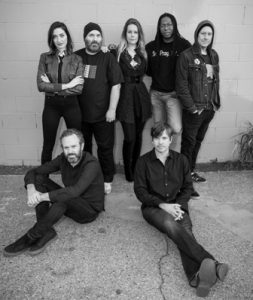
“I am in Los Angeles and my brother is in Chicago,” says Damon, “so there are some frequent flyer miles being racked up. The other five members – Mary Morales (keyboards), Bryan Dobbs (guitar, mandolin), Rachel Grace (fiddle), Patrick D’Arcy (pipes) and Forrest Robinson (percussion) – are in LA, which is where we are currently rehearsing.”

Recommitted to the project, the group started working on a new album last year – titled ‘You Owe it to the People’ – which is scheduled for release in 2018.

“During those recording sessions we decided to put out our ‘Live, In Studio’ album first,’ says Damon. “It was originally only going to be a rehearsal tool for upcoming live shows, and was put together in about a week, but it came out better than we expected.”

In fact, the band was so pleased with the way the recording session turned out, they resisted the urge to overdub any of the tracks, which include ‘Have a Cigar’, ‘Shine On You Crazy Diamond’, and ‘Set the Controls for the Heart of the Sun.’

“We are fairly confident Celtic music fans will like it, and we are really stoked by how many Pink Floyd fans have embraced us. It is a great feeling to strike a chord with both fan bases.

“It is also quite rewarding when Celtic music fans tell us they aren’t very familiar with Pink Floyd but, after hearing what we do, are going to explore their music further. Equally exciting is when a Floyd fan says they aren’t familiar with Celtic music and never suspected a Celtic arrangement would do their music justice.”

The true test, says Stout, is when the band takes the stage.

“We recently opened for The Young Dubliners and that show helped to solidify all our expectations that not only can we pull this off, but the crowd really responded to our arrangements and overall take on Pink Floyd.”

www.celticpinkfloyd.com


01 July 2025: Cressida “Asylum”; Jolanda Moletta and Karen Vogt "Sea-swallowed Wands" (Quiet Details 35); Sonologyst "Planetarium"

 Be sure to follow KMXT FreeForm Radio on Facebook and Bandcamp and Spotify.  

You can now listen to the livestream of the show through the KMXT app; it's available through the Mac App Store or Google Play. The stream is also available at www.kmxt.org

Please support FreeForm Radio and KMXT by going to www.KMXT.org and pledging your support.

The music you hear on tonight's show is available on the artists' Bandcamp pages and websites. (links below) 

We urge you to support the musicians you hear on FreeForm Radio. 

 I'll also be hosting Rural Electric right after the Island Messenger at  7 pm until 9 pm


Review by Steve Hegede
PROG REVIEWER
5 starsCRESSIDA's "Asylum" is a wonderful example of early British symphonic progressive rock. This 1971 release mixes catchy Paul McCartney-esque vocals with adventurously colorful instrumental passages. The new listener will probably notice singer Angus Cullen, whose voice comes close to McCartney's (not totally, but close). His vocal melodies are some of the finest I've heard in 70s English prog, and the subtle British storytelling style in the lyrics is amusing to listen to. The instrumental sections are equally good, and tend to be typical of early 70s prog rock. A fair amount of the music is driven by Hammond organ (dirty, and mellow), piano, bass, guitar, and drums; a small orchestral band also adds violins, and other orchestral instruments (cellos, trumpets, timpanis, etc) to the arrangements. Most of the first side of the LP seems to deal with the title of the album, "Asylum", and ends with a short filler track. That filler track features one of weirdest topics for a rock songs that I've heard. The second side of the LP features a couple more short filler tracks, and a high-quality epic. One of the short tracks, on Side B, turns a bit cheesy when the singer starts to yell "Survivor!!!!", in a 70s broadway sort of way, but after those few scary seconds the band returns to their classic sound. Overall, "Asylum" is a classic. 
 
                                            Jolanda Moletta and Karen Vogt:  Sea-swallowed Wands
 
From Alex at Quiet Details:
Delighted to say that up next with a beautiful and totally unique vocal interpretation of quiet details, is a collaboration by the wonderful pair of Jolanda Moletta and Karen Vogt, with Sea-swallowed Wands.

Two musicians with the ability to conjure transcendent sound-worlds through the use of their incredibly expressive vocal talents - together they’ve created something that takes all their individual creativity and makes a new and deeply ethereal universe.

Their previous release together on the excellent Longform Editions was a stunning introduction to this collaboration, Sea-swallowed Wands evolves from there with sublime effect.

Jolanda has a string of releases, self-released and on labels such as Whitelabelrecs and Ambientologist; and Karen is prolific, self-releasing and on labels such as Waxing Crescent, Wayside and Woodland, Coriolis Sound, Stella Frequencies, and more; plus her part as co-founder and vocalist of the dream-pop band Heligoland.

Sea-Swallowed Wands is a true meeting of kindred spirits - the connection here feels so profound, and this mutual creative understanding leads to the most enchanting musical articulation.

Layers of wordless choral beauty build up over time to create complex harmony, that’s at once both almost infinitely expansive and light as a feather.

The vocal orchestration is the mark of two musicians with highly-tuned intuition and elemental knowledge of symphonic structure.

Huge washes of emotive waves flow across the album - vocal-only material from improvised seaside sessions combined with an emphasis on “the little noises, clicks, breaths, crackles and physical movements” to fully embrace their interpretation of quiet details.

As they say:

Vocal explorations and improvisations made while heavily under the influence of the sea and the moon

Huge thanks to Jolanda and Karen - a very special addition to the series.

The artwork was made as always influenced by the music and idea behind the album - originating from a photo from Jolanda and Karen which was then captured with analogue photography and processed here at quiet details studios.

As usual, the album is presented on the physical edition, a custom six-panel digipack with a separate fine art print too.
The CD also has a special long-form continuous mix of the album, created by the artist and representing the music in its purest form.

Credits:

Music by Jolanda Moletta and Karen Vogt
Mastered by Alex at quiet details studios
Artwork by quiet details in collaboration with Jolanda Moletta and Karen Vogt
Design by quiet details
© quiet details 2025 all rights reserved
FreeForm Radio thanks Alex for a complimentary copy of this release.

Album - https://quietdetails.bandcamp.com/album/sea-swallowed-wands 
 
                                                                Sonologyst - Planetarium
 
NASA and other space agencies have captured "sounds" from the cosmos by recording non-audible signals like radio waves, electromagnetic waves, and plasma (ionized gas that’s prevalent in space) wave fluctuations. These are converted into audio frequencies we can hear using a process called data sonification. Spacecraft like Voyager, Cassini, and Juno are equipped with special instruments (e.g., plasma wave antennas, magnetometers, radio wave receivers) to detect radio waves, plasma waves, and electromagnetic fields.

These signals can provide data on phenomena like solar wind, planetary magnetospheres, and charged particles. Since many of these signals are outside our hearing range (radio waves might have frequencies far below the audible range (20 Hz to 20 kHz) or far above it, while magnetic and plasma waves are often in the range of milliHertz (mHz) to kilohertz (kHz), also outside human hearing.), they are converted using various techniques, including frequency scaling, sampling, filtering, and amplitude modulation. Some events, like plasma wave bursts, happen over long periods. Scientists may speed up the playback so we can hear the changes in a shorter time frame.

After conversion, the resulting sounds are often enhanced to make certain patterns, pitches, or changes in intensity more noticeable. This may involve amplifying certain frequencies or adding layers to represent multi-dimensional data. This processing helps bring out subtle differences that might otherwise be hard to discern.
 

credits

releases July 10, 2025 
FreeForm Radio thanks Raffaele Pezzella aka Sonologyst for a complimentary copy of this release.

REVIEWS

Lux Athena
A sublime album that will fascinate not only music lovers but also space lovers....
luxatenea.com/2025/06/24/sonologyst-planetarium-cold-spring-records-junio-2025-resena-review/

Ver Sacrum
Planetarium is a work outside of time, outside of the market, outside of orbit. It invites us to listen not to what man has invented, but to what the universe has always been saying. It is ambient, yet it sets the scene for the inaudible. It’s an album, but it behaves like a portal. It is silent, yet it reveals the noise of cosmic reality. A creation that speaks to sonic explorers, to those who contemplate the invisible, to those who know that listening can be an act of travel. With Planetarium, Sonologyst offers us not just a record, but a vantage point for listening to the infinite.....
www.versacrum.com/vs/2025/06/sonologyst-planetarium.html

Avant Music News
Space may be largely silent to the human ear, but when its electromagnetic fragments are made audible, they resonate with the same characteristics that drive Pezzella’s explorations.
avantmusicnews.com/2025/06/08/amn-reviews-sonologyst-planetarium-2025-cold-spring-records/

Weird Bones
What’s remarkable is how ‘Planetarium’ manages to be both deeply scientific and profoundly mystical. It’s a record that could sit comfortably in a physics lecture or a séance. There’s a reverence here, a sense that Pezzella isn’t just making music, he’s communing with something vast and unknowable...
weirdbones.co.uk/now-thats-what-i-call-entropy-sonologysts-planetarium/

Side Line
www.side-line.com/sonologyst-turns-nasa-space-probe-signals-into-an-ambient-2cd-album-preview-now

Vital Weekly
www.vitalweekly.net/number-1486

Die Zukunft
diezukunft.de/news/gadget/sonologyst-planetarium

Bizarre Chats
bizarrechats.blogspot.com/2025/06/sonologygt-planetarium-music-for-space.html


Data sonification files provided by NASA.
Analogue synthesizers, sampling, and processing by Sonologyst.
Recorded and mastered at Sonologyst studio from July to November 2024.
Published by Cold Spring Records (CSR359CD).
Graphic design by Abby Helasdottir.

Album teaser by Abby Helasdottir: youtu.be/fcZpHk9VZTo
 

29 April 2025: Out of Focus "Four Letter Monday Afternoon"; Richard Begin "Déjà vu"

 Be sure to follow KMXT FreeForm Radio on Facebook and Bandcamp and Spotify.  

You can now listen to the livestream of the show through the KMXT app; it's available through the Mac App Store or Google Play. The stream is also available at www.kmxt.org

Please support FreeForm Radio and KMXT by going to www.KMXT.org and pledging your support.

The music you hear on tonight's show is available on the artists' Bandcamp pages and websites. (links below) 

We urge you to support the musicians you hear on FreeForm Radio.


Out Of Focus biography
This awesome band came from Munich and made three extraordinary albums on the super-collectable Kuckuk label plus another that never got released until recently. Hennes Herring on KB (mainly Hammond organ), Remi Dreschler on guitars, Moran Neumuller on vocals and winds, Klaus Spöri and Stefan Wisheu on drums and bass respectively made an incredibly tight unit although they were prone to a lot of improvisation moments also. Their music is somewhat similar to early British prog but will gradually evolve to a certain jazz-rock while staying very politically and socially conscious (in the typical German style of those years) although the singing does not hold a big place in their music, their third release (a double) being mostly instrumental. They released three albums on the legendary Kuckuk label, the same one that also reissued them in Cd format.

After their third album, OOF suffered their first major line-up change with keyboardist Hennes Herring leaving the band to join SAHARA (another excellent group that will release two very solid albums), and he was replaced by yet another guitarist Wolfgang Gohringer (that made double guitar and double horn attack), but if it affected the group's sound a bit, it was nothing drastic either. A fourth (excellent) album was recorded in the spring of 74, but for some reasons it was never released - until Ultima Thule/Cosmic Egg would in 99. Sadly these events lead towards a slow decline of the group who would gradually slow down activities, recording just one more single and playing their last concerts in 78.

The musicians went their way, but in the mid-80's, three of them met and participated to Kontrast and recorded one of the best Krautrock album of that decade, according to the experts. This album and its intended suite just got a second life by getting a reissue, again on the Cosmic Egg label. Among the other posthumous releases is the left-overs from FLMA albums (Rat Roads) and a Live in Palerme 72, both excellent records appearing on the great Garden Of Delight Label.

Let me quote D-E Asbjornssen in Cosmic Dreams At Play and use his final comment about OOF: "what an awesome band they were" and I fully adhere to that opinion.


: : : Hugues Chantraine, BELGIUM : : :


Highly recommended by Dag-Erik Asbjornsen in his great book Cosmic Dreams At Play, and by myself to every progheads infatuated with the early 70's way of making music. Simply awesome!

Four Letter Monday Afternoon Review by BrufordFreak
Collaborator Honorary Collaborator

5 stars The peak of achievement from this uber-talented band from München, Bundesrepublik Deutschland: a 94-minute of finely polished music. Just remember that there was at least another 94 minutes of excess music from these recording sessions that was left on the cutting room floor or studio shelves gathering dust until someone saw fit to dust them off and publish them on two albums, released in 1999 and 2002, respectively.

LP 1 (46:07): 1. "L.S.B." (17:37) very much like some evolved Big Band jazz--taking Don Ellis a bit further in terms of incorporating elements of avant/free jazz and electronics, but also quite a bit more reigned in in terms of the use of odd time signatures. Still, the song is quite entertaining for its multiple sax-connected multiple motifs covering a range of styles and tempos. There are a lot of elements of blues-rock at the core of a lot of this music (one can still hear the band that did Wake Up! just two years before). I really like the KINGSTON WALL-like vocal motif in the last third of the song. (31.75/35)

2. "When I'm Sleeping" (4:04) sounds like THE ROLLING STONES if they tried covering PETER HAMMILL song as well as a smooth Motown tune for the chorus and instrumental section. Hennse Hering's old-time saloon-like piano play in the background is a delight, as is Stephen Wishen's bass JAMES JAMERSON-like play and the sax work. I don't know why, but the recording of the drums is rather poor. This may be my favorite vocal performance from Moran. (9/10)

3. "Tsajama" (9:23) a great guitar and flute intro leads into an awesome motif with heavy organ and low bass notes weighing things down beneath the flute, guitars, and smoothly-drawn lines coming from the full horn section. Awesome in a Brian Auger/Eumir Deodato kind of way. Remigius Drechsler leads the way with his searing guitar play in the second and third minutes before Hennse's Hammond and the orgasmically-smooth horn section join in to double and back him. Such a great groove! In the second half of the sixth minute the horns, Hammond, and guitars back off and Moran enters in a singing capacity, using Japanese as his language. Interesting. Then he runs off into some poorly-synched scatting in the seventh minute before returning to leading the smoother, multi-channel melody in Japanese in the eighth. But then the band ramps up the pace and breadth of sound dynamics with a return of the horn section, inspiring Moran to gallop off with some more interesting horse-like vocalese scatting(?). (19/20)

4. "Black Cards" (9:38) a gentle weave of organ and electric guitar arpeggi opens this before flute, hand drums, and a second guitar join in. At the one-minute mark the bass jumps on board, ushering the band into a full blues-rock sound palette over which Moran turns back to his Mick Jagger voice for another vocal performance that reminds me of Mick singing his Slow Horses theme song. A return to the opening theme at the end of the third minute allows for a kind of 30-second reset from which they emerge with a VAN MORRISON "Moondance"-like motif over which Hennse solos on his Wurlitzer-sounding organ. This is a great, extended instrumental section with some gorgeous and dynamic flute soloing throughout. At the end we return to the blues swing theme for Moran to finish things off with his Moves Like Jagger. (18/20)

5. "Where Have You Been" (5:35) a gorgeous folk-rock song with one of Moran's most moving and melodic vocal performances. Powerful. Incredible flute solo in the "C" part: heart-wrenching. I know that Moran (and maybe his bandmates) had a very strong moral compass. We are so blessed to have the legacy of their passion and courage. (9.5/10)

Disc One earns itself a five star rating.

LP 2 (48:09): 6. "A Huchen 55" (9:19) opens with mutliple flutes winding and wending their way through a rondo weave for two minutes before giving way to a faded in psychedelic blues-rock jam (that was already in progress). Hammond organ takes the first solo over the bass, drums, and guitar support. At the three-minute mark, a panoply of horns join in, each playing their own melody line but securing their comraderie through mutually-respective pauses and breaks. The music coming from the rhythm section beneath kind of hits a "I'm a Man" pulse-and-let-off pattern as the horns continue their fascinating and almost humorous interplay. In the seventh minute, electric guitar and Hammond start to inject their own flourishes and melodic ideas. By the eighth minute the horn players are starting to tire--and eventually peter out for a full minute or more while the Hammond and sassy electric guitar share a quirky little conversation of quips and epithets. At the end of the ninth minute, then, the bluesy jazz music is fadeout (the same way it came in) replaced by the flute weave that opened the song. (18/20)

7. "Huchen 55, B" (14:32) opening with the flute weave from the previous song bleeding over, a new already-in- progress R&B jam is faded in. The James Jamerson-like bass play that drives the music is once again emitting waves of groovy Motown sound, but this soon fades out to be replaced by Moran's solo flute play. He sounds so much as if he's trying to imitate the breathy play of maestro Jean-Pierre Rampal. Jazz guitars, trumpet, Hammond, each take their turn joining in beneath Moran's increasingly-avat garde flute stylings. In the seventh minute trumpeter Jimmy Polivka tries usurping the lead from Moran, but it is not that easy: Moran is riding along on pure inspiration. So Jimmy gives up. Hennse and Remigius each take their own turns, trying to nudge Moran out, but Herr Hering only seems to get stronger--until the 9:00 mark: then he gives way, sits back and lets the music unfold without him. The band seem to rise to the occasion with a JEFFERSON AIRPLANE-like creativity: slowly, carefully, deliberately. Hennse's excited Hammond is kept at bay via repressed volume, which allows the horns to have their time. In the twelfth minute Remigius steps to the fore and lays out one awesome blues-rock solo. The band is really into the jam here: fully entrained with everyone clicking--expelling their full creative juices. Awesome! Despite its looseness and lack of plan or developmental structure, this song plays out with some infectious power. Moran's multi-flute weave is once again used to bridge this song with the next one. (27/30)

8. "Huchen 55, C" (24:18) What a jam! Wild and crazy: from Moran's lyrics and vocal performance (sounding like a reckless/uninhibited Mick Jagger channeling PETER HAMMILL through DAMO SUZUKI) to the reckless abandon with which everyone blasts and grooves out their passion. I mean, it feels as if everyone, all at once, is given the total green light to play whatever they feel inspired to play. This makes for some very creative and memorable solos--especially from the horn players (the multitude of saxes are of special note), percussionist, and Hennse's Hammond organ. Definitely Krautrock. Definitely hypnotic in a "Low Spark of High-Heeled Boys"-kind of way--a sound that would also seem to indicate the use of mind altering substances. The song's final three minutes are particularly entertaining for the frenetic yet-respectful free-for-all that gradually peters out, making way for yet another reprise of Moran's multi-flute weave. (45.5/50)

Disc Two earns itself a 4.5/5 star rating.

Total Time: 94:16

A-/five stars; a minor masterpiece of wonderfully-creative First Wave Jazz-Rock Fusion. One can definitely trace the influences and inspirations for each song on several levels but in the end the boys have achieved a mastery of their instruments and goals, enabling them to merge admirably their Krautrock influences with the Blues-Rock and Jazz- Rock Fusion trends they've been hearing. As with every other reviewer I've read, it's too bad this band didn't stay together.

With regards to the controversy of whether or not this album (or band) deserves to belong to the Jazz-Rock Fusion sub-genre, I will only say that over the course of the band's three album evolution it has definitely flowed toward Jazz-Rock (though it has also picked up a strong Krautrock foundation as well). This is 1972! Jazz-Rock Fusion was still in it's childhood! The dominant styles and sounds were still as-yet undecided. Herbie Hancock and Mahavishnu John McLaughlin were still evolving! Rapidly! Many bands like Out Of Focus were offering up a wide range of their own personal interpretations--which is one of the most exciting and refreshing aspects of J-R F's "First Wave." 


Déjà vu is a fleeting yet profound sensation, a moment when time seems to fold in on itself, between past and present. It is a phenomenon of memory—both elusive and deeply personal—where recognition and strangeness coexist. Few artistic mediums can evoke this liminal state as powerfully as ambient music, where repetition, decay, and texture shape sonic landscapes that mirror the ghostly presence of the past within the present.
Canadian composer Richard Bégin has been steadily building a reputation in the realm of ambient music for his explorations of memory, crafting soundscapes that feel like echoes from a distant past, lost yet eerily familiar. His latest work, centered on the concept of déjà vu, follows in the tradition of artists like Boards of Canada, Fennesz, Philip Jeck, and William Basinski—musicians who have sculpted time-worn textures, fragile loops, and sonic artifacts to capture the essence of recollection and its inevitable dissolution.
Like Basinski’s Disintegration Loops, which document the slow decay of recorded memory, or Jeck’s ghostly turntable manipulations that awaken forgotten voices from the grooves of old records, Bégin’s music invites listeners into an auditory space where time is fluid. Fennesz’s digital deconstructions and Boards of Canada’s nostalgia-tinted melodies find an echo in Bégin’s work, which similarly embraces imperfection, layering textures that drift between clarity and erosion keeping the listener between the comfort of recognition and the disquieting realization that the past is always just out of reach. 

credits

released April 16, 2025
Our thanks to Raffaele Pezzella for providing FreeForm Radio with a copy of this release.
REVIEWS

Avant Music News

avantmusicnews.com/2025/04/20/amn-reviews-richard-begin-deja-vu-2025-reverse-alignment


Music by Richard Bégin
Published by Reverse Alignment.
Mastering by Raffaele Pezzella
Cat. Num. RA69.
© 2025. All rights reserved.

license

all rights reserved

tags


11 March 2025: Gayle Ellett & the Electromags "The Painted River of Light"; Tomoyoshi Date and Bill Seaman "Duet". (Quiet Details 26)


 Be sure to follow KMXT FreeForm Radio on Facebook and Bandcamp and Spotify.  

You can now listen to the livestream of the show through the KMXT app; it's available through the Mac App Store or Google Play. The stream is also available at www.kmxt.org

Please support FreeForm Radio and KMXT by going to www.KMXT.org and pledging your support.

The music you hear on tonight's show is available on the artists' Bandcamp pages and websites. (links below) 

We urge you to support the musicians you hear on FreeForm Radio.

Tonight I'll also be hosting Rural Electric right after the Island Messenger at  7 pm until 9 pm.

Tonight's Rural Electric theme is songs about the Gulf of Mexico. 


Gayle Ellett & The Electromags are back with their third album: The Painted River of Light. This instrumental progressive rock offering features four mesmerizing extended tracks flowing with the sounds of Mellotron and Minimoog, Hammond organ and Rhodes piano. Filled with 48 minutes of rushing currents, psychedelic swirling melodies and pounding solos, Painted River is meant to take listeners on an imaginary boat ride through a fantastical canyon that follows an otherworldly river of light. “While” explains Ellett, “they feel like they’re high on mushrooms. It’s meant to sound both familiar and exotic, like you’re seeing colors in the water that you’ve never seen before.”

Flowing from the fiery headwaters of Topanga Canyon, this glowing river of sound relies on Craig Kahn’s dynamic drumming, which helps propel the currents forward, while bassist Mark Cook, with his 14-string Warr guitar, provides powerful waterfalls of soundscapes and effects. Besides playing all the thundering keyboards, to keep the sound moving through the rapids, Gayle Ellett leans in with his trademark wailing guitar style. Using his large collection of guitars and vintage tube amps, tape-delays, and effects, Ellett mixes a 1970’s feel with more modern sensibilities. And, by including his sitar-guitar and 8-string bouzouki, he adds a silvery thread that bubbles into tranquil eddies and then rushes towards the torrent’s
edge.

“As a kid, my favorite ride at Disneyland was always the Jungle Cruise,” muses Ellett. “It was all
encompassing, huge and three-dimensional, a total environment of the Imagineers’ own making. With The Painted River of Light, I wanted to recreate that same sort of visual immersion, but through sound. And I hope we’ve succeeded!”

Come float with us as you explore the glorious sounds of The Painted River of Light!
 

credits

released February 1, 2025

Performers and what instruments they played:

Gayle Ellett: keyboards, electric & acoustic guitars, sitar guitar & soundscapes
Mark Cook: bass, 14-string Warr guitar & soundscapes
Craig Kahn: drums

Composer for each track: Gayle Ellett
Mixed mastered and produced by Gayle Ellett
Album cover art: Steven Leak
Recorded in Topanga California and Arlington Texas
Mixed mastered produced in Topanga, CA.
Published by: PeacockSunrise Records
© 2025 Gayle Ellett (BMI)
rock instrumental rock surf rock California
 

by Tomoyoshi Date and Bill Seaman


FreeForm thanks Alex at Quiet Details for a copy of this release. 

Credits:
Music by Tomoyoshi Date and Bill Seaman
Mastered by Tomoyoshi Date
Artwork by quiet details in collaboration with Tomoyoshi Date and Bill Seaman Design by quiet details
© quiet details 2024 all rights reserved 


So happy to say the next album in the quiet details series is a creation born from the collaboration of two wonderful artists, Tomoyoshi Date and Bill Seaman.

Individually, both artists have extensive discographies, stretching back many years
and known for a cerebral and deeply musical approach to their work.

Tomoyoshi, solo and in collaboration (with the likes of Corey Fuller, Tatsuhisa Yamamoto, Federico Durand and Chihei Hatakeyama), with beautiful releases on labels such as LAAPS, 12k, Home Normal, Dauw, White Paddy Mountain and more.

Bill, also a consummate collaborator (with Craig Tattersall, Off The Sky, Stephen Vitiello, Tim Diagram, Stephen Spera. Michael Grigoni, Xu and more), releasing stunning albums on Room40, Longform Editions, LAAPS, oscarson, Fluid Audio, Eilean Recs, Cotton Goods and others.

Together they’ve made something of astounding beauty - a masterclass in electro- acoustic composition, centred around the piano and all its nuances.

Working by slowly passing ideas back and forth, and influenced by Bill’s work with Wei Ping Lin of the Austrian Symphony and James Chu (who both feature on the album), and progressing while Tomoyoshi was heavily involved with the incredible Ryuichi Sakamoto Micro Ambient Music project - over time the album gradually took shape.

Building on an innate and natural understanding of each other, piano improvisations and sonic abstractions layer with violin and clarinet to form richly detailed soundscapes, full of micro-ambience and elegant textures.

You can feel how in-tune these two instinctive and highly-skilled musicians are with every passing moment - everything so carefully and precisely constructed while feeling completely natural and perfectly formed.

Along with piano, the micro-sounds are fundamental to this music - the fragments from the recording process, deliberately and meticulously prepared to show the listener a whole world of subtlety - delicate and arising from silence, this is a graceful and vivid experience for the senses.
So pleased to share it with you, a gorgeous album of breathtaking beauty.

Huge thanks to Tomoyoshi and Bill for everything, a wonderful addition to the series.
The artwork was made as always influenced by the music and idea behind the album - originating from a photo from Tomoyoshi and Bill which was then captured with analogue photography and processed here at quiet details studios.

As usual, the album is presented on the physical edition, a custom six-panel digipack with a separate fine art print too.

The CD also has a special long-form continuous mix of the album, representing the music in its purest form.

tomoyoshidate.bandcamp.com
billseaman.bandcamp.com
 

credits

released November 13, 2024
ambient japan united states chill-out downtempo drone electronic field recordings microsound piano United Kingdom

about

quiet details UK

a record label where each release is an interpretation of the name

curation and art fieldswefound.bandcamp.com

mastering and audio services

contact / help

Contact quiet details


In our vast and largely unexplored universe, it is conceivable that we are not alone. The cosmos could be teeming with life, and within the depths of unknown worlds, countless civilizations might thrive, each with their own unique history, culture, and beliefs. These alien species, potentially millennia ahead of humans in terms of evolution, could have developed religious and spiritual systems that are incomprehensible to our current understanding. Rather than worshipping gods bound by earthly limitations, these beings might have a more cosmic orientation—deities and spiritual energies connected to the stars, the fabric of space-time, or the intricate dance of galaxies and black holes. Some may venerate celestial bodies or cosmic phenomena, viewing stars, supernovas, or even the void itself as manifestations of divine forces. Others might have no concept of gods at all, finding spirituality in the patterns of the universe, in mathematical perfection, or in the interconnectedness of all things. It is possible that some of these civilizations may be entirely artificial, their minds uploaded into machines or existing as pure energy. In this case, their form of worship could be directed toward artificial intelligences or a collective consciousness, where rituals are carried out through data streams, and prayers are transmitted through quantum entanglements.

"Music for Alien Temples" is an ambitious and visionary project that ventures into the realm of speculative soundscapes, imagining the religious practices, spiritual rituals, and cosmic ceremonies of advanced alien civilizations. It invites listeners to journey through soundscapes that evoke this cosmic religiosity. Each track is designed to transport the listener to an alien temple, a sacred space where the divine is perceived not through human eyes but through the expanded consciousness of extraterrestrial minds. These temples could be physical or purely conceptual, existing in dimensions we cannot perceive or even understand. The atmospheres evoke the presence of alien priests, perhaps artificial intelligences or cyborg entities, leading ritualistic chants and cosmic hymns filled with meaning on a vibrational, energetic level. "Music for Alien Temples" does not attempt to define or limit these extraterrestrial belief systems but rather offers a sonic interpretation of what alien spirituality might feel like. It is a meditation on the possibility that, across the cosmos, there are civilizations whose approach to the divine is as diverse and boundless as the universe itself.
 

credits

released January 2, 2025

Previous compilations from the same series:

Music For Abandoned Monasteries
eighthtowerrecords.bandcamp.com/album/music-for-abandoned-monasteries

Music For Haunted Asylums
eighthtowerrecords.bandcamp.com/album/music-for-haunted-asylums


REVIEWS

Avant Music News
avantmusicnews.com/2025/01/04/amn-reviews-various-artists-music-for-alien-temples-2025-eighth-tower-records/

Igloo Magazine
igloomag.com/reviews/music-for-alien-temples-eighth-tower

Luminous Dash
luminousdash.be/reviews/music-for-alien-temples-eight-tower

This Is Darkness
Described as “… an ambitious and visionary project that ventures into the realm of speculative soundscapes, imagining the religious practices, spiritual rituals, and cosmic ceremonies of advanced alien civilizations…” Music for Alien Temples is an album that totally delivers on its premise. With 14 tracks of strange, multi-layered otherworldliness, presented by a range of talented musicians, this is one of those remarkable albums that is an absolute joy to listen to from start to finish, each track offers something unique, and yet they all fit together perfectly to create a unified audio experience that is quite honestly stunning. Impressive!

FreeForm thanks Raffaele Pezzella for a complimentary copy of this release.

Artwork by David Kovacs.
Curated and mastered by Raffaele Pezzella (a.k.a. Sonologyst).
Published by Eighth Tower Records (Cat. Num. ETR057).
© 2025 All rights reserved.

license

all rights reserved

tags