Showing posts with label experimental. Show all posts

25 August 2026: Neal Morse Band (NMB) "L.I.F.T."; Pete Swinton "Quantum 2"

Be sure to follow KMXT FreeForm Radio on Facebook and Bandcamp and Spotify.  

You can now listen to the livestream of the show through the KMXT app; it's available through the Mac App Store or Google Play. The stream is also available at www.kmxt.org

Please support FreeForm Radio and KMXT by going to www.KMXT.org and pledging your support.

The music you hear on tonight's show is available on the artists' Bandcamp pages and websites. (links below) 

                    We urge you to support the musicians you hear on FreeForm Radio


Press Release

For over a decade, NMB has stood as one of progressive rock’s most enduring and unified collectives. With their latest studio album L.I.F.T., set for release on the 27th February 2026, Neal Morse, Mike Portnoy, Eric Gillette, Bill Hubauer, and Randy George return with a work that embodies vision, passion and inspiration . Written and recorded during a period of major transition, L.I.F.T. captures the band’s creative chemistry at its most instinctive and inspired.

To coincide with this announcement, the band has launched the first single from the album, and you can watch the video for ‘Fully Alive’ (directed by Industrialism Films) now here: https://youtu.be/rk-ZJFGbfUo

Conceptually, L.I.F.T. stands toe to toe with NMB’s greatest works like their much acclaimed concept album “Similitude of a Dream”, combining emotional depth with the band’s trademark progressive rock grandeur. “In short, L.I.F.T. is a prog concept album that follows the journey of someone seeking to belong to something greater than themselves” Morse explains. “It starts with feeling connected to the world and life, then there is a break in belonging, after which comes the turmoil and desperate cry, leading to a return to that place of profound connection.” 

The album title came late, though its meaning remains intentionally vague. “We thought it could stand for different things,” says Randy. “It’s kind of whatever the listener wants it to be.”

True to the band’s collaborative spirit, L.I.F.T. began with the usual whiteboard full of ideas, with columns under each member’s name filled with riffs and snippets. However, few of them made it onto the final album. “We hardly used any of the ideas on the board,” says George. “Most of it was written right there in the room, more so than in the past.” While Bill Hubauer contributed a few early sketches, and Morse improvised piano pieces that evolved into key themes, much of the music took shape spontaneously.

The sessions were engineered by longtime collaborator Jerry Guidroz, with all drum tracks recorded on-site before each member continued working individually from home studios. For the first time, NMB worked entirely outside their familiar recording environment, at Eric Gillette’s studio in Tulsa, adding a layer of uncertainty to the process. “It was strange not being in the usual studio,” George admits. “But hearing the final mixes, it all came together beautifully.”

Mixing once again fell to longtime collaborator Rich Mouser, who has been refining NMB’s complex sound for years. As George explains, the band sends him the tracks and lets him work independently: “We just let him do his thing.” Despite the enormous amount of detail in the arrangements, Mouser once again delivered a mix where “everything lives.” The drums, in particular, stand out. Mouser will experiment by removing or combining elements “to see what it sounds like if this isn’t there.” The result is another brilliant showcase of the band’s trademark sound.

L.I.F.T. is everything the NMB fan could hope for and will surely live on in the great canon of the band’s outstanding career as one of their best.


Review of the new NMB album, L.I.F.T., out on February 27th, 2026.

by Victor Giol

In the early fall of 2023, the progressive rock world was lit up with excitement by the announcement that Mike Portnoy would be returning to Dream Theater after his shocking departure more than a decade earlier. As the news spread quickly, a new question arose: how would the bands in which Portnoy had remained active and productive during his time away from DT continue moving forward? The long-hoped-for reunion, complete with expectations of a new album, reunion tour, and subsequent album tour, suddenly placed the future of Morse/Portnoy collaborations into question, at least from a timing perspective. Would there still be room for Portnoy to operate outside the Dream Theater universe?

The answer arrived like a surprise gift on Christmas morning. In early December 2025, the Neal Morse Band, now known as NMB, revealed that the band had convened in secret, at Eric Gillette’s home studio, to write and record a new album during the spring of 2025. Featuring the familiar and formidable lineup of Neal Morse, Mike Portnoy, Randy George, Eric Gillette, and Bill Hubauer, NMB delivers a fun, inspired, and deeply engaging album in L.I.F.T., their fifth studio release and first since Innocence & Danger in 2021.

L.I.F.T. immediately distinguishes itself as a strongly focused, single-disc concept album. As fans have come to expect from NMB, the opening track “Beginning” serves as an instrumental overture, instantly easing the listener in with top-tier production and compositional finesse. Memorable, singable melodic themes are introduced right away and seamlessly transition into the next track. “Fully Alive” launches the narrative with Morse and Hubauer trading vocal lines and harmonies during verses. This mid-paced piece steadily builds, highlighted by its soaring chorus and the first of many blazing Eric Gillette guitar solos.

“I Still Belong” acts as a brief transitional piece that would feel at home on ‘The Similitude of a Dream’ album from 2016, featuring a passionate vocal performance from Morse, before giving way to the instrumental “Gravity’s Grip,” where the band flexes its technical chops and showcases its continued musical maturation atop Portnoy’s relentless rhythmic foundation. This sets the stage for the musical highlight of the album’s first half, “Hurt People.” An anthem-like rocker with Gillette on lead vocals, the track features a thrilling middle instrumental section with dueling guitar and keyboard lines, intricate odd-time shifts, and dynamic drum fills that will have listeners air-drumming along. This is NMB’s musicianship firing on all cylinders. Next is the dramatic and emotionally charged “The Great Withdrawal,” highlighted by an over-the-top Gillette solo before the song winds down to Neal Morse’s lone voice.

The first half of the concept continues with the polyphonic piano introduction of “Contemplation.” This short instrumental leads to “Shame About My Shame” which marks the point in the story where the main character has hit bottom and comes to terms with being broken. Morse’s vocals shine alongside the backing choir, while the guitar solo—tinged with a Pink Floyd–like atmosphere—ushers the mood from shame and sadness toward hope and joy.

The second half of the album picks up with “Reaching,” an uplifting, uptempo rocker where NMB’s collective vocal harmonies are fully on display. The emotional arc now trends upward, with the song’s chorus standing out as one of the album’s highlights. Morse and Gillette split lead vocal duties on this one, while the modulation to a higher key provides an extra lift. This song recalls previous NMB anthems like “The Call” and “The Great Adventure.” “Carry You Again” begins with Morse on vocals and acoustic guitar before gradually building into a full-band arrangement, combining a steady groove with a wall of harmonized voices. The track strikes a balance between the unmistakable sound of NMB and the uplifting spirit of a modern worship song.

The album concludes with a powerful trifecta that brings the concept to its climax and resolution. “Shattered Barricade” serves as a transition into “Fully Alive Pt. 2,” which reintroduces earlier musical themes with renewed energy—most notably in the final 90 seconds, where some of the album’s heaviest instrumentation and arrangements take center stage. All of this leads into the expected, but nonetheless incredible, closing epic, “Love All Along.” At over 11 minutes, the track serves as a microcosm of L.I.F.T., beginning with a somber, restrained vocal from Morse before steadily building and recalling earlier lyrical and musical motifs. Morse, Gillette, and Hubauer trade vocal lines alongside a harmonizing choir, culminating in an epic ending that only the Neal Morse Band can deliver.

It is clear that NMB has crafted yet another excellent album, driven by collective inspiration, focused intention, and a long-established chemistry that continues to deepen with each release. L.I.F.T. strikes an ideal balance between conceptual narrative, musical virtuosity, compositional depth, melodic accessibility, and progressive complexity, all woven together by the magic sauce, Rich Mouser’s unparalleled mix mastery. The result is an instant NMB classic that can comfortably stand alongside the band’s most beloved releases.

                                                 Pete Swinton - Quantum 2

 
 Pete Swinton is a half Hungarian, half Polish man born in London, UK in 1961. Since 2015 he has lived in Jawa, Indonesia. He began playing guitar in the '70s. He started playing keyboards in the 2000s. He makes Ambient and Experimental music. And a cross between the 2 which he calls Insanbient music. He likes cats and motorbikes.

Pete Swinton is an ambient music producer known for his unique soundscapes and albums like "HUNGER" and "HOMO CRETINOUS." His work often explores themes of human experience and contemporary issues through atmospheric compositions. 

Overview of Pete Swinton

Pete Swinton is an ambient music producer recognized for his innovative soundscapes and thematic albums. His work often delves into human experiences and contemporary societal issues, creating immersive auditory experiences.

Notable Albums

Album TitleRelease DateThemes and Concepts
HUNGEROctober 26, 2021Inspired by Knut Hamsun's novel, it reflects the psychological effects of extreme hunger through ten evocative tracks.
HOMO CRETINOUSApril 15, 2022A critical exploration of modern dependency on technology, featuring ten tracks that blend dark drones with rhythmic elements.

Musical Style

  • Soundscapes: Swinton's music is characterized by atmospheric compositions that evoke deep emotional responses.
  • Themes: His albums often address complex themes, such as human suffering and societal critiques, using ambient sounds to enhance the narrative.

Collaborations and Projects

Swinton has collaborated with various artists, contributing to multiple projects that showcase his versatility in the ambient genre. His work includes contributions to compilations and collaborative albums, further establishing his presence in the ambient music scene.


30 June 2026: Huis "Despite Guardian Angels"; "Night Falls: Music Inspired by David Lynch's Twin Peaks"

Be sure to follow KMXT FreeForm Radio on Facebook and Bandcamp and Spotify.  

You can now listen to the livestream of the show through the KMXT app; it's available through the Mac App Store or Google Play. The stream is also available at www.kmxt.org

Please support FreeForm Radio and KMXT by going to www.KMXT.org and pledging your support.

The music you hear on tonight's show is available on the artists' Bandcamp pages and websites. (links below) 

                    We urge you to support the musicians you hear on FreeForm Radio 

I am also hosting Rural Electric, so tune in for some great country music from 7-9 before FreeForm! 


Huis biography
Founded in Québec, Canada in 2009

Huis ("home doors" in french, and "house" in dutch) is a five member musical project from Québec officially formed by Pascal LAPIERRE (keyboards) and Michel JONCAS (bass) at the end of 2009, after an oustanding and inspiring trip in the Netherlands.

At that time, they decided to put on tape (read hard drive!) some ideas they had in mind since a long time. Over time, three other talented musicians, William REGNIER (drums), Sylvain DESCOTEAUX (vocals) and Michel ST-PERE, this last musician from the band MYSTERY (guitars) joined the band, each one bringing a special touch to Huis' sound.

The music is a well crafted progressive rock with a symphonic touch and the use of Hammond, Moog and Mellotron takes us back to the old prog rock sound of the 70's. The guitar playing of St-Pere brings a big influence of the Neo-Prog band MYSTERY and many others Neo-Prog bands that put the melody and vocals upfront with strong compositions skills. The band has released is first studio album in January 2014, " Despite Guardian Angels". 

Reviewed by Marc on 30 Jan 2014


First album from this Canadian Neo Prog band. Huis is made up of french speaking Canadians, but listening to Sylvain Descôteaux on lead vocals, this band could easily pass for a Manchester or Liverpool based group.

The most well known (at least to me) member of Huis is Michel St-Père, leader of Mystery, a band that has a gained an international reputation, partly because of ex-Yes Benoit David on lead vocals. Because of that, there are some excellent guitars to be heard on Despite Guardian Angels, but this is certainly not the only positive point of this excellent CD. Pascal Lapierre on keyboards also takes on a prominent role, having a constant presence in the music and offering a number of interesting solos. The rythm section (i.e. Michel Joncas and William Régner) is impeccable and Descôteaux's vocals are just great, his powerfull yet very melodic voice being better than the great majority of lead singers of today's most well known Neo Prog bands.

The compositions on Despite Guardian Angels are all very good, very symphonic in nature, alternating powerfull pieces with more melodic and emotional ones. If I were to pick a band as an acceptable reference, it would be late 90's or early 00's Arena, and Despite Guardian Angels compares easily with their best CDs.

Those wanting to hear some great Neo Prog should certainly seek out this new album by Huis. In my humble opinion, Despite Guardian Angels is one of the best Neo Prog album to come out in quite a while. Don't miss it. 

My highest recommendation indeed.


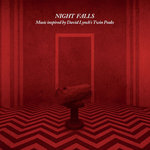
Night Falls is a literary anthology inspired by the universe of Twin Peaks, created by David Lynch and Mark Frost. The book brings together eight original short stories that explore the emotional, symbolic, and metaphysical territory it has carved into the collective imagination. At the heart of Twin Peaks lies a fragile balance between familiarity and unease, between everyday rituals and the presence of something deeply unsettling beneath the surface. Night Falls embraces this tension, moving through small towns, isolated landscapes, domestic interiors, dreams, and thresholds where reality begins to fracture. The writers approach Twin Peaks as a condition of perception. Their stories resonate with themes that have long defined the work of Lynch and Frost: duality, hidden violence, trauma, the instability of time, and the uneasy coexistence of innocence and corruption. Some narratives lean toward psychological introspection, others toward the uncanny or the metaphysical, yet all share a sensitivity to atmosphere, rhythm, and suggestion rather than explanation. Night Falls extend the resonance of Twin Peaks into new and independent fictional forms. It invites the reader to remain within ambiguity, to accept disorientation, and to listen carefully to what emerges when the lights fade and the night begins to speak.

Stories by: J. Edwin Buja, Michael F. Housel, Chris McAuley, Nora B. Peevy, RDJ Armstrong, Niyyah Ruscher-Haqq, Erica Ruppert, Can Wiggins.

Curated by Raffaele Pezzella
Edited by Chris McAuley

This compilation continues a path that Unexplained Sounds Group has been developing over time, following the earlier CD project inspired by Eraserhead. While that release focused on the cinematic origins of David Lynch’s language, this new work turns its attention to Twin Peaks, the television series created by Lynch and Mark Frost that profoundly reshaped the relationship between narrative, sound and perception on the small screen. First broadcast in 1990, Twin Peaks initially aired for two seasons between 1990 and 1991, before returning in 2017 with a third season that radically redefined the boundaries of television storytelling. From the outset, the series introduced an unprecedented fusion of crime drama, soap opera, surrealism and metaphysical horror, filtered through Lynch’s authorial vision as director and Frost’s narrative architecture. What began as an apparently familiar small-town mystery gradually evolved into an increasingly unstable universe, dissolving linear narration and pushing television into territories that were previously unthinkable. Across its three seasons, Twin Peaks expanded into a complex exploration of dreams, alternate realities, fragmented identities and temporal dislocation, transforming the medium of television into a space for long-form experimentation and subconscious...  more

credits

released June 18, 2026

REVIEWS

Bad Alchemy
Unexplained Sounds Group – Eighth Tower Records (Naples)
With Night Falls. Music Inspired by David Lynch's Twin Peaks (USG117), Raffaele Pezzella deepens the reverence for the thrill of David Lynch's fantastical cinema already demonstrated with The Eraserhead (USG110). Five of the fellow devotees were already involved the first time around: Craig Varian, with 400 Lonely Things as "Dark New Age for the New Dark Age" and his hauntological fondness for the Green Man and for Thoreau, lets 'Butterfly' drift through melancholic guitar loops. Kabra darkens the Red Room with 'Black Soil' and lets a Haunted Ballroom and Skull Island echo through the walls. Mark Hjorthoy in Vancouver, together with David Strother in Olympia, WA, sets 'A Rabbit In The Moon' spinning with trembling guitar strings. Oubys, the USG-seasoned Wannes Wolf in Hasselt, lays mournfully plucked flowers on the grave of Julee Cruise (1956–2022) with 'For Julee'. And Richard Bégin — the professor of Media & Film Studies in Montreal, fascinated by H.R. Giger, William Gibson, Philip K. Dick, ESP and Gysin's Dreamachine, and a perennial USG guest — offers 'Dale Cooper's Doppelgänger', humming, distorted and sorrowful. Joel Gilardini, the drone-loving, doomsterish guitarist in Zurich, already a fellow reader of J.G. Ballard and Neuromancer and a contributor to tributes to Dario Argento and Dreamachine, is now also Lynched with 'Traces to Nowhere'. David Kovacs, a Hungarian between fog and facts, between night and dawn, unsettles and seduces on 'Dreaming in a Grey Lodge' with knocking sounds, bass strokes, and dreamlike guitar tones. Mario Lino Stancati, the éminence grise of USG and Eighth Tower, ranging from Burroughs, Cronenberg, Dante, Dracula, Fulci, Hellraiser to Lovecraft, Poe and Tarkovsky, is naturally here too, with 'Fire Walks Through Wires' — demonic yet with thundersheet irony. Paolo L. Bandera (of Sshe Retina Stimulants), another node in Pezzella's network, has infernally orchestrated 'Agente Atomico Episodico' as a ghost-train revue with gurgling voices. Yousef Kawar, oscillating in New York between guitar rock and dark ambient, tilts once more toward the dark side with 'Whispers in the Black Lodge'. Rapoon takes us with 'Snoqualmie Falls' to the original locations in Washington, elegiacally stirring strings and keys. Zuleika AvTes, who came from Brazil to London, shows as Glass Isle — with her whispers and stippling on 'Haze' — that Lynch fascinates women too, as of course he does. Pierre Laplace in Lille, once singer-guitarist in Vera Clouzot (with Peter Orins on drums), then the male half of The Sandman's Orchestra and finally alone as Beyond the Ghost, draws 'The Velvet Curtain' closed with billowing strings, reverberant piano tones, glockenspiel, and a frail JazzNoir trumpet.
badalchemy.de


Weird Bones
The real triumph of ‘Night Falls’ is that it doesn’t pretend to offer clarity. Each artist approaches the material like someone walking into a room where the lights keep changing colour – you adjust, you squint, you shrug, you keep going. The compilation honours the series by refusing to sand down its edges or explain its logic. It just lets the unease breathe.
weirdbones.co.uk/a-bit-peaky-twin-peaks-reimagined/

Bizzarrechats
bizarrechats.blogspot.com/2026/06/eighth-towers-night-falls-music.html
bizarrechats.blogspot.com/2026/06/eighth-towers-night-falls-stories.html

Our thanks to Raffaele Pezzella (Sonologyst) for a complimentary copy of this release.
Curated and mastered by Raffaele Pezzella.
Layout by Matteo Mariano.
Published by Unexplained Sounds Group
Cat. Num. USG117
© 2026 All rights reserved
experimental ambient ambient music avant-garde drone improvisation musique concrete sound art Italy

Unexplained Sounds Group Italy

Global Network Of Aural Disorientation founded and curated by Raffaele Pezzella

Subsidiaries:

eighthtowerrecords
...  more

c


02 June 2026: Markus Reuter "Blind Architectures"; Ian Boddy & Markus Reuter "Distant Rituals" (Ambient Mix); Variant "While the Universe Sleeps" QD50

Be sure to follow KMXT FreeForm Radio on Facebook and Bandcamp and Spotify.  

You can now listen to the livestream of the show through the KMXT app; it's available through the Mac App Store or Google Play. The stream is also available at www.kmxt.org

Please support FreeForm Radio and KMXT by going to www.KMXT.org and pledging your support.

The music you hear on tonight's show is available on the artists' Bandcamp pages and websites. (links below) 

                    We urge you to support the musicians you hear on FreeForm Radio 

I am also hosting Rural Electric, so tune in for some great country music from 7-9 before FreeForm! 

Blind Architectures - Markus Reuter

These ambient miniatures were born over two days in May 2026, serving as both a sonic laboratory and a foundational exploration for an upcoming recording session. The guiding principle behind these sessions was the creation of atmosphere through intentional obscuration.

By routing the touch guitar through a heavily altered signal chain, incorporating a new array of effects pedals, deliberate distortion, and manipulated noise floors, the goal was to render sonic environments that evoke distinct "rainscapes" and "cityscapes."

The defining methodology of this collection is the "blind" recording process. The initial improvisations and textures were tracked entirely without monitoring, the faders pulled completely down. The act of composition then became an act of excavation. The music only revealed itself in the final stage, pushing the faders up to make the invisible architectures suddenly, and sometimes startlingly, visible.

The resulting pieces are brief, concentrated vignettes, averaging two to three minutes in length, capturing the exact moment a hidden landscape comes into focus.

credits

released May 21, 2026

Recorded: May 18–19, 2026
Instrumentation: 8-string Touch Guitar, Effects, Faders
Player and composer: Markus Reuter
ambient classical experimental modern jazz Berlin


VIP membership exclusive


1.


about

Remix produced by Ian Boddy in 2025. The album was originally released in 2000. You can find the original album here:
dinrecords.bandcamp.com/album/distant-rituals-din2

credits

released May 21, 2026
Variant - While the Universe Sleeps 


For the fiftieth release in the series, Quiet Details is thrilled to share an extended-length interpretation from a foundational figure in the electronic music world, the Detroit-based Stephen Hitchell, here as variant with while the universe sleeps.
 
Describing the importance of Stephen’s contribution to electronic music is a huge task - born out of the visionary axis between Detroit, Chicago and Berlin, he built on structures laid by those before him to create a universe of vast depth and sonic beauty. Along with many collaborators, his label echospace [detroit] became a home for forwarding-thinking dub-spirited music.

This, and numerous releases on other labels, including the seminal The Coldest Season on Modern Love with regular partner Rod Modell, and ground-breaking live performances everywhere from Berghain to Movement, made Stephen indivisible from any conversation of the most important artists of our time.

Under the guise of variant, we might find Stephen at his deepest, as he puts it:
"score the constellation of mystical events occurring in the depths of space”

With while the universe sleeps, he has achieved something remarkable. As with all the variant music, Stephen takes influence from the vast recesses of the cosmos, both imaginatively and sonically.

Drawing on NASA’s sound archive, “the vast echoes of space have been manipulated and resynthesized throughout the duration of this sonic experience.”

Through decades of dedication to his craft, Stephen has become a producer of almost unparalleled skill - all seen through the lens of formative years immersed in the inception and evolution of techno, house, ambient and countless detours.

All this is brought to bear on while the universe sleeps - a truly masterful deep-space voyage, eighty minutes submerged in cathartic waves of interstellar bliss.

Infinitely spacious - echoing chords and endlessly sustaining pads establish an emotional core, surrounded by highly-processed astral transmissions and organic analogue noise. Always underpinned by sub-bass reminiscent of the lowest frequencies emanating from the studios of Jamiaca, that are also of massive significance to Stephen’s work.

Huge thanks to Stephen, an incredible addition to the series.

The artwork was made as always influenced by the music and idea behind the album - originating from a photo from Stephen which was then captured with analogue photography and processed here at quiet details studios.

As usual, the album is presented on the physical edition, a custom six-panel digipack with a separate fine art print too.

The CD also has a special long-form continuous mix of the album, unique and representing the music in its purest form.

From Stephen:
written and produced by variant in ann arbor, mi. [2020-2025]
additional modular synthesis provided by antiquemodulations, detroit, mi. usa.
mixdown and premastering by alex gold. mastered by stephen hitchell in echospace. 
thanks to: alex gold, chris federsen, gerard hanson, martin, richard, jimmy, kevin martin, rod modell, sam valenti, steve barker, tomoko and family at disk union and everyone around the world supporting this sonic art.

Credits:
Music by variant
Mastered by Stephen Hitchell in Echospace and Alex at quiet details studios 
Artwork by quiet details in collaboration with Stephen Hitchell
Design by quiet details
© quiet details 2026 all rights reserved


12 May 2026: Focus "Moving Waves"; Agitation Free "Malesch"; Richard Barbieri "Hauntings"

Be sure to follow KMXT FreeForm Radio on Facebook and Bandcamp and Spotify.  

You can now listen to the livestream of the show through the KMXT app; it's available through the Mac App Store or Google Play. The stream is also available at www.kmxt.org

Please support FreeForm Radio and KMXT by going to www.KMXT.org and pledging your support.

The music you hear on tonight's show is available on the artists' Bandcamp pages and websites. (links below) 

                    We urge you to support the musicians you hear on FreeForm Radio 


Focus II (better known by its international title, Moving Waves) is the second studio album by Dutch progressive rock band Focus, released in October 1971 on Imperial Records. Following the departure of original bassist Martin Dresden and drummer Hans Cleuver in 1970, the band recruited Cyril Havermans and Pierre van der Linden, respectively, and prepared material for a new album. Recording took place in London in April and May 1971 with Mike Vernon as producer. The album features "Hocus Pocus" a hard rock song featuring keyboardist Thijs van Leer's yodelling, scat singing, and whistling, and "Eruption", a 22-minute track inspired by the opera Euridice by Italian composer Jacopo Peri.

The album was released to a mostly positive response and remains one of their most commercially successful albums, reaching No. 2 in the UK, No. 4 in the Netherlands, and No. 8 in the US. "Hocus Pocus" was released as a single in the Netherlands in June 1971, followed by its international release in 1973, where it reached No. 9 in the US and No. 20 in the UK.[3][4] The album is certified gold by the Recording Industry Association of America for selling 500,000 copies in the US.[5]

Hocus Pocus" is a rock song that features van Leer yodelling, eefing, scat singing, and whistling. The song was written as a rock parody, and it was recorded for the album as it lacked any "outright rock" tracks at that point. The group wanted to incorporate an element of humour in the track because they felt it was missing in the rock genre.[6] "Le Clochard" is French for "Tramp" and is fully titled "Le Clochard (Bread)". It is a melancholic classical guitar piece by Akkerman with van Leer backing on Mellotron. "Janis" is another Akkerman-penned ballad and features van Leer on the flute. "Moving Waves", a piano and vocal solo by van Leer, features lyrics by Sufi singer, poet, and teacher Inayat Khan. "Focus II" is a classical-jazz fusion instrumental.

Side two contains the 23-minute track "Eruption", a loose rock adaptation of the tale of Orpheus and Euridice from the opera Euridice by Italian composer Jacopo Peri. The track is in fifteen distinct sections, and the suite opens with an uncredited melody from the opera L'Orfeo by Monteverdi. "Tommy" features a guitar solo and was named and written by Tom Barlage of the Dutch fusion band Solution. "Euridice" is a classical lied which segues into the Gregorian-inspired "Dayglow" and followed by van der Linden's drum solo, "Endless Road". The suite ends with a return to its opening themes.

Release

Professional ratings
Review scores
SourceRating
AllMusicStarStarStarStar[7]
MelodicMusicStarStarStarStarStar

Moving Waves was released in October 1971 to mainly positive reception. It went on to peak at number 2 on the UK Albums Chart,[8] number 8 on the US Billboard 200,[9] and number 4 on the Dutch Album Top 100 chart.[10]

The single "Hocus Pocus" peaked at number 9 on the Billboard Hot 100.[11]

Moving Waves came in at number 24 in Q and Mojo's list of "40 Cosmic Rock Albums".[12]


Malesch is the debut album by German rock group Agitation Free. It was released in 1972 on the Vertigo Records [Germany] label. It was reissued on CD in 1992 by the Spalax label and in 2001 by the Garden of Delights label, with another reissue in 2008 by Revisited Records. The album was inspired by the group's travels through Lebanon, Egypt, Greece, and Cyprus.

Track listing

All songs written by Agitation Free.

Side one
  1. "You Play for Us Today" – 6:15
  2. "Sahara City" – 7:51
  3. "Ala Tul" – 4:57
Side two
  1. "Pulse" – 4:51
  2. "Khan el Khalili" – 5:34
  3. "Malesch" – 8:24
  4. "Rücksturz" – 2:11   

    Agitation Free's music is psychedelic, experimental krautrock with elements of spaced-out ambient, experimental electronic and drone. The music for the most part consists of driving organ-patterned drone-like rock; seamless psychedelic cosmic musical textures with intricate musicianship and musical variety; hard, driving rock similar to Amon Düül II; and jamming that occasionally invokes the interplay and styles of Garcia, Weir and Lesh of The Grateful Dead and hints at a blues rock base not unlike The Allman Brothers Band. Many of their songs have a trance-inducing, psychedelic feel with sections of driving rock fueled by fiery and melodic moving guitar lines and solid, propelling and intricate drumming and a prominent bass line. All of Agitation Free's songs are instrumental apart from some recitation on "Haunted Island".

    Their first album Malesch features short interludes of recordings from Egypt. Their second, titled 2nd is more laid-back and upbeat, with longer structure, much more of an emphasis on traditional styled jamming like the Grateful Dead and a warmer and more straightforward sound. On Malesch the songs blend together to make a seamlessly flowing, tangential and uninterrupted musical journey, whereas on 2nd songs are more predictably structured, more varied in their sound and stand more as independent works.

    Their sound is similar to, but fairly distinguishable from, other contemporary Krautrock bands such as Ash Ra Tempel, Amon Düül II, Guru Guru, Brainticket, Yatha Sidhra and Kalacakra, as well as the mixed-influence blues-based jam rock of The Grateful Dead and The Allman Brothers noticeable on 2nd, and slightly later and more symphonic bands like Asia Minor and Anyone's Daughter.


    TND Staff Album Review: ‘Hauntings’ by Richard Barbier 

      Album Reviews Tyler Roland

    Even if I don't dig everything he's put out, Richard Barbieri is one of my favorite musicians in the world. He's carved out one of those niches that even the most amped-up, pyroclastic keyboardist can't fill. Barbieri's careful, methodical sound design adds an X factor to whatever he's a part of, most notably two rock bands with a devoted following: Japan and Porcupine Tree. In the case of the latter, you rarely hear Barbieri playing piano or organ, which is often delivered by frontman Steven Wilson. Instead, he brings textures which are harder to define, lending a cinematic boost to the vast majority of Porcupine Tree's discography.

    His new solo album, Hauntings (KScope/Snapper), is as good a calling card as any for Barbieri's treatments and services. Some tracks have rhythmic drive, like "Anemoia," but Hauntings takes as much (or more) pleasure in dropping the listener into ambient interludes. Take the track after "Anemoia," "Victorian Wraith," which is little more than a cloud of sound. Rusty samples of clock chimes, thunder, and radio broadcasts decorate what may be my favorite cut, "1890."

    Vocals are few and far between throughout Hauntings, since Barbieri isn't a singer. The track "Artificial Obsession" has some disquieting, sampled spoken-word stuff that may not be for everyone. "Perfect Toys" weaves some into the mix as well, on a more subtle level. There's something to be said about how instrumental music is leagues more difficult to sell than songs with vocals front and center. But, for some reason, I find Barbieri shines brightest on Hauntings without any decipherable words.

    "Paris Sketch" is more of a full-blown Paris painting, as one of the most expansive tracks. There's even what the kids might call a "beat switch" near the end of the piece. How about that! Another great moment arrives at the album's conclusion, in the form of "A New Simulation." Hear the slide guitar? That's Porcupine Tree bandmate Wilson.

    While I believe that Barbieri's Stranger Inside (2008) is his greatest solo album, this is in strong contention for the silver medal. His first LP, Things Buried from 2004, has a too-cold, too-lifeless approach. His albums between Stranger and Hauntings don't have too many memorable moments going for them. Between 2017's Planets + Persona and 2021's Under a Spell, there are only a handful of tracks I'd call all-time Barbieri works. His series of EPs, released from 2017-18 and referred to as "Variants," are a lot more rewarding.

    Hauntings sees Barbieri present, with few frills, the flights of fancy he's best at arranging. The jazz and percussion tinges are there on compositions like "Snakes & Ladders," but they don't eclipse moods you'd swear were created from a director's chair. How can something be both opulent and sparse at once? Just take a listen.

    Light to decent 7/10. Order here.