Showing posts with label neo-prog. Show all posts

28 July 2026: Timothy Pure "Blood of the Berry"; James Murray "Islands Alight" QD52

  Be sure to follow KMXT FreeForm Radio on Facebook and Bandcamp and Spotify.  

You can now listen to the livestream of the show through the KMXT app; it's available through the Mac App Store or Google Play. The stream is also available at www.kmxt.org

Please support FreeForm Radio and KMXT by going to www.KMXT.org and pledging your support.

The music you hear on tonight's show is available on the artists' Bandcamp pages and websites. (links below) 

                    We urge you to support the musicians you hear on FreeForm Radio 

Timothy Pure biography
American progressive rock band from Georgia has made 3 albums so far, two of them are concept albums. With a lush songwriting approach and a conceptual and highly symbolic perspective on lyrics, the band excels in building up structures of emotional richness that allow for an uninterrupted storyline immersed in drama and sharp social analysis. Their music is a mixture of sweet atmospheres and fine prog passages. Certainly influenced by PINK FLOYD, they manage to produce a typical dark and melodic sound with very strong lyrics.

"Blood Of The Berry" is a concept album that tells a story of love and sacrifice. The music features light and dark musical tones and flows which is what makes this American band so good. The last album "The Island Of The Misfit Toys" (2000) is something more than a prog album: music and words seem to tell us a story you never would be over. This album describes the problems and nightmares children and adolescents deal with nowadays (mainly because of war or child abuse). Matthew Still has a beautiful and emotional voice, the instruments are played in a very subtle way and the production is high standard. Fans of bombastic or overly complex music would be advised to look elsewhere. This is very emotional music which should appeal to fans of concept albums. A must!
(Claude Bpl)

 Review by tszirmay
SPECIAL COLLABORATOR Honorary Collaborator


4 stars This sophomore album was a definite harbinger of things to come as the next "Island of Misfit Toys" will consecrate Timothy Pure with prog excellence. The band came out of peachy Atlanta with a decent debut that had all kinds of promise plastered all over it. A few personnel changes to set the boat straight and a style is born, a strong spacey Floydian influence but thankfully without the immense showoff egos. Matthew Still is an effective keyboardist but an even better vocalist, owner of a dreamy set of pipes that amplifies the murky energy of the music and can snarl when needed. Andre Neitzel on bass does a lissome job weaving his down low notes deep into the rhythmic fabric set by drummer Chris Wallace. Guitarist Zod (yeah, I know.) does not attempt to be a guitar god (zod=god?), staying well within his tonal limitations and sealing the arrangements as a team concept and not 4 virtuosos showing off their chops. Let it be said right away, this is not the most complex material ever recorded but it has a very original style that reverberates often through the course of these tracks that flow into one another, as if one long suite. Not much change of pace either, Timothy Pure come across as jacks of one trade, relying on some superbly mysterious melodies to keep the doom moving forward. "Blood of the Berry" has some luminous moments, such as on the fantastic "Slide", the extraordinary "The Afterglow" and the lilting "Magdalena Hell", all imbued with a mystical haze that is quite attractive, even after multiple spins. There is a slight similarity with fellow American bands Singularity and Discipline, both having made some admirable recordings. While this is a good release and thoroughly enjoyable, it still lacks some fire in the belly which would catapult it into the upper reaches of excellence. The best is yet to come. 
 

                                                        James Murray  "Islands Alight"
 
From Alex at Quiet Details:
Very happy to say that next in the quiet details series, with his second solo album, is an artist with a uniquely special talent - UK-based James Murray, with Islands Alight
 
Full release 29th July 2026.

Undoubtedly familiar to followers of the label - James first appeared in collaboration with our good friend Ian Hawgood on qd15 Slowreels - Everyday Exotic, a gorgeous example of what can happen when two wonderful musicians come together. Then again on his first individual album, qd23 Weeds - another spellbinding album.

Along with all his many other releases on the likes of Home Normal, Ultimae, Eilean Rec, Fluid Audio, Morr Music, his own Slowcraft and more - James is an artist dearly loved across the community.

Islands Alight is James combining his peerless ability to craft deeply touching synthetic vistas, now sent through a prism of rhythmic forms. Four years in the making, and much inspired by the history of dub in electronic music, James has made a singular and mesmerising work of art.

The introductory lush chordal waves and modulating melodic shapes are soon joined by the first indication of the true direction of this album - textural percussive patterns give us an initial glimpse into James’ vision.

Huge spaces open up and the drums morph into new forms; psychedelic echoes disintegrate into the distance; the emotions of the listener are brought to the forefront by radiant synth contours that reach into your consciousness.

The album evolves from here - countless textures and beautifully subtle percussive programming meshes perfectly with James’ melodic refinement - hypnotic, all- compassing, and one of a kind.

As James says:

Islands Alight making landfall amidst these relentless heatwaves and impending drought feels about right; environmental anxiety courses through the album like wildfire, consciously balanced only by the rising of pale, elemental waters.

Developed over four years, the origins go back further still. Drawing together wide- screen melodic, rhythmic and electroacoustic concerns, Islands Alight stands as a deliberate, defining work at the confluence of ambient dub roots and the artist I am now.


Huge thanks to James, a fantastic addition to the series.

The artwork was made as always influenced by the music and idea behind the album - originating from a photo from James which was then captured with analogue photography and processed here at quiet details studios.

As usual, the album is presented on the physical edition, a custom six-panel digipack with a separate fine art print too.

The CD also has a special long-form continuous mix of the album, unique and representing the music in its purest form.

Credits:
Music by James Murray
Mastered by Alex at quiet details studios
Artwork by quiet details in collaboration with James Murray
Design by quiet details
© quiet details 2026 all rights reserved


30 June 2026: Huis "Despite Guardian Angels"; "Night Falls: Music Inspired by David Lynch's Twin Peaks"

Be sure to follow KMXT FreeForm Radio on Facebook and Bandcamp and Spotify.  

You can now listen to the livestream of the show through the KMXT app; it's available through the Mac App Store or Google Play. The stream is also available at www.kmxt.org

Please support FreeForm Radio and KMXT by going to www.KMXT.org and pledging your support.

The music you hear on tonight's show is available on the artists' Bandcamp pages and websites. (links below) 

                    We urge you to support the musicians you hear on FreeForm Radio 

I am also hosting Rural Electric, so tune in for some great country music from 7-9 before FreeForm! 


Huis biography
Founded in Québec, Canada in 2009

Huis ("home doors" in french, and "house" in dutch) is a five member musical project from Québec officially formed by Pascal LAPIERRE (keyboards) and Michel JONCAS (bass) at the end of 2009, after an oustanding and inspiring trip in the Netherlands.

At that time, they decided to put on tape (read hard drive!) some ideas they had in mind since a long time. Over time, three other talented musicians, William REGNIER (drums), Sylvain DESCOTEAUX (vocals) and Michel ST-PERE, this last musician from the band MYSTERY (guitars) joined the band, each one bringing a special touch to Huis' sound.

The music is a well crafted progressive rock with a symphonic touch and the use of Hammond, Moog and Mellotron takes us back to the old prog rock sound of the 70's. The guitar playing of St-Pere brings a big influence of the Neo-Prog band MYSTERY and many others Neo-Prog bands that put the melody and vocals upfront with strong compositions skills. The band has released is first studio album in January 2014, " Despite Guardian Angels". 

Reviewed by Marc on 30 Jan 2014


First album from this Canadian Neo Prog band. Huis is made up of french speaking Canadians, but listening to Sylvain Descôteaux on lead vocals, this band could easily pass for a Manchester or Liverpool based group.

The most well known (at least to me) member of Huis is Michel St-Père, leader of Mystery, a band that has a gained an international reputation, partly because of ex-Yes Benoit David on lead vocals. Because of that, there are some excellent guitars to be heard on Despite Guardian Angels, but this is certainly not the only positive point of this excellent CD. Pascal Lapierre on keyboards also takes on a prominent role, having a constant presence in the music and offering a number of interesting solos. The rythm section (i.e. Michel Joncas and William Régner) is impeccable and Descôteaux's vocals are just great, his powerfull yet very melodic voice being better than the great majority of lead singers of today's most well known Neo Prog bands.

The compositions on Despite Guardian Angels are all very good, very symphonic in nature, alternating powerfull pieces with more melodic and emotional ones. If I were to pick a band as an acceptable reference, it would be late 90's or early 00's Arena, and Despite Guardian Angels compares easily with their best CDs.

Those wanting to hear some great Neo Prog should certainly seek out this new album by Huis. In my humble opinion, Despite Guardian Angels is one of the best Neo Prog album to come out in quite a while. Don't miss it. 

My highest recommendation indeed.


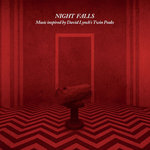
Night Falls is a literary anthology inspired by the universe of Twin Peaks, created by David Lynch and Mark Frost. The book brings together eight original short stories that explore the emotional, symbolic, and metaphysical territory it has carved into the collective imagination. At the heart of Twin Peaks lies a fragile balance between familiarity and unease, between everyday rituals and the presence of something deeply unsettling beneath the surface. Night Falls embraces this tension, moving through small towns, isolated landscapes, domestic interiors, dreams, and thresholds where reality begins to fracture. The writers approach Twin Peaks as a condition of perception. Their stories resonate with themes that have long defined the work of Lynch and Frost: duality, hidden violence, trauma, the instability of time, and the uneasy coexistence of innocence and corruption. Some narratives lean toward psychological introspection, others toward the uncanny or the metaphysical, yet all share a sensitivity to atmosphere, rhythm, and suggestion rather than explanation. Night Falls extend the resonance of Twin Peaks into new and independent fictional forms. It invites the reader to remain within ambiguity, to accept disorientation, and to listen carefully to what emerges when the lights fade and the night begins to speak.

Stories by: J. Edwin Buja, Michael F. Housel, Chris McAuley, Nora B. Peevy, RDJ Armstrong, Niyyah Ruscher-Haqq, Erica Ruppert, Can Wiggins.

Curated by Raffaele Pezzella
Edited by Chris McAuley

This compilation continues a path that Unexplained Sounds Group has been developing over time, following the earlier CD project inspired by Eraserhead. While that release focused on the cinematic origins of David Lynch’s language, this new work turns its attention to Twin Peaks, the television series created by Lynch and Mark Frost that profoundly reshaped the relationship between narrative, sound and perception on the small screen. First broadcast in 1990, Twin Peaks initially aired for two seasons between 1990 and 1991, before returning in 2017 with a third season that radically redefined the boundaries of television storytelling. From the outset, the series introduced an unprecedented fusion of crime drama, soap opera, surrealism and metaphysical horror, filtered through Lynch’s authorial vision as director and Frost’s narrative architecture. What began as an apparently familiar small-town mystery gradually evolved into an increasingly unstable universe, dissolving linear narration and pushing television into territories that were previously unthinkable. Across its three seasons, Twin Peaks expanded into a complex exploration of dreams, alternate realities, fragmented identities and temporal dislocation, transforming the medium of television into a space for long-form experimentation and subconscious...  more

credits

released June 18, 2026

REVIEWS

Bad Alchemy
Unexplained Sounds Group – Eighth Tower Records (Naples)
With Night Falls. Music Inspired by David Lynch's Twin Peaks (USG117), Raffaele Pezzella deepens the reverence for the thrill of David Lynch's fantastical cinema already demonstrated with The Eraserhead (USG110). Five of the fellow devotees were already involved the first time around: Craig Varian, with 400 Lonely Things as "Dark New Age for the New Dark Age" and his hauntological fondness for the Green Man and for Thoreau, lets 'Butterfly' drift through melancholic guitar loops. Kabra darkens the Red Room with 'Black Soil' and lets a Haunted Ballroom and Skull Island echo through the walls. Mark Hjorthoy in Vancouver, together with David Strother in Olympia, WA, sets 'A Rabbit In The Moon' spinning with trembling guitar strings. Oubys, the USG-seasoned Wannes Wolf in Hasselt, lays mournfully plucked flowers on the grave of Julee Cruise (1956–2022) with 'For Julee'. And Richard Bégin — the professor of Media & Film Studies in Montreal, fascinated by H.R. Giger, William Gibson, Philip K. Dick, ESP and Gysin's Dreamachine, and a perennial USG guest — offers 'Dale Cooper's Doppelgänger', humming, distorted and sorrowful. Joel Gilardini, the drone-loving, doomsterish guitarist in Zurich, already a fellow reader of J.G. Ballard and Neuromancer and a contributor to tributes to Dario Argento and Dreamachine, is now also Lynched with 'Traces to Nowhere'. David Kovacs, a Hungarian between fog and facts, between night and dawn, unsettles and seduces on 'Dreaming in a Grey Lodge' with knocking sounds, bass strokes, and dreamlike guitar tones. Mario Lino Stancati, the éminence grise of USG and Eighth Tower, ranging from Burroughs, Cronenberg, Dante, Dracula, Fulci, Hellraiser to Lovecraft, Poe and Tarkovsky, is naturally here too, with 'Fire Walks Through Wires' — demonic yet with thundersheet irony. Paolo L. Bandera (of Sshe Retina Stimulants), another node in Pezzella's network, has infernally orchestrated 'Agente Atomico Episodico' as a ghost-train revue with gurgling voices. Yousef Kawar, oscillating in New York between guitar rock and dark ambient, tilts once more toward the dark side with 'Whispers in the Black Lodge'. Rapoon takes us with 'Snoqualmie Falls' to the original locations in Washington, elegiacally stirring strings and keys. Zuleika AvTes, who came from Brazil to London, shows as Glass Isle — with her whispers and stippling on 'Haze' — that Lynch fascinates women too, as of course he does. Pierre Laplace in Lille, once singer-guitarist in Vera Clouzot (with Peter Orins on drums), then the male half of The Sandman's Orchestra and finally alone as Beyond the Ghost, draws 'The Velvet Curtain' closed with billowing strings, reverberant piano tones, glockenspiel, and a frail JazzNoir trumpet.
badalchemy.de


Weird Bones
The real triumph of ‘Night Falls’ is that it doesn’t pretend to offer clarity. Each artist approaches the material like someone walking into a room where the lights keep changing colour – you adjust, you squint, you shrug, you keep going. The compilation honours the series by refusing to sand down its edges or explain its logic. It just lets the unease breathe.
weirdbones.co.uk/a-bit-peaky-twin-peaks-reimagined/

Bizzarrechats
bizarrechats.blogspot.com/2026/06/eighth-towers-night-falls-music.html
bizarrechats.blogspot.com/2026/06/eighth-towers-night-falls-stories.html

Our thanks to Raffaele Pezzella (Sonologyst) for a complimentary copy of this release.
Curated and mastered by Raffaele Pezzella.
Layout by Matteo Mariano.
Published by Unexplained Sounds Group
Cat. Num. USG117
© 2026 All rights reserved
experimental ambient ambient music avant-garde drone improvisation musique concrete sound art Italy

Unexplained Sounds Group Italy

Global Network Of Aural Disorientation founded and curated by Raffaele Pezzella

Subsidiaries:

eighthtowerrecords
...  more

c


02 January 2024: Bruce Soord: Mostly Autumn; Joel Giladini

 Be sure to follow KMXT FreeForm Radio on Facebook and Bandcamp.  

Please support FreeForm Radio and KMXT by going to KMXT.org and pledging your support.

The music you hear on tonight's show is available on the artists' Bandcamp pages and websites. (links below) 

We urge you to support the musicians you hear on FreeForm Radio. 

I will also be hosting "Songs Celebrating the New Year" on the Rural Electric show 

right after the Island Messenger at 7 pm until 9 pm.  Rural Electric Spotify Playlist

Tonight's FreeForm Playlist on Spotify 


Review of the new Bruce Soord album ‘Luminescence’

Prolific singer/songwriter and frontman for The Pineapple Thief, Bruce Soord, returns with a new solo album titled ‘Luminescence.’ While Soord’s music has always been largely melancholic and mellow, the tracks on this intimate collection are slightly even more subdued then his last solo release, 2019’s All This Will Be Yours.’ But that is not a negative here as these songs are beautiful, contemplative, and still very engaging. Soord proves once again he is one of the today’s best storytellers.

The album begins with the gorgeous “Dear Life” a thought provoking track about how delicate life is singing, “don’t wish it away,
don’t wish that it will all be over.” Built around his voice, an acoustic guitar, and a simple drum loop, the song captures what the album is about in a brief 3 minutes.

“Lie Flat” provides a little more tempo and atmospheric synth sounds around a Soord’s reverbed vocals. This is another enchanting song. But the song that has perhaps the best hook on the album is the 3rd track “Olomouc.” The song starts with just Soord and an acoustic guitar, but the chorus pops out of nowhere and is simply breathtaking. This is a really great track. Other outstanding tracks include “So Simple” the title fits perfectly, and the second single “Nestle In” which is the albums most upbeat song by a slight margin. The album closes on the orchestral “Find Peace,” a wonderful way to conclude.

Soord doesn’t reinvent anything on this album, but rather does what he does brilliantly. He creates a mood and an atmosphere with his music as only he can do. The songs here are beautiful and make for a great listen. While many fans might still be on edge for the next Pineapple Thief album, this is a great collection to get you through that period.

Released on Sept. 22nd, 2023 on Kscope

‘Luminescence’ track list:
Dear Life [03:03]
Lie Flat [03:51]
Olomouc [03:55]
So Simple [02:05]
Never Ending Light [04:13]
Day of All Days [03:23]
Nestle In [03:15]
Instant Flash of Light [03:36]
Rushing [03:03]
Stranded Here [03:41]
Read to Me [02:07]
Find Peace [04:45]

Order the album here: https://BruceSoord.lnk.to/Luminescence

LAZLAND Review:

A browse of the hundreds of album reviews I have posted on this wonderful little website (self-praise being a virtue) will show the reader that there are very few reviews of live albums. There is a reason for this – I prefer to listen to, and review, new music. It is rare that bands introduce new music in the live arena, and it can be commercial suicide to do so. Further, a recording of a gig does not often mirror the sheer joy and emotion the live experience brings.

I have, though, made an exception for Back In These Arms, the new live double CD issued by one of my favourite acts, Mostly Autumn, a band who continue to provide discerning music fans with thoughtful, emotional, powerful, and above all intelligent rock music. The CD was purchased for me as a birthday present in late December.

I first saw the band live at Patti Pavillion in Swansea, a tiny roundhouse of a venue and, as Bryan Josh subsequently said to me in a conversation in Cardiff, utterly unsuited to the band. That was on a tour following the release of The Last Bright Light. We then saw them a couple of years later in Cardiff on The Passengers tour, when I had said discussion with the great man. We very rarely get to live shows these days, and it has been a wee while since the band came remotely close to us in West Wales, so this live release chronicling the band’s return to live music after the impact of Covid was both welcome and really my only realistic opportunity to enjoy the live MA “experience”. I was also extremely curious to see how one of the finest releases of recent years by any band dealing with said pandemic, Graveyard Star, would translate to the live arena. The album does not disappoint.

The setlist is a treat, well over two hours which includes bona fide MA classics such as The Last Climb, Nowhere to Hide, Spirit of Autumn Past, Passengers, Mother Nature and thence through to a strong showing for recent works. There are also a couple of rather pleasant surprises such as the exceptional Gaze, a track you will have needed to have purchased the bonus CD version of 2006’s Heart Full Of Sky to have heard before (take a listen below and enjoy) and In for the Bite, a track from the spinoff Josh & Co Ltd Transylvania album.

For all the classics and the surprises, it is, though, to these ears the later Autumn tracks which shine and are played with a vitality and urgency. I really enjoyed 2017’s Sight of Day, and in my review of the album described it as an album of light in direct contrast to the bleakness of Dressed in Voices (which I still regard as being one of the top five albums I have the pleasure to own). Opener Tomorrow Dies is a rollicking way to start a set, with Olivia Sparnenn-Josh beginning as she would continue throughout the gig, in exceptional vocal form – what a set of pipes she has. Changing Lives features the vocal talents of Chris Johnson and he, Bryan Josh, and Angela Gordon provide for a group of vocalists bringing words alive with feeling. The album provides the final encore in Forever and Beyond, and by this time they can do no wrong. A sensitive anthemic track, listen with sheer joy at Angela Gordon’s whistle introducing the lovely mid-section love song of Bryan & Olivia before the closing section lifts your spirit and fills you with joy.

The longest epic piece is the superb title track from White Rainbow at over 19 minutes, with a deeply brooding opening sequence before Bryan makes his vocal entrance. The rendition of this is cracking (with nods to other heights), not once losing the interest of the listener and what helps, by the way, is the crystal-clear sound which is a feature of the entire performance.

To me, though, it is the band’s wonderful paeon to the dreadful Covid period which takes centre stage for much of the gig, and live they do this fine album justice. Spirit of Mankind races along with Olivia belting out the tribute to our indefatigability and Jennings especially strong on keyboards. Its warmth is strongly replicated on this live performance, and how nice it was to have the band continue to surprise us with something so completely different after all these years. This Endless War drips with emotion and takes you right back to the time when you felt that it really would never end. Back in These Arms, a song of freedom, starts with a gorgeous key and guitar duet and as Bryan & Olivia start singing, the musical backdrop is fresh and vital, a piece of music for the 21st century. When the main riff kicks in, the urgency is felt keenly. The pipes are gorgeous. A video is embedded below – if you have never heard anything of Mostly Autumn, or gave up in the past, take a listen to this track below and rush out and buy the fantastic music you have been missing.

I only really have one very minor quibble with this album, and that is the surprising quietness of the audience in the mix. Mind you, you could also say that about many of the “classic” live albums such as Genesis Live et al, so this is nothing new in the world of prog, but they do seem subdued and I am pretty sure that was not the case in the flesh, so to speak.

Pettiness aside, Back In These Arms is I believe the definitive live record of Mostly Autumn, surpassing to these ears the exceptional That Night in Leamington, and I say this because this is the sound of a band who nod to the classics, but also continue to drive their art forward.

Available at all the usual outlets, this album comes highly recommended.


 Black Programs Facility is a project by Zerok label featuring albums from four label veterans: Joel Gilardini, Lars Bröndum, Mombi Yuleman, and Vongoiva - "Nocturnal" by Joel Gilardini
- "Wall Of Darkness" by Lars Bröndum
- "Abductee" by Mombi Yuleman
- "The Fabric Of Space and Time" by Vongoiva
NOCTURNAL
Recorded live at Exil Club, Zürich/CH, 13.06.2022, Montags 915
Mixed and mastered at Nowhere Studio, Zürich/CH, 14.06.2022
Joel Gilardini is an experimental guitarist and sound designer, based in Zurich (Switzerland).
He’s known for his live ambient duties as an opening act for Nik Bärtsch’s Ronin in Zurich’s clubs, besides being the mastermind of the experimental-doom-sludge project The Land Of The Snow and member of the noise-industrial combos such Mulo Muto (with Attila Folklor/CH) and Psychic Drones (with Kazuyuki Kishino/JP).
Furthermore, Joel works as a soundtrack composer for theater and dance performances. In this context he has collaborated with ensembles such as the Junior Ballett Zurich, Swiss dancer Benoît Favre, and the collective House Of Pain. 

Joel Gilardini plays: baritone guitars, guitars pedals, electronics & live-looping.

released November 16, 2023

REVIEWS

Avant Music News
avantmusicnews.com/2023/12/01/amn-reviews-joel-gilardini-lars-brondum-mombi-yuleman-vongoiva-black-programs-facility-2023-zerok

This Is Darkness
Black Programs Facility is a project by the ever awesome ZeroK label and features albums from of their four label veterans: Joel Gilardini, Lars Bröndum, Mombi Yuleman, and Vongoiva. The music here includes dark ambient, looping drones, electro-acoustic soundscapes, and experimental noise ambient. Each of these 28 tracks is of the highest quality, and each of the 4 albums here would be worth getting individually, they are all that good – getting all 4 albums together is simply incredible!


Mastered by Raffaele Pezzella (Sonologyst)
Design by RhaD
Cat. Num. ZK08
© 2023. All Rights Reserved.

license

all rights reserved

tags


04 May 2021: Magenta "We Are Legend" ; Tone Science Module No 5

 Be sure to follow KMXT FreeForm Radio on Facebook and Bandcamp.  

Please support FreeForm Radio and KMXT by going to KMXT.org and pledging your support.

This Friday, May 7, is BANDCAMP FRIDAY!  

Musicians do not have to pay fees to Bandcamp for music sold on Bandcamp Friday. 

 Support the music you hear on FreeForm this Friday! 


Review of Magenta – We Are Legend, out on April 27th, 2017

by Prog Nick

I openly admit that I am a Magenta fanatic – I have loved this leading Welsh Prog band for years. Having made that statement (but no apology for it), I am tasked with giving an objective analysis of Magenta’s long-awaited new album, “We Are Legend”(Buy it this Friday on Bandcamp)

Magenta officially comprises keyboard virtuoso/producer/composer Rob Reed, massively underrated guitarist Chris Fry, and award-winning vocalist Christina Booth. On this album, they are joined by regular live bassist Dan Nelson, and respected new drummer Jon ‘Jiffy’ Griffiths. Rob’s brother Steve contributes the lyrics.

Something that first attracted me to Magenta, particularly 2004‘s sophomore release “Seven” (one of my all-time favourite albums), was their ability to conjure Yes-like mindscapes, and make me feel the same sense of musical wonder that Yes created in the early 70’s. This was true Classic Prog, 21st Century style, with a stunning female vocalist. In Reed’s own words “Current prog bands are always scared and shy about admitting the influences of the great bands of the 70’s, and I wanted to…admit and celebrate those influences, and hopefully create something as worthwhile as those classic bands”. This he did, and we loved it.

One aspect that remained constant in Magenta’s earlier work was the extant presence of melody in every song. Melody emphasized by the unique combination of Reed’s composition and keyboard chops, Fry’s six-string excellence and Booth’s magnificent voice.

But after “Seven”, a few of the band’s releases variously displayed Reed’s penchant for wanting to “try something different”. This need, which was perfectly understandable for a musician of Reed’s stature, has, at times, resulted in varied responses, particularly when tougher or darker sounds were created (for example on 2008‘s “Metamorphosis”). There were, of course, many excellent moments on every album the band recorded, but the consistency of melody to be found on “Seven” was at times elusive. This matter was clearly and firmly addressed with Magenta’s 2013 release, “The Twenty-seven Club”. The latter was a clarion call, announcing that the classic sound of Magenta had returned. Very few people had a negative word to say about that album.

Which brings us to 2017, and guess what? When the new release was announced, Magenta’s eager fans were again informed that Reed was going to “try something different”. “Why,” I asked myself, “after the brilliance of The Twenty-Seven Club, would this great band want to change a thing?” I anticipated this release with a little trepidation, because I did not want the band that produced “Seven” and “The Twenty-Seven Club” to change. And honestly, I did not think that 2013’s masterful release could be bettered.

Well, dear Reader, you will be happy to know that my paranoia was completely unfounded. Change can indeed be good, and Mr Reed and his cohorts have just proved it. While this album is neither a repeat of “Seven” or “The Twenty Seven Club”, and it is in parts, even a departure from the Magenta of old, it is nonetheless brilliant in a different, yet still familiar way. While innovative and modern, it somehow remains faithful to the band’s classic roots, and is immensely fulfilling.

“We Are Legend” is comprised of one 27-minute epic and two shorter songs. Does this sound familiar? Well, you will be pleased to know that while Magenta have referenced their 70’s influences where necessary, they have also proceeded to innovate without compromise where they felt the need to do so, and the result is spectacular.

“Trojan” is a dystopian sci-fi story of war against machines attacking mankind from the ocean. A 27 minute journey, with several distinct parts, it starts with eerie keyboard sounds and a gentle melody that explodes into a heavy guitar passage – Magenta mean business. Early on, forceful new recruit Griffiths makes his presence felt, and while Reed and Fry call the instrumental shots, Nelson and Griffiths admirably complete an already formidable attack. We are under way, and Booth’s magnificent voice is introduced in one of the most powerful, driving verses that Magenta have created. A superb middle section, presenting the melody in gentler fashion, gives way to a stylish Fry solo at the sixth minute, after which Booth and the rest of the band play call-and-answer in a manner familiar to Magenta fans, but this time with a sci-fi twist.

There is a clear intention on this piece to give each performer a chance to shine, and this is in every manner successful. Above all, the song has every perspective you would desire in a Prog epic. Expect tenderness and anger, weight and light, dizzying mixed imagery, theatrical delivery, distinctly different parts stitched together into a common theme, and a strong pull at every one of your emotions.

The band is in top form and precision is the order of the day. Griffiths’ fills are perfectly worked out often to be exactly what Fry and Nelson are playing – it’s a considered performance, with every stroke carefully prepared, one believes, under Reed’s guidance. Fry’s guitar work, as always, is staggering. He performs jazz progressions with deceptive ease, and his interludes of acoustic picking are particularly tasteful. Of course his electric solos are, without exception, astounding. One also feels that Nelson, who despite his regular live appearances, recorded with Magenta for the first time here, has hit his stride with great precision and an immense sound. It goes without saying that Booth and Reed are magnificent performers, and deliver to the highest levels, as they always have.

With a song this length, the band is given room to breathe, and the composition goes through many peaks, valleys and everything in between. The main guitar solo is pure Floyd, and will unashamedly entice any Gilmour devotee. The gentle middle interlude gives Booth the scope to sound like an angel, with lyrics like ‘I look around in disbelief, our history is what brings me back to you.’ Her versatile voice goes from anguished wail to gentle caress, and reminds us that she more than deserves her numerous awards and accolades. Griffiths provides a roto-tom-like solo that is reminiscent of Pink Floyd’s “Time”, which leads into a section where Reed syncopates new-age keyboard effects with Griffiths’ double bass drum (possibly intended to conjure the huge robots marching forward). This in turn leads into a guitar riff that is pure Magenta and could have been on “Seven”. Finally, a gargantuan modern rock passage leads to an ending of consolation and peace. Are you getting the picture? It’s classic Magenta mixed with “something new”.

“Trojan” stands up with the best that Reed has delivered. Technical wizardry and copious instrumental dexterity are there, but they are never allowed to stand without reference to melody, which always commands the composition.

If there is a criticism to be made, it might be that sometimes Steve Reed’s lyrics can be stylistically repetitive. (For example he often to starts a line with a present participle such as ‘hoping’ or ‘thinking’, or an infinitive such as “to grow’ or ‘to live’.) This can become noticeable in its regularity, but a lyricist so prolific can be forgiven this foible.

Second song “Colours” is about Vincent van Gogh. It starts with what sounds like the music from a child’s toy or musical box, before exploding into a veritable layer cake of tortured progressive sound – as tortured as the man it describes. If the song is about the palette of a genius, the musical colours painted by the band conjure just that. Booth almost spits out the lyrics when adopting van Gogh’s persona, and she perfectly evokes his madness. The middle section once again features Fry in full Gilmour mode and Reed channeling Rick Wright. There is absolutely nothing wrong with that. The toy music returns to usher in an anguished build-up on organ, guitar and vocals, all counterpointing magically. Griffiths’ precision and tightness again display why he is the right choice for the Magenta drum throne. As van Gogh’s life reaches its tormented end, the band keep pace with the theme in a slow whirlwind of calculated musical madness, ending in quiet resignation. “Colours” is a great song that shows Magenta at their startling best.

“Legend” is a driving behemoth of a song about the last survivors on Earth, starting in 7/4 timing. Angular and pointed in its attack, melody is again not forgotten in the verses and choruses which are a perfect vehicle for Booth’s emotive range. Lots of modern sci-fi sound effects, created by studio artifice, are woven into the tapestry of the song (another “something new” for Magenta), but again, Booth’s melodious voice saves the song from the ordinary or the artificial. Fry’s solo is immense, and Booth’s refrain of “Its Over” will move you to tears. The final passage, a pastoral then triumphant slow-march to bliss, reminds us of the 70’s Yes influence that made us fall in love with Magenta to begin with. The closing of this passage ends the album on a massive tympanic climax.

The album’s excellent artwork has a dystopian sci-fi combat look that reflects the central themes in the music.

Despite challenges posed by Booth’s recent illness and some personnel changes, Magenta have never gone away. They are here to stay, and while there might be a new flavour, new members and some new sounds, the bedrock of tasteful 70’s Prog that is classic Magenta has also not gone away. It just has a new twist.

I could easily have been disappointed by this release, because “The Twenty Seven Club” created very high expectations for me. But that is not even mildly the case. Magenta have once again extended themselves beyond what any reasonable fan can expect, and have delivered something classic that will appease diehard fans, but also something new that might just conjure a new audience.

On the strength of this album, I remain a Magenta fanatic, and once again, make no apology for that.

Released on April 27th, 2017

Tracklisting:
1-Trojan 26:09
2-Colours 10:47
3-Legend 11:33


Ian Boddy continues to democratize the art of the modular with another compilation of even more daring emerging artists. He blows hot and cold with a fabulous split between complexity and ease. As much as there are tricks that require a little more patience, there are other tricks that catch us at the first attempt. This perfect balance supports the curiosity of discovery that can be done at the risk of our ears. But don't worry, what you'll find horrible on the first listen has the potential to be discovered with a new face while you push your experience of discovering the below of No.5 INTEGERS AND QUOTIENTS.   (Buy it this Friday on Bandcamp)

Incantation comes from afar! Its distant breath accosts our ears with shimmering effects drawn in keyboard riffs. A ghostly shadow whispers a hooking melody while the riffs are structured in aggressive and repetitive loops. The bass line is monstrous in this title of Hélène Vogelsinger. It extends its hold which receives the texture of looped riffs that is not really far from Clara Mondshine's vocal effects. Iterations is one of the few tracks that seduces from the start. The notes of a nostalgic piano fall, as if abandoned by the pianist, in a universe of noise and static. They dance and twirl in the roundness of a double bass, creating this unexpected slow dance under a sky darkened by these strange noises and the telegraphy code disputes that become more and more nervous. Do I hear synth-guitar tears wailing in this canvas of devastation? Still, the track takes a livelier tangent with a rhythm running continuously towards a road to freedom. A superb track by Raffael Seyfried with good arrangements and an optimistic cinematic vision. Waving and Drowning brings us into the universe without tenderness of Stephan Whitlan. A cosmic wind and its stars are sucked into a huge black hole that struggles to contain its immense waves of woosshh. This black hole has a transparent tubular shape where we witness the mutation of sounds and a first dialogue with an entity as evasive as these filiform lines filled with wiiissshhh. In short, a vague title where the sounds and flattened pulsations converge in an intense finale of its tonal template. This is the kind of track that my friends and neighbors don't understand! I fell in love with Johnny Woods' excellent album Pavilions, released last summer. Cuckoo is in the same genre with an oscillating wave and its harmonious fluctuations where the excessive beat of a clatter is lost. The movement is very Teutonic in its vision, but not in its rhythmic level. Synth pads connect by saying mouan, while other phonic elements focus on creating a web where each new element brings its shadow to dance tirelessly around Cuckoo. I hung on without difficulty to this huge mosaic where a fade-out remains the only option.

I've heard a lot of great things about Polypores, and Clocks, Unravelling only confirms my eagerness to discover this painter from Preston, England. The flow is as hyperactive as Cuckoo but with delicious jerks and slowdowns on the fractured flow of a rhythm built on diodes with desynchronized and arrhythmic current. Lisa Bella Donna is another artist of whom we say only good things. She has the longest track on No.5 INTEGERS AND QUOTIENTS. Electronic Study #26 is a track with prismatic ambiences with ectoplasmic vocals over an atonal structure. An eerie humming insinuates itself with the radiation of a bass without harmonies until reaching a phase of violence, scribbling waves and sound graffiti that annoyed me for a good 90 seconds. Let's just say that it's in the middle of the track that a second listening becomes a reviewer's job and not a music lover's pleasure! At this point in the album, Delusion comes at the right time. Matths manages to recreate the sounds of a train, still a bit psychedelic, in an EDM structure. This first sustained beat here is as catchy as lively and supports a splendid melody pushed from the tip of our lips. The second half, which follows a bridge of ambiences, offers us an electronic rock bend with big and shiny effects of the modular. A beautiful bomb which is followed by a very cheerful track of Chuck van Zyl. The Zanti Misfits is a dance of the sequencer whose curves and variations attract a bass line in rhythmic corridors as ambient one to end by pouring in a final whose arrangements give a surreal tint to the second part of The Zanti Misfits. Philippe Petit joins the pool of artists with more complex sound orientations. Flirting on a razor's edge, Delicate Elementum moves from cosmic reverie to the suffering of the waves with the same ease as saying hat! It's a track that at times is annoying, while at other times what is annoying is charming. So, a title that we will appreciate a little more, especially with the numerous videos that show how this modular EM is made.

There are geniuses in this album who are able to connect our eyes to their music! And that's the best thing about the art of modular; the ability to believe in the incredible. For my part, I found that No.5 INTEGERS AND QUOTIENTS proposes a nice balance in rhythm, in melody and in the unexplainable.

Sylvain Lupari (01/05/21) ****½*

SynthSequences.com

Available at DiN Records