Showing posts with label italy. Show all posts

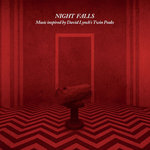
30 June 2026: Huis "Despite Guardian Angels"; "Night Falls: Music Inspired by David Lynch's Twin Peaks"

Be sure to follow KMXT FreeForm Radio on Facebook and Bandcamp and Spotify.  

You can now listen to the livestream of the show through the KMXT app; it's available through the Mac App Store or Google Play. The stream is also available at www.kmxt.org

Please support FreeForm Radio and KMXT by going to www.KMXT.org and pledging your support.

The music you hear on tonight's show is available on the artists' Bandcamp pages and websites. (links below) 

                    We urge you to support the musicians you hear on FreeForm Radio 

I am also hosting Rural Electric, so tune in for some great country music from 7-9 before FreeForm! 


Huis biography
Founded in Québec, Canada in 2009

Huis ("home doors" in french, and "house" in dutch) is a five member musical project from Québec officially formed by Pascal LAPIERRE (keyboards) and Michel JONCAS (bass) at the end of 2009, after an oustanding and inspiring trip in the Netherlands.

At that time, they decided to put on tape (read hard drive!) some ideas they had in mind since a long time. Over time, three other talented musicians, William REGNIER (drums), Sylvain DESCOTEAUX (vocals) and Michel ST-PERE, this last musician from the band MYSTERY (guitars) joined the band, each one bringing a special touch to Huis' sound.

The music is a well crafted progressive rock with a symphonic touch and the use of Hammond, Moog and Mellotron takes us back to the old prog rock sound of the 70's. The guitar playing of St-Pere brings a big influence of the Neo-Prog band MYSTERY and many others Neo-Prog bands that put the melody and vocals upfront with strong compositions skills. The band has released is first studio album in January 2014, " Despite Guardian Angels". 

Reviewed by Marc on 30 Jan 2014


First album from this Canadian Neo Prog band. Huis is made up of french speaking Canadians, but listening to Sylvain Descôteaux on lead vocals, this band could easily pass for a Manchester or Liverpool based group.

The most well known (at least to me) member of Huis is Michel St-Père, leader of Mystery, a band that has a gained an international reputation, partly because of ex-Yes Benoit David on lead vocals. Because of that, there are some excellent guitars to be heard on Despite Guardian Angels, but this is certainly not the only positive point of this excellent CD. Pascal Lapierre on keyboards also takes on a prominent role, having a constant presence in the music and offering a number of interesting solos. The rythm section (i.e. Michel Joncas and William Régner) is impeccable and Descôteaux's vocals are just great, his powerfull yet very melodic voice being better than the great majority of lead singers of today's most well known Neo Prog bands.

The compositions on Despite Guardian Angels are all very good, very symphonic in nature, alternating powerfull pieces with more melodic and emotional ones. If I were to pick a band as an acceptable reference, it would be late 90's or early 00's Arena, and Despite Guardian Angels compares easily with their best CDs.

Those wanting to hear some great Neo Prog should certainly seek out this new album by Huis. In my humble opinion, Despite Guardian Angels is one of the best Neo Prog album to come out in quite a while. Don't miss it. 

My highest recommendation indeed.


Night Falls is a literary anthology inspired by the universe of Twin Peaks, created by David Lynch and Mark Frost. The book brings together eight original short stories that explore the emotional, symbolic, and metaphysical territory it has carved into the collective imagination. At the heart of Twin Peaks lies a fragile balance between familiarity and unease, between everyday rituals and the presence of something deeply unsettling beneath the surface. Night Falls embraces this tension, moving through small towns, isolated landscapes, domestic interiors, dreams, and thresholds where reality begins to fracture. The writers approach Twin Peaks as a condition of perception. Their stories resonate with themes that have long defined the work of Lynch and Frost: duality, hidden violence, trauma, the instability of time, and the uneasy coexistence of innocence and corruption. Some narratives lean toward psychological introspection, others toward the uncanny or the metaphysical, yet all share a sensitivity to atmosphere, rhythm, and suggestion rather than explanation. Night Falls extend the resonance of Twin Peaks into new and independent fictional forms. It invites the reader to remain within ambiguity, to accept disorientation, and to listen carefully to what emerges when the lights fade and the night begins to speak.

Stories by: J. Edwin Buja, Michael F. Housel, Chris McAuley, Nora B. Peevy, RDJ Armstrong, Niyyah Ruscher-Haqq, Erica Ruppert, Can Wiggins.

Curated by Raffaele Pezzella
Edited by Chris McAuley

This compilation continues a path that Unexplained Sounds Group has been developing over time, following the earlier CD project inspired by Eraserhead. While that release focused on the cinematic origins of David Lynch’s language, this new work turns its attention to Twin Peaks, the television series created by Lynch and Mark Frost that profoundly reshaped the relationship between narrative, sound and perception on the small screen. First broadcast in 1990, Twin Peaks initially aired for two seasons between 1990 and 1991, before returning in 2017 with a third season that radically redefined the boundaries of television storytelling. From the outset, the series introduced an unprecedented fusion of crime drama, soap opera, surrealism and metaphysical horror, filtered through Lynch’s authorial vision as director and Frost’s narrative architecture. What began as an apparently familiar small-town mystery gradually evolved into an increasingly unstable universe, dissolving linear narration and pushing television into territories that were previously unthinkable. Across its three seasons, Twin Peaks expanded into a complex exploration of dreams, alternate realities, fragmented identities and temporal dislocation, transforming the medium of television into a space for long-form experimentation and subconscious...  more

credits

released June 18, 2026

REVIEWS

Bad Alchemy
Unexplained Sounds Group – Eighth Tower Records (Naples)
With Night Falls. Music Inspired by David Lynch's Twin Peaks (USG117), Raffaele Pezzella deepens the reverence for the thrill of David Lynch's fantastical cinema already demonstrated with The Eraserhead (USG110). Five of the fellow devotees were already involved the first time around: Craig Varian, with 400 Lonely Things as "Dark New Age for the New Dark Age" and his hauntological fondness for the Green Man and for Thoreau, lets 'Butterfly' drift through melancholic guitar loops. Kabra darkens the Red Room with 'Black Soil' and lets a Haunted Ballroom and Skull Island echo through the walls. Mark Hjorthoy in Vancouver, together with David Strother in Olympia, WA, sets 'A Rabbit In The Moon' spinning with trembling guitar strings. Oubys, the USG-seasoned Wannes Wolf in Hasselt, lays mournfully plucked flowers on the grave of Julee Cruise (1956–2022) with 'For Julee'. And Richard Bégin — the professor of Media & Film Studies in Montreal, fascinated by H.R. Giger, William Gibson, Philip K. Dick, ESP and Gysin's Dreamachine, and a perennial USG guest — offers 'Dale Cooper's Doppelgänger', humming, distorted and sorrowful. Joel Gilardini, the drone-loving, doomsterish guitarist in Zurich, already a fellow reader of J.G. Ballard and Neuromancer and a contributor to tributes to Dario Argento and Dreamachine, is now also Lynched with 'Traces to Nowhere'. David Kovacs, a Hungarian between fog and facts, between night and dawn, unsettles and seduces on 'Dreaming in a Grey Lodge' with knocking sounds, bass strokes, and dreamlike guitar tones. Mario Lino Stancati, the éminence grise of USG and Eighth Tower, ranging from Burroughs, Cronenberg, Dante, Dracula, Fulci, Hellraiser to Lovecraft, Poe and Tarkovsky, is naturally here too, with 'Fire Walks Through Wires' — demonic yet with thundersheet irony. Paolo L. Bandera (of Sshe Retina Stimulants), another node in Pezzella's network, has infernally orchestrated 'Agente Atomico Episodico' as a ghost-train revue with gurgling voices. Yousef Kawar, oscillating in New York between guitar rock and dark ambient, tilts once more toward the dark side with 'Whispers in the Black Lodge'. Rapoon takes us with 'Snoqualmie Falls' to the original locations in Washington, elegiacally stirring strings and keys. Zuleika AvTes, who came from Brazil to London, shows as Glass Isle — with her whispers and stippling on 'Haze' — that Lynch fascinates women too, as of course he does. Pierre Laplace in Lille, once singer-guitarist in Vera Clouzot (with Peter Orins on drums), then the male half of The Sandman's Orchestra and finally alone as Beyond the Ghost, draws 'The Velvet Curtain' closed with billowing strings, reverberant piano tones, glockenspiel, and a frail JazzNoir trumpet.
badalchemy.de


Weird Bones
The real triumph of ‘Night Falls’ is that it doesn’t pretend to offer clarity. Each artist approaches the material like someone walking into a room where the lights keep changing colour – you adjust, you squint, you shrug, you keep going. The compilation honours the series by refusing to sand down its edges or explain its logic. It just lets the unease breathe.
weirdbones.co.uk/a-bit-peaky-twin-peaks-reimagined/

Bizzarrechats
bizarrechats.blogspot.com/2026/06/eighth-towers-night-falls-music.html
bizarrechats.blogspot.com/2026/06/eighth-towers-night-falls-stories.html

Our thanks to Raffaele Pezzella (Sonologyst) for a complimentary copy of this release.
Curated and mastered by Raffaele Pezzella.
Layout by Matteo Mariano.
Published by Unexplained Sounds Group
Cat. Num. USG117
© 2026 All rights reserved
experimental ambient ambient music avant-garde drone improvisation musique concrete sound art Italy

Unexplained Sounds Group Italy

Global Network Of Aural Disorientation founded and curated by Raffaele Pezzella

Subsidiaries:

eighthtowerrecords
...  more

c


23 June 2026: Yes "Aurora"; Parallel Worlds "Explorer"

Be sure to follow KMXT FreeForm Radio on Facebook and Bandcamp and Spotify.  

You can now listen to the livestream of the show through the KMXT app; it's available through the Mac App Store or Google Play. The stream is also available at www.kmxt.org

Please support FreeForm Radio and KMXT by going to www.KMXT.org and pledging your support.

The music you hear on tonight's show is available on the artists' Bandcamp pages and websites. (links below) 

                    We urge you to support the musicians you hear on FreeForm Radio 


Aurora is the twenty-fourth studio album by English progressive rock band Yes, released on 12 June 2026 by InsideOut Music and Sony Music.

Yes started work on the album shortly after the release of Mirror to the Sky in May 2023. As with the band's immediate preceding albums, guitarist Steve Howe resumed his role as producer, and orchestral arrangements were provided. Unlike the last two albums, the orchestral parts of the album were provided by the Czech National Symphony Orchestra. The album was released on CD, LP, Blu-ray, and digital platforms, with some editions containing additional artwork by long-time Yes cover artist Roger Dean.[3]


Review of the new YES album ‘Aurora’ out on June 12th, 2026

by Geoff Bailie

After 58 years, 24 studio albums, and a catalogue that helped define progressive rock, how should we approach a new album by Yes? The 2025 USA Fragile Tour programme described Yes as a band who “constantly evolve and create a sound unlike anyone else’s”, with each member bringing “exceptional skill and a distinctive style to the shared vision”. So does Aurora deliver against that definition?

The current – and now longest-standing – line-up has barely paused for breath since the release of The Quest in late 2021. Mirror to the Sky followed in 2023, with Jay Schellen stepping fully into the drum role after the passing of Alan White, and many fans felt that album represented another step forward. All the while, the band toured the world performing classic Yes albums, deep cuts, and newer material with real conviction. And so to Aurora, the third Yes studio album released through Inside Out Music – and, for me, the strongest album of the Jon Davison era so far.

What sets Aurora apart is that it finally sounds like a fully unified band rather than a collection of exceptional musicians preserving a legacy. The last two albums certainly had strong moments, but perhaps felt a little cautious. Here there’s a greater willingness to embrace contrasting moods and unexpected musical turns, while still sounding unmistakably like Yes. Add to that a rhythm section that feels genuinely locked in, Geoff Downes’ keyboards pushed much further forward in the mix, and the increasingly rich vocal blend developing between Jon Davison, Steve Howe, and Billy Sherwood, and you have an album with far more personality and confidence.

When we spoke to Jon Davison recently, he attributed some of that evolution to the way this album was created. Mirror to the Sky had begun while Alan White was still alive, with Jay Schellen joining partway through the process. Aurora, by contrast, was shaped by all five members from start to finish — and you can hear the difference.

The album opens magnificently. Downes’ piano, joined by Paul K Joyce’s orchestration, creates a cinematic opening that genuinely feels like the start of an event. If you ever wanted a Yes intro tape for a live show, surely this is it! Repeated listens reveal recurring motifs and clever musical callbacks throughout the opening title track, along with an impressive variety of keyboard and guitar textures. The arrangement keeps evolving without ever losing momentum.

Then comes “Turnaround Situation,” which captures the “complex simplicity” that has always sat at the heart of great Yes music. Strong harmonies, Hammond organ, and Howe’s signature guitar riffing suddenly give way to one of the album’s first genuinely surprising moments: Steve delivers a beautifully loose jazz-style solo, but played on nylon-string guitar. It’s completely unexpected and absolutely right for the song. The middle section – piano, slide steel guitar, and a quietly superb rhythm section underneath – is another reminder of how well this line-up now functions as an ensemble.

“Love Lies Dreaming” shifts the mood again. Sherwood’s bass work in the introduction is excellent, and the song provides one of the album’s more reflective moments without losing the richness of the arrangements around it. One of the album’s biggest strengths is the sheer variety of sounds it contains. Acoustic guitars, layers of keyboards, orchestration, unusual guitar tones – all of it feels carefully considered without becoming over-produced. The mix is particularly impressive, giving every instrument space while still preserving the density that makes Yes music feel immersive.

Of course, many prog fans will head straight for the epic “Countermovement,” perhaps hoping for “Close to the Edge Part 2.” Thankfully, that’s not what this is! Structurally, the closest comparison is probably Abbey Road Side Two: a sequence of interconnected musical ideas flowing naturally into one another rather than a single recurring thematic framework. That approach suits the piece perfectly. Howe’s delicate opening vocal in the Anytime Soon section is one of the album’s most unexpectedly moving moments, before the Blink Of An Eye section built around identity and artificial intelligence (the “in the blink of AI” lyric genuinely made me smile) brings a contemporary edge without sounding forced. Schellen and Sherwood deliver a strong instrumental detour and the track closes with a beautifully understated a cappella reprise that lingers long after the song ends.

“Ariadne” takes another left turn entirely, drawing on Greek mythology without becoming overly literal in its storytelling. The atmosphere here is superb. Strings, layered vocals, strange guitar textures, and some particularly strong vocal work from Billy Sherwood create one of the album’s most cinematic tracks. This is also where the production really shines: lavish and detailed, occasionally over-the-top, but always in service of the music rather than simply showing off!

Then comes perhaps the album’s biggest surprise. “All Hands On Deck” opens with one of the heaviest guitar riffs heard on a Yes album in years – when Hammond organ is added, it’s almost a modern day Deep Purple-style sound initially. Davison sings much of the track in a lower than normal register, reinforcing how far beyond simply “sounding like Jon Anderson” his role in the band has evolved. Howe’s lead vocal in the chorus works brilliantly, especially when paired with Davison’s responses, while Downes contributes clever keyboard interjections, sympathetic to the organic sound of this track. One major takeaway from Aurora overall is how much more present Geoff feels within the arrangements. The long-established working relationship between Howe and Downes now seems fully settled in the modern Yes context; both players understand exactly where their sounds complement rather than compete with one another.

The album’s instrumental-with-vocals piece, “Outside The Box,” is another genuinely unusual moment in the Yes catalogue. Beginning as a delicate acoustic guitar composition accompanied by layered “la la la” vocals that somehow evoke both Leave It and medieval choral music, the track gradually expands into something stranger and far more atmospheric. Drums, bass, electric guitar textures, and ambient soundscapes slowly emerge around it. It’s adventurous, slightly eccentric, and exactly the sort of risk a band at this stage of its career could easily avoid taking – but they took it, and I’m glad they did!

The closing track, “Emotional Intelligence,” strips things back again. Built around piano and a strong central melody, it highlights Davison’s growing importance to the band not only as a vocalist but as a multi-instrumentalist and songwriter. There’s a confidence to his writing throughout Aurora that feels notably stronger than on previous albums.

The bonus tracks continue the unusually high standard. “Jambustin’” provides a lighter change of pace, while “Watching The River Roll” feels far too substantial to be dismissed as a bonus. Howe’s Portuguese guitar, Sherwood’s vocal, and the flowing arrangement briefly hint at “Your Move” territory before moving somewhere entirely its own. The keyboard and guitar interplay here is especially effective.

I’m not sure any of us entirely know what we expect from a new Yes album in 2026 – perhaps the band itself doesn’t either. But Aurora succeeds because it doesn’t try to recreate the past and instead focuses on what this version of Yes uniquely does well. The dynamics, diversity, musicianship, and sheer confidence on display throughout these 60 minutes reveal a band that is still creatively alive, still evolving, and still capable of taking listeners somewhere unexpected.

And ultimately, that feels completely true to the description from the Fragile tour programme: “exceptional skill and a distinctive style brought to a shared vision”. Aurora doesn’t simply remind us what Yes once were; it makes a convincing case for what they still can be.

released June 19, 2026

All tracks composed, arranged and produced by Bakis Sirros during 2025.
Thanks to: friends and family, John Sirros, Alessandro Vaccaro, Lorenzo Montana, Mamonu, Ingo Zobel, Dimitris Pavlidis, Angelos Ioakimoglou, Andreas Vamvakaris.
Mastered by Lorenzo Montana’
Cover design by LoMo
Machines used:
Eurorack modular (including modules by Qu-Bit, Synthesis Technology, Make Noise, Instruo, Xaoc Devices, Frap Tools, Doepfer, 4ms company, Noise Engineering, Buchla Tiptop Audio, Befaco, Neuzeit, Strymon, Steady State Fate, Cosmotronic, Hexinverter, Industrial Music Electronics, Endorphin.es, Behringer and others), Analogue Systems RS-Integrator modular, Roland System-8, korg Prologue, Wavestate, Opsix, SQ64, MS2000R, ASM Hydrasynth, Novation Peak, Kodamo EssenceFM mk2, Yamaha TG77, Waldorf Microwave, Behringer Model-D.
link: facebook.com/parallelworldsmusic
 
analogue electronic idm modular ambient electro idm techno Italy

05 May 2026: Far East Family Band "Parallel Worlds"; Sulk Rooms "Songs of Soil" (Quiet Details 49); "Music for Ancient Catacombs"

Be sure to follow KMXT FreeForm Radio on Facebook and Bandcamp and Spotify.  

You can now listen to the livestream of the show through the KMXT app; it's available through the Mac App Store or Google Play. The stream is also available at www.kmxt.org

Please support FreeForm Radio and KMXT by going to www.KMXT.org and pledging your support.

The music you hear on tonight's show is available on the artists' Bandcamp pages and websites. (links below) 

                    We urge you to support the musicians you hear on FreeForm Radio 


Musical Style and Influence

The album features long, hypnotic tracks that reflect the band's experimental approach. It draws inspiration from the psychedelic sounds of early Pink Floyd and the electronic experimentation of Klaus Schulze. The music is characterized by its immersive soundscapes and intricate arrangements, making it a significant work in the progressive rock genre.

 Review by Proghead
PROG REVIEWER 

5 stars This is without a doubt the best album FAR EAST FAMILY BAND has ever done. Unlike other albums where the band focused mainly on ballads influenced by PINK FLOYD, on "Parallel World" they decided to merge the prog rock style of the time with electronic music in the vein of Klaus SCHULZE. And just like their previous album, "Nipponjin", this album was also produced by SCHULZE, and you could swear he actually played on the album (he didn't). All the synth duties here are Fumio Miya[&*!#]a (who also played guitar and sang), Akira Ito, and Masanori Takasaki (who we all know as the future New Age star of the '80s and '90s, that is KITARO).

For "Parallel World", the band went to England to record at Richard Branson's Manor Studios to strike a deal with Virgin Records. Unfortunately Virgin rejected the album (their loss), so it was left released only in Japan (with two different album covers, depending what you got, mines is the lesser known one with the peering eyes cover). About these two different album covers, I am unable to determine if what I own is a reissue, but probably is. Let's say this new electronic direction for the band was an excellent move as they produced their ultimate masterpiece. Here you get "Metempsychosis" which shows the band in a more experimental setting, complete with synth drones and percussion. "Entering" and "Times" will fool you for SCHULZE's own works, Shizuo Takasaki's drumming often reminds me of Harald Großkopf (WALLENSTEIN member who was often found playing on SCHULZE's albums), and it's packed with same kind of space electronic effects found on a SCHULZE album. It's the presence of guitar (from Fumio Miya[&*!#]a and Hirohito Fukushima) that separates this from a SCHULZE album. Then you have "Kokoro", which harkens back to their earlier works. This is basically a slow ballad, sung in Japanese that could easily fit on "The Cave: Down to the Earth". This is the only song like this on "Parallel World".

And then you get the 30 minute title track that is just so amazing that it totally justifies the five star rating I give this album! Here the band goes on a lengthy jam, with the Akira Fukakusa's bass dominating with tons of killer synths, lots of great spacy string synths and Moog. After about halfway through this piece, the bass and drums gives away to straigh-up synth experiments. Somewhere you hear some chanting and references to Zen Buddhism. There are some truly mindblowing use of Mellotron that pop up on occasions, and this one synth solo I am pretty sure none other than KITARO is responsible for. I can't believe this album, it's hard to believe that a guy whose later music is often dismissed as New Age fluff (KITARO, that is) is on this album. Truly a wonderful album and if the description of this album sounds good to you, find a copy. 


Next up in the quiet details series, with a beautifully crafted interpretation, is the UK-based musician, Thomas Ragsdale, here as Sulk Rooms with Songs of Soil. (Quiet Details 49)

Full release 6th May 2026.

A mainstay of the UK electronic music and live performance scenes - Thomas has been releasing music for well over a decade and established himself as one of our most important voices, making what he describes as “luminescent electronica”. 

Releasing on a range of excellent labels (Waxing Crescent, Werra Foxma,  Subexotic and more), plus loads of self-releases, has created a deep back-catalogue - and he’s a regular fixture playing live across the country alongside some of the biggest names around. He also plays in the band Pijn and runs his own Frosti label.

His quiet details interpretation, Songs of Soil, is a reflection on his life living in rural Yorkshire and his connection to nature - in his own words this “is an album dedicated to the majesty of worms”. 

Making extensive use of field recordings of these essential parts of the ecosystem in his allotment, Thomas imprints the organic chaos of their hidden world - sounds rarely heard by humans, amplified and shaped into captivating and mesmerising soundscapes.

These worlds are both delicate and evocative of unknown space and are the perfect compliment to the ethereal and powerful sonic atmospherics Sulk Rooms does so well. Using a range of synthesisers, guitars and effects, the album winds its way though a huge range of emotions. Vast dynamics - from time-stopping euphoria to soft introspection - Thomas’s command of his instruments is absolute.

Melodic, textural and deeply moving - this is Sulk Rooms at his very best.

Undulating synthetic motifs unfold to effervesce waves of bliss; choral pads draw you into psychedelic stasis; soft piano evokes gorgeous melancholy - all mixed with the potent textures from the worms and their ceaseless movement.

Overall a stunning and wonderfully constructed piece of work - a true album and exploration into the creativity of Sulk Rooms.

Huge thanks to Thomas.

The artwork was made as always influenced by the music and idea behind the album - originating from a photo from Thomas which was then captured with analogue photography and processed here at quiet details studios.

Credits:
Music by Sulk Rooms
Mastered by Alex at quiet details studios
Artwork by quiet details in collaboration with Thomas Ragsdale
Design by quiet details
© quiet details 2026 all rights reserved 
FreeForm Radio thanks Alex for a complimentary copy of this release.


Across centuries, catacombs have exerted a powerful fascination on the human imagination. These underground networks, carved beneath cities and landscapes, have served as places of burial, devotion, secrecy, and contemplation. Their presence continues to resonate strongly today, inspiring artists, writers, and musicians who perceive them as symbolic spaces where history, spirituality, and the passage of time converge. The silence of stone corridors, the weight of centuries, and the sense of suspended time still speak vividly to contemporary sensibilities.
“Music For Ancient Catacombs” is conceived as a descent into subterranean spaces where time, memory, and silence accumulate layer after layer. The catacomb emerges as a resonant chamber in which sound takes the form of ritual, meditation, and threshold. These underground architectures, both imagined and real, evoke permanence and decay at the same time, spaces carved to preserve the dead and to host a deep sense of continuity beyond human presence.
Featuring contributions from key figures of the dark ambient scene whose work has long explored liminal zones between sound, spirituality, and darkness, the compilation shapes a coherent sonic environment built from drones, distant harmonics, and slow-moving textures. Each piece unfolds as a chamber within a wider underground complex, distinct yet interconnected, guiding the listener through a continuous immersive experience.

In the same series:

Music For Abandoned Monasteries
eighthtowerrecords.bandcamp.com/album/music-for-abandoned-monasteries

Music For Haunted Asylums
eighthtowerrecords.bandcamp.com/album/music-for-haunted-asylums

Music For Alien Temples
eighthtowerrecords.bandcamp.com/album/music-for-alien-temples
 

credits

FreeForm Radio thanks Raffaele Pezzella for a promo copy of this release. 

releases May 14, 2026

REVIEWS

Bizarrechats:
bizarrechats.blogspot.com/2026/05/eighth-towers-music-for-ancient.html


Published by Eighth Tower Records.
Curated and mastered by Raffaele Pezzella.
Photos: The Catacombs of Paris and Naples; the Capuchin Crypt, Rome. Layout by Matteo Mariano.
Cat. Num. ETR071.
2026 All Rights Reserved.
ambient dark ambient drone ambient electronic music industrial noise ambient Italy