
Be sure to follow KMXT FreeForm Radio on Facebook and Bandcamp and Spotify.
You
can now listen to the livestream of the show through the KMXT app; it's
available through the Mac App Store or Google Play. The stream is also
available at www.kmxt.org
Please support FreeForm Radio and KMXT by going to www.KMXT.org and pledging your support.
The music you hear on tonight's show is available on the artists' Bandcamp pages and websites. (links below)
We urge you to support the musicians you hear on FreeForm Radio
I am also hosting Rural Electric, so tune in for some great country music from 7-9 before FreeForm!

These
ambient miniatures were born over two days in May 2026, serving as both
a sonic laboratory and a foundational exploration for an upcoming
recording session. The guiding principle behind these sessions was the
creation of atmosphere through intentional obscuration.
By routing the touch guitar through a heavily altered signal chain, incorporating a new array of effects pedals, deliberate distortion, and manipulated noise floors, the goal was to render sonic environments that evoke distinct "rainscapes" and "cityscapes."
The defining methodology of this collection is the "blind" recording process. The initial improvisations and textures were tracked entirely without monitoring, the faders pulled completely down. The act of composition then became an act of excavation. The music only revealed itself in the final stage, pushing the faders up to make the invisible architectures suddenly, and sometimes startlingly, visible.
The resulting pieces are brief, concentrated vignettes, averaging two to three minutes in length, capturing the exact moment a hidden landscape comes into focus.
By routing the touch guitar through a heavily altered signal chain, incorporating a new array of effects pedals, deliberate distortion, and manipulated noise floors, the goal was to render sonic environments that evoke distinct "rainscapes" and "cityscapes."
The defining methodology of this collection is the "blind" recording process. The initial improvisations and textures were tracked entirely without monitoring, the faders pulled completely down. The act of composition then became an act of excavation. The music only revealed itself in the final stage, pushing the faders up to make the invisible architectures suddenly, and sometimes startlingly, visible.
The resulting pieces are brief, concentrated vignettes, averaging two to three minutes in length, capturing the exact moment a hidden landscape comes into focus.
credits
released May 21, 2026
Recorded: May 18–19, 2026
Instrumentation: 8-string Touch Guitar, Effects, Faders
Player and composer: Markus Reuter
ambient
classical
experimental
modern jazz
BerlinRecorded: May 18–19, 2026
Instrumentation: 8-string Touch Guitar, Effects, Faders
Player and composer: Markus Reuter

-
Join now to receive all the new music Markus Reuter creates, including 50 back-catalog releases, delivered instantly to you via the Bandcamp app for iOS and Android. You’ll also get access to supporter-only exclusives like this album. Learn more.
Join Now €50 EUR/year or more
1. |
about
Remix produced by Ian Boddy in 2025. The album was originally released in 2000. You can find the original album here:
dinrecords.bandcamp.com/album/distant-rituals-din2
dinrecords.bandcamp.com/album/distant-rituals-din2
credits
released May 21, 2026

Variant - While the Universe Sleeps
For the fiftieth release in the series, Quiet Details is thrilled to share an extended-length interpretation from a foundational figure in the electronic music world, the Detroit-based Stephen Hitchell, here as variant with while the universe sleeps.
Describing
the importance of Stephen’s contribution to electronic music is a huge
task - born out of the visionary axis between Detroit, Chicago and
Berlin, he built on structures laid by those before him to create a
universe of vast depth and sonic beauty. Along with many collaborators,
his label echospace [detroit] became a home for forwarding-thinking
dub-spirited music.
This, and numerous releases on other labels, including the seminal The Coldest Season on Modern Love with regular partner Rod Modell, and ground-breaking live performances everywhere from Berghain to Movement, made Stephen indivisible from any conversation of the most important artists of our time.
Under the guise of variant, we might find Stephen at his deepest, as he puts it:
"score the constellation of mystical events occurring in the depths of space”
With while the universe sleeps, he has achieved something remarkable. As with all the variant music, Stephen takes influence from the vast recesses of the cosmos, both imaginatively and sonically.
Drawing on NASA’s sound archive, “the vast echoes of space have been manipulated and resynthesized throughout the duration of this sonic experience.”
Through decades of dedication to his craft, Stephen has become a producer of almost unparalleled skill - all seen through the lens of formative years immersed in the inception and evolution of techno, house, ambient and countless detours.
All this is brought to bear on while the universe sleeps - a truly masterful deep-space voyage, eighty minutes submerged in cathartic waves of interstellar bliss.
Infinitely spacious - echoing chords and endlessly sustaining pads establish an emotional core, surrounded by highly-processed astral transmissions and organic analogue noise. Always underpinned by sub-bass reminiscent of the lowest frequencies emanating from the studios of Jamiaca, that are also of massive significance to Stephen’s work.
Huge thanks to Stephen, an incredible addition to the series.
The artwork was made as always influenced by the music and idea behind the album - originating from a photo from Stephen which was then captured with analogue photography and processed here at quiet details studios.
As usual, the album is presented on the physical edition, a custom six-panel digipack with a separate fine art print too.
The CD also has a special long-form continuous mix of the album, unique and representing the music in its purest form.
From Stephen:
written and produced by variant in ann arbor, mi. [2020-2025]
additional modular synthesis provided by antiquemodulations, detroit, mi. usa.
This, and numerous releases on other labels, including the seminal The Coldest Season on Modern Love with regular partner Rod Modell, and ground-breaking live performances everywhere from Berghain to Movement, made Stephen indivisible from any conversation of the most important artists of our time.
Under the guise of variant, we might find Stephen at his deepest, as he puts it:
"score the constellation of mystical events occurring in the depths of space”
With while the universe sleeps, he has achieved something remarkable. As with all the variant music, Stephen takes influence from the vast recesses of the cosmos, both imaginatively and sonically.
Drawing on NASA’s sound archive, “the vast echoes of space have been manipulated and resynthesized throughout the duration of this sonic experience.”
Through decades of dedication to his craft, Stephen has become a producer of almost unparalleled skill - all seen through the lens of formative years immersed in the inception and evolution of techno, house, ambient and countless detours.
All this is brought to bear on while the universe sleeps - a truly masterful deep-space voyage, eighty minutes submerged in cathartic waves of interstellar bliss.
Infinitely spacious - echoing chords and endlessly sustaining pads establish an emotional core, surrounded by highly-processed astral transmissions and organic analogue noise. Always underpinned by sub-bass reminiscent of the lowest frequencies emanating from the studios of Jamiaca, that are also of massive significance to Stephen’s work.
Huge thanks to Stephen, an incredible addition to the series.
The artwork was made as always influenced by the music and idea behind the album - originating from a photo from Stephen which was then captured with analogue photography and processed here at quiet details studios.
As usual, the album is presented on the physical edition, a custom six-panel digipack with a separate fine art print too.
The CD also has a special long-form continuous mix of the album, unique and representing the music in its purest form.
From Stephen:
written and produced by variant in ann arbor, mi. [2020-2025]
additional modular synthesis provided by antiquemodulations, detroit, mi. usa.
mixdown and premastering by alex gold. mastered by stephen hitchell in echospace.
thanks
to: alex gold, chris federsen, gerard hanson, martin, richard, jimmy,
kevin martin, rod modell, sam valenti, steve barker, tomoko and family
at disk union and everyone around the world supporting this sonic art.
Credits:
Music by variant
Mastered by Stephen Hitchell in Echospace and Alex at quiet details studios
Credits:
Music by variant
Mastered by Stephen Hitchell in Echospace and Alex at quiet details studios
Artwork by quiet details in collaboration with Stephen Hitchell
Design by quiet details
© quiet details 2026 all rights reserved
Design by quiet details
© quiet details 2026 all rights reserved



 The peak of achievement from this uber-talented band from München, Bundesrepublik Deutschland: a 94-minute of
finely polished music. Just remember that there was at least another 94 minutes of excess music from these recording
sessions that was left on the cutting room floor or studio shelves gathering dust until someone saw fit to dust them
off and publish them on two albums, released in 1999 and 2002, respectively.
The peak of achievement from this uber-talented band from München, Bundesrepublik Deutschland: a 94-minute of
finely polished music. Just remember that there was at least another 94 minutes of excess music from these recording
sessions that was left on the cutting room floor or studio shelves gathering dust until someone saw fit to dust them
off and publish them on two albums, released in 1999 and 2002, respectively.

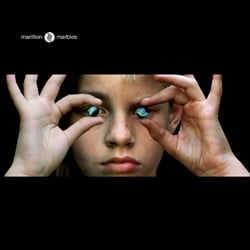
 Whilst browsing the site, I was surprised to see this LP hasn't been rated.


 Gilgamesh was formed at the peak of progressive rock era when ambitions met with sophisticated and maturity.
That characteristics matches their music well.
Though labeled as Cantebury band (and they definitely match that comparison when looking at the line-up), they
are actually closer to the jazz-rock/fusion area.
Music on that album is quite nuanced with proficient playing that is exploratory rather than rigorous, more
atmospheric than energetic. It is one of the less accessible "Canterbury" music which may be an advantage for
instrumental freaks and may put off folks looking for good compositions.
The first composition (over 10-minutes) is, in my opinion, the landmark of Gilgamesh, blending several advanced
motives to create an impressive instrumental suite.
Shorter pieces are less substantial but we still have two tracks well worth attention - number 5 and 7 (their names
are too long to write here ;-)). The 5th track evolves from a fine jazzy keyboard-guitar tandem into a "Hatfieldesque"
fiery upbeat piece.
The seventh track graces us with the female vocals again in the "Hatfield" way, but before that, I must again
highlight the excellent guitar leads supported by Rhodes. Really tight playing by all band members.
Gilgamesh was formed at the peak of progressive rock era when ambitions met with sophisticated and maturity.
That characteristics matches their music well.
Though labeled as Cantebury band (and they definitely match that comparison when looking at the line-up), they
are actually closer to the jazz-rock/fusion area.
Music on that album is quite nuanced with proficient playing that is exploratory rather than rigorous, more
atmospheric than energetic. It is one of the less accessible "Canterbury" music which may be an advantage for
instrumental freaks and may put off folks looking for good compositions.
The first composition (over 10-minutes) is, in my opinion, the landmark of Gilgamesh, blending several advanced
motives to create an impressive instrumental suite.
Shorter pieces are less substantial but we still have two tracks well worth attention - number 5 and 7 (their names
are too long to write here ;-)). The 5th track evolves from a fine jazzy keyboard-guitar tandem into a "Hatfieldesque"
fiery upbeat piece.
The seventh track graces us with the female vocals again in the "Hatfield" way, but before that, I must again
highlight the excellent guitar leads supported by Rhodes. Really tight playing by all band members.


 Posts
Posts


