Showing posts with label elp. Show all posts

06 May 2025: An Evening of Symphonic Prog (Modest Mussorgsky edition); Fire Ballet "Night on Bald Mountain"'; Emerson, Lake, and Palmer "Pictures at an Exhibition"

 Be sure to follow KMXT FreeForm Radio on Facebook and Bandcamp and Spotify.  

You can now listen to the livestream of the show through the KMXT app; it's available through the Mac App Store or Google Play. The stream is also available at www.kmxt.org

Please support FreeForm Radio and KMXT by going to www.KMXT.org and pledging your support.

The music you hear on tonight's show is available on the artists' Bandcamp pages and websites. (links below) 

We urge you to support the musicians you hear on FreeForm Radio.

Tonight I'll also be hosting Rural Electric right after the Island Messenger at  7 pm until 9 pm.

This week's Rural Electric spotlights the best of Canadian country music.

Tonight's FreeForm albums feature the music of Modest Mussorgsky.

Fireballet biography
Founded in North Jersey, USA in 1971 ( as "The Fireball Kids") - Disbanded in 1976

This is one of the gems from the USA progrock history. The band featured Jim Como (lead vocals, drums, percussion), Bryan Howe (Hammond - and pipe organ, celeste and vocals), Ryche Chlanda (electric - and acoustic guitars, electronic devices and vocals), Frak Petto (piano, electric piano, ARP 2600 synthesizer, Mellotron, electronic strings, Oberheim DS-2 digital sequencer and vocals) and Martyn Biling (bass, 12-string guitar, Moog Taurus bass pedals).

Their first album "Night on Bald Mountain" was released in '75 and produced by Ian McDonald (KING CRIMSON). It sounds like a very tasteful progrock stew with elements from GENESIS, GENTLE GIANT and YES. The very disappointing second LP ('76) is entitled "Two, two ... ", no surprise that it turned out to be their swansong.

The album debut-album "Night on Bald Mountain" from 1975 is a bit unknown beauty, other USA prog rock bands NETHERWORLD and LIFT got far more attention from the prog fans all over the world. The twelve compositions (including seven bonus tracks, "All Killers, No Fillers" would Greg Walker from Syn-Phonic say) contain alternating and captivating music with strong echoes from early GENESIS and also GENTLE GIANT and YES. But many twists and turns give the music an original approach, including exciting arrangements from classic composers (MUSSORGSKY and DEBUSSY). The singer sounds powerful and has a wide range, the 'vintage' keyboards are very lush with spectacular synthesizer solos and the guitar work has a beautiful, 24-carat symphonic tradition. Highlight on this splendid CD is the epic title track (almost 20 minutes): wonderful changes of climate, great breaks, impressive pipe organ (evoking "Close to the Edge" from YES) and beautiful HACKETT-like guitar work. Also worth mentioning is Ian McDonald's contribution to this album, he plays flute on two tracks and saxophone on two tracks, his sound is very distinctive. Highly recommended!

Review by loserboy
PROG REVIEWER
5 stars Superbly crafted 70's mellotron/moog laden progressive rock gem with great artistic expressionism and full instrumental interplay. "Night On Bald Mountain" was produced by KING CRIMSON's Ian McDonald who also contributes some sax on the album. Musicianship on this album is simply awesome with some of the most scrumptious interplay you have ever heard. Opening number 'Les Cathedrales' is absolutely in the same brilliance as early GENESIS with the most captivating and delicate of melodies. This five member band incorporate some wonderful musical instrumentation including xylophone, glockenspiel, chineese bell tree, gong, finger cymbals, tubular bells, triangle, hammond organ, pipe organ, celeste, mellotron, moog , Taurus pedals, and everyone's favourite... electronic devices. Vocals are quite well done with some great lyrics as well. "Night On Bald Mountain" contains 2 epic tracks and a couple of shorter but well pieced tracks. For those lucky enough to have snagged a copy of Setticlavio Record's (Italy) re-released CD pressing can also enjoy their second album as well... 7 extra bonus tracks from the album titled "Two Too" (1976)... although it is always nice to have this bonus material is ranks much lower IMHO than "Night On Bald Mountain" which is a great album and in my opinion an essential piece of Prog Land history !

Night on Bald Mountain (Russian: Ночь на лысой горе, romanized: Noch′ na lysoy gore), also known as Night on the Bare Mountain, is a series of compositions by Modest Mussorgsky (1839–1881). Inspired by Russian literary works and legend, Mussorgsky composed a "musical picture", St. John's Eve on Bald Mountain (Russian: Иванова ночь на лысой горе, romanized: Ivanova noch′ na lysoy gore) on the theme of a Witches' Sabbath occurring at Bald Mountain on St. John's Eve, which he completed on that very night, 23 June 1867. Together with Nikolai Rimsky-Korsakov's Sadko (1867), it is one of the first tone poems by a Russian composer.[1


Pictures at an Exhibition is a live album by English progressive rock band Emerson, Lake & Palmer, released in November 1971 on Island Records. It features the group's rock adaptation of Pictures at an Exhibition, the piano suite by Modest Mussorgsky, performed at Newcastle City Hall on 26 March 1971.

The band had performed the Mussorgsky piece since their live debut in August 1970, after keyboardist Keith Emerson had attended an orchestral performance of the piece several years before and pitched the idea to guitarist and frontman Greg Lake and drummer Carl Palmer, who agreed to adapt it while contributing sections to the arrangement. The album concludes with the concert's encore, "Nut Rocker", a rock adaptation of The Nutcracker originally arranged by Kim Fowley and recorded by B. Bumble and the Stingers in 1962.

Pictures at an Exhibition went to number 3 on the UK Albums Chart and number 10 on the US Billboard 200. In 2001, it was reissued as a remastered edition that included a studio version of the piece recorded in 1993.

Arrangement

The band's arrangement of the suite uses only four of the ten parts in Mussorgsky's suite, along with the linking "Promenade" sections. The suite was performed live as one continuous piece, with new, group-written sections linking Mussorgsky's original themes.

Note that Mussorgsky's original compositions are listed in bold:

  1. Promenade: Pipe organ solo by Emerson at the Harrison & Harrison pipe organ of the auditorium; followed by a drum roll
  2. The Gnome: Group instrumental adaptation featuring fuzz bass, Hammond and Moog
  3. Promenade: Hammond organ and soft vocal, followed by a short synthesizer solo
  4. The Sage: A new picture drawn by Lake solely on acoustic guitar in the mood of a medieval minnesang, it works as sort of romantic prelude to "The Old Castle"
  5. The Old Castle: Begins with Emerson squeezing out whoops and whistles from the Moog's ribbon controller, followed by an accelerated adaptation of the original theme played by the full band
  6. Blues Variation: a Hammond-driven twelve-bar blues credited to the group, borrowing themes from "The Old Castle" and those that Emerson had previously performed with The Nice on their version of "My Back Pages"
  7. Promenade: Full group instrumental version of the primary theme
  8. The Hut of Baba Yaga: Full group instrumental adaptation
  9. The Curse of Baba Yaga: Lake adapts a section of Mussorgsky's music on fuzz/wah-wah bass, followed by a group-penned section with lyrics/vocal climaxing on a siren-like Moog solo
  10. The Hut of Baba Yaga: Full group reprise of the earlier "Hut" theme
  11. The Great Gates of Kiev: with lyrics/vocal added by the group and an extended climax featuring Emerson dragging his Hammond organ across the stage to produce feedback


Pictures at an Exhibition[a] is a piano suite in ten movements, plus a recurring and varied Promenade theme, written in 1874 by Russian composer Modest Mussorgsky. It is a musical depiction of a tour of an exhibition of works by architect and painter Viktor Hartmann put on at the Imperial Academy of Arts in Saint Petersburg, following his sudden death in the previous year. Each movement of the suite is based on an individual work, some of which are lost.

The composition has become a showpiece for virtuoso pianists, and became widely known from orchestrations and arrangements produced by other composers and contemporary musicians, with Maurice Ravel's 1922 adaptation for orchestra being the most recorded and performed. The suite, particularly the final movement, "The Bogatyr Gates", is widely considered one of Mussorgsky's greatest works.

04 March 2025: Emerson, Lake, & Palmer "s/t"; Ian Boddy & Harald Grosskopf "Doppelganger". (DiN91)

Be sure to follow KMXT FreeForm Radio on Facebook and Bandcamp.  

You can now listen to the livestream of the show through the KMXT app; it's available through the Mac App Store or Google Play. The stream is also available at www.kmxt.org

Please support FreeForm Radio and KMXT by going to www.KMXT.org and pledging your support.

The music you hear on tonight's show is available on the artists' Bandcamp pages and websites. (links below) 

We urge you to support the musicians you hear on FreeForm Radio.


Emerson, Lake & Palmer is the debut studio album by English progressive rock band Emerson, Lake & Palmer. It was released in the United Kingdom by Island Records in November 1970, and in the United States by Cotillion Records in January 1971. After the group formed in the spring of 1970, they entered rehearsals and prepared material for an album which became a mix of original songs and rock arrangements of classical music. The album was recorded at Advision Studios in July 1970, when the band had yet to perform live. Lead vocalist and bassist/guitarist Greg Lake produced it.

Upon release, the album went to No. 4 in the UK and No. 18 in the US.[2][3] Lake's song "Lucky Man" was released as a single in 1970 and helped the group achieve radio airplay; it peaked at No. 48 in the US. After a warm-up gig in Plymouth, the band performed songs from the album at their next, a spot at the 1970 Isle of Wight Festival which propelled them to widespread fame. In 2012, Steven Wilson prepared a special edition that features a new stereo and 5.1 surround sound mixes, plus bonus material.

Songs

Side one

"The Barbarian" is an arrangement of Béla Bartók's 1911 piano piece Allegro Barbaro, but original early pressings of the album credit the track to the group.[4][5] Bartók's widow contacted the band shortly after the album's release to request that the credit be corrected.[6]

"Take a Pebble" was penned by Lake, with the primary sections being a jazz keyboard arrangement by Emerson, and the middle section being a folk guitar work by Lake with water-like percussion effects from Palmer, plus bits of clapping and whistling.

"Knife-Edge" is based on the first movement of Leoš Janáček's orchestral piece Sinfonietta (1926),[5] with an instrumental middle section that includes an extended quotation from the Allemande of Johann Sebastian Bach's first French Suite No. 1 in D minor, BWV 812, but played on an organ rather than a clavichord or piano. Lake provided the lyrics, with assistance from Richard Fraser, a member of the group's road crew.

Side two

"The Three Fates" is a three-part "pseudo suite",[4] written and predominantly performed by Emerson. Each section is named after the three sisters of Greek mythology known as the Three Fates, or Moirai: Clotho, Lachesis, and Atropos. The "Clotho" movement was recorded at the Royal Festival Hall in London, with Emerson playing the venue's pipe organ. "Lachesis" is a short piano piece that features baroque and jazz influences, ending in grand, sweeping arpeggios. "Atropos" sees Emerson play a piano vamp in 7/8 with percussion accompaniment from Palmer.[7] An improvisational section is played on top, which transforms into a polymetrically played repeated sequence in 4/4 time. The resonance of the final chords is curtailed by the sound of explosions.

Palmer's solo spot "Tank" was composed with Emerson. The first section features Emerson on clavinet and piano, Lake on bass and Palmer on drums. The middle section is a drum solo. The final section features Emerson on clavinet and Moog synthesizer.

"Lucky Man" is a song written by Lake on the acoustic guitar when he was 12. It features an improvised Moog synthesizer solo by Emerson at the end, liberally using portamento.[8][9][10] A 5.1 surround sound mix of the song was released on a 2000 reissue of Brain Salad Surgery

Artwork

The album's cover is a painting by British artist Nic Dartnell. Although it has been said to be originally intended for the American group Spirit, and that the bald-headed man on the left of the cover is Spirit's drummer, Ed Cassidy, the artist denied this in an interview with Mike Goldstein of RockPoP:

"I'd like to take a moment and dispel a rumor that, according to Wikipedia, the image is somehow linked to the LA band Spirit. The fact is that, at the time I painted the ELP 'Bird', I also painted a portrait of Spirit which I sent to them in LA. A very similar bird was featured in the corner of that painting. I got a message from Spirit to say that if they had received their painting in time they would have put it on the back of Twelve Dreams of Dr. Sardonicus. I became friendly with Randy California over the years and I took the photograph that is on his 1982 12" EP All Along the Watchtower. The bald image in "Bird" has no connection to Ed Cassidy of Spirit and doesn't look anything like him. Ed still has the Spirit portrait – so I'm told."

— Nic Dartnell, [11]

Critical reception

Professional ratings
Review scores
SourceRating
AllMusic[12]
Christgau's Record GuideC[13]
Rolling Stone(favorable)[14]
Classic Rock RevisitedA[15]
The Daily VaultA−[16]
MusicHound Rock[17]
Sound & Vision[18]

Upon release, Loyd Grossmas at Rolling Stone enthused "this is such a good album it is best heard as a whole".[14] Reviewing in Christgau's Record Guide: Rock Albums of the Seventies (1981), Robert Christgau said: "This opens with 'The Barbarian,' a keyboard showpiece (not to slight all the flailing and booming underneath) replete with the shifts of tempo, time, key, and dynamics beloved of these bozos. Does the title mean they see themselves as rock and roll Huns sacking nineteenth-century 'classical' tradition? Or do they think they're like Verdi portraying Ethiopians in Aida? From such confusions flow music as clunky as these heavy-handed semi-improvisations and would-be tone poems."[13]

In a retrospective review, Bruce Eder at AllMusic claimed it "showcased the group at its least pretentious and most musicianly"[12] while The Daily Vault hailed it as a "dizzying mix of keyboard solos, incredible bass work, excellent vocals and powerful drums".[16] Paul Stump's 1997 History of Progressive Rock commented of the album, "Still hailed by many as the band's best effort, it established the blueprint for a musical style which, for all the bullish puffing of the band's 'progressive' credentials, they would develop hardly at all." However, he found significant shortcomings with all of the individual songs, excepting only "Atropos", which he called the album's best track.[1


9]


Ian Boddy & Harald Grosskopf | Doppelgänger | DiN91
 

Release date 21st March 2025
Limited to 500 copies Digipak CD
Bar Code 5028423250913

Available this Friday, March 7 on BANDCAMP FRIDAY, when Bandcamp waives all seller fees.

Fostering musical collaborations has been a key motivational force for DiN label boss Ian Boddy since the inception of the imprint in 1999. He has also made no secret of his musical heritage and influences, especially the 1970’s German electronic music masters such as Tangerine Dream and particularly the late, great Klaus Schulze. So when, through a chance conversation with Harald Grosskopf at a music festival in the Netherlands, the opportunity arose for them to collaborate together Boddy jumped at the chance.  Grosskopf has had an amazing career as a drummer working with many German music luminaries. Of special interest to Boddy is his work with Schulze on some of his finest mid-70’s albums and this connection forms an emotional bridge to that fervent, shared musical heritage. However Grosskopf is way more than just a percussionist and his classic Synthesist album showcases the other side to his music with his very personal use of melody and harmony.

Thus Boddy and Grosskopf combine forces in a stunning display of sequenced and groove based tracks that constitute the album Doppelgänger. The album flirts with the so called Berlin School of music but goes way beyond it’s metronomic straitjacket with Boddy serving up multi-patterns of shifting sequencer lines underpinned by Grosskopf’s mesmerising percussion grooves. There are ample examples of Boddy’s modular synth sound design on show, especially on tracks such as Boulevard Horizon and Dubnium. Elsewhere Grosskopf has a playful input on the track Livewire and indeed his keyboard playing are as much a part of this album as Boddy’s own. The album ends with the stunning title track with its grandiose chords and processional percussion.

Once again the DiN label forges into unknown sonic territory by serving up two unique musicians in collaboration creating a musical dialogue that is as inspiring as it is unexpected.

09 April 2024: Tone Science Module 9; The Royal Philharmonic Orchestra

  Be sure to follow KMXT FreeForm Radio on Facebook and Bandcamp.  

Please support FreeForm Radio and KMXT by going to KMXT.org and pledging your support.

The music you hear on tonight's show is available on the artists' Bandcamp pages and websites and Spotify. (links below) 

We urge you to support the musicians you hear on FreeForm Radio. 
 
 Find playlists for my shows on Spotify by searching "KMXT FreeForm Radio".
 

Tone Science sub-label, from DiN records, continues to explore the world of modular synth music.

Following the success and critical acclaim of the first eight Tone Science compilation albums, 
DiN label boss Ian Boddy has collated another nine tracks from musicians of varying backgrounds working in the realms of modular synthesis.

As the Tone Science journey continues it never ceases to amaze just how varied and individualistic each musicians work can be. Whilst the hardware is technologically based each artist teases out a reflection of their own musical personality.

This volume kicks off with two pointillistic compositions from Loula Yorke and State Azure with intertwining sequencer patterns flowing and coiling around to create ever changing soundscapes.

After this energetic start the next pair of tracks from Theda Electronic Music and Swansither enter calmer, ambient territory where careful sculpting of synthesiser voices creates room for expression and atmosphere.

The mid-point of the album sees Sulk Rooms take us into darker territory with a drone based piece that slowly climbs from the undergrowth like some great creature arising from its slumber.

The next three tracks from Tomorrow The Cure, JacqNoise and Alex Ball are rhythmically based and showcase just how different the feel and energy of music made with modular synths can be with pure tones, deep bass and transient blips respectively.

Finally Michael J. York leads us gently into the distance with a beautiful, shimmering cocoon of blissful sound to close out the album.

“Tone Science Module No.9 Theories and Conjectures” continues the journey down the rabbit hole of possibilities and sound worlds inhabited by artists and musicians working in this ever fascinating and varied musical field.
 

credits

releases April 19, 2024

1) Loula Yorke - Eala - 7:44
If you’ve come to save me, you’re wasting your time. Your freedom is bound up with mine.
loulayorke.com

2) State Azure - Scanner - 8:23
The lone traveller glides through the void, the scanner revealing secrets in the darkness. Guided by stars, they explore the cosmic sea, uncovering its mysteries.
youtube.com/@stateazure

3) Theda Electronic Music - Per-Bast - 7:24
An exercise in semi-aleatoric machine/human collaboration, using various constrained semi-random elements to control pitch, timbre and timing, further elements added by myself to accentuate the most pleasing moments that the synthesizers brought up.
soundcloud.com/theda-electronic-music

4) Swanswither - Muad’Dib - 7:04
5 a.m on a rooftop in Marrakech. The mysterious ebb and flow of several competing mosques calling to prayer. Recreated with my Make Noise Shared System.
swansither.bandcamp.com

5) Sulk Rooms - Grasping The Eye Of The Duck - 6:43
A piece of music that came from sheer chance jamming with my Bass VI guitar and Strega. I love venturing more and more into sludge territory these days with pulsing atmospherics.
instagram.com/thomasragsmusic

6) Tomorrow The Cure - Minimum - 6:18
Based around a 4-note melody using one VCO and a self-oscillating VCF. Performed and recorded entirely in Eurorack, all sounds are AJH Synth modules with modular FX.
tomorrowthecure.bandcamp.com

7) JacqNoise - Lono - 5:51
In the realm of sounds, errors can manifest as dissonance. The noises introduce characters like embodied structures and sequences. Lono is the Hawaiian God of Music and Peace. May his spirit be alive in the sounds, providing a base of peace we so all need in the world today. 
jacqnoise.cargo.site

8) Alex Ball - Adaption - 6:23
Polyrhythmic synthesizer sequences dancing in spring reverb, tape echo and modern glitches with soft analogue percussion and gentle voices in support.
alexballmusic.com

9) Michael J. York - And They Shall Have Stars - 6:20
This vignette was created quite spontaneously one clear night under the gaze of Glastonbury Tor using a Fenix II, a Moog and a reverb pedal.
thewitchingtale.bandcamp.com

license

all rights reserved
alex ball ambient em electronic electronic music electronica jacqnoise loula yorke michael j. york state azure sulk rooms swansither theda tomorrow the cure modular synth Sunderland


Review by David Randall

Classical rock is an often maligned genre, when done well it can bring new dimension to time-worn classics, done badly and it can fail to enhance the originals.

The Royal Philharmonic Orchestra have always done it better than most, and in recent times they’ve orchestrated Queen and Fleetwood Mac and – even further back – the music of Pink Floyd and – where it all started – Deep Purple in 1969.  I suppose it all comes down to the arrangements and the interpretation.

Having well known rock musicians as “soloists” (and in one example the original artist) stops any over-egging or extravagance and a core rhythm section including the Cottle brothers – Laurence and Richard – at least keeps the foundations rocking.  They are particularly impressive on ‘Watcher Of The Skies’ and it’s perhaps a little surprising that Steve Hackett is conspicuous by his absence.

Amongst the guests,  Ian Bairnson stands in for David Gilmour on ‘Comfortably Numb’ whilst one-time mediaeval rocker Richard Harvey (Gryphon) excels on ‘Thick As A Brick’.

The heaviest almost big band diversion is King Crimson’s ‘21st Century Schizoid Man’ which features Gavin Harrison and the fusion guitar of Guthrie Govan.  Iron Maiden’s Adrian Smith is featured on Rush’s ‘Red Barchetta’.

Elsewhere, as you might expect, this is a production job of widescreen proportions, especially evidenced on ‘Think Of Me With Kindness’ the lesser-known Gentle Giant song (from ‘Octopus’ in 1972) that now comes across as Vaughan Williams mixed with Big Country (the movie theme not the band).  Yes’ ‘Roundabout’ (featuring the late Jimmy Greenspoon on keyboards) sounds like it could have been a Bond theme.  Of course this treatment may not appeal to all tastes but it is very well done.

Hopefully this will be the start of a series (there’s also a “More Symphonic Rock” album released in May although not on the same label).  It demonstrates that in amongst prog rock there was always a damn good classical musician trying to get out, and an even more durable tune.  ****


02 April 2024: Emerson, Lake, & Palmer; Seabuckthorn; Pete Swinton

 Be sure to follow KMXT FreeForm Radio on Facebook and Bandcamp.  

Please support FreeForm Radio and KMXT by going to KMXT.org and pledging your support.

The music you hear on tonight's show is available on the artists' Bandcamp pages and websites and Spotify. (links below) 

We urge you to support the musicians you hear on FreeForm Radio. 
 
 Find playlists for my shows on Spotify by searching "KMXT FreeForm Radio".
 

The First Tuesday of every month we spotlight a classic progressive rock album from the 1970s in the first half of the show.

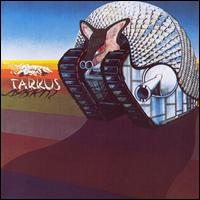
This week we are featuring Emerson, Lake, & Palmer's classic 1971 release: Tarkus


Tarkus is the second studio album by English progressive rock band Emerson, Lake & Palmer, released on 14 June 1971 on Island Records. Following their debut tour across Europe during the second half of 1970, the group paused touring commitments in January 1971 to record a new album at Advision Studios in London. Greg Lake produced the album with Eddy Offord as engineer.

Side one features the 20-minute conceptual title track written by keyboardist Keith Emerson, the opening of which created friction between Lake and himself that almost split the group, but Lake agreed to pursue it and contributed musical ideas for it and wrote the lyrics. Side two features a collection of unrelated tracks of different styles. The artwork was designed by William Neal.

Tarkus went to number one on the UK Albums Chart, becoming the only album by the band to do so. It was a top 10 album worldwide, including the US, where it peaked at number 9. The album reached gold certification in the UK and US, the latter for 500,000 copies sold. It has been reissued and remastered several times, including a new stereo and 5.1 surround sound edition by Steven Wilson, with bonus and previously unreleased tracks from the original sessions, released in 2012. 

You will be hearing the 2012 Steven Wilson stereo mix tonight.

Read more about Tarkus here.

 Seabuckthorn - this warm, this late

So pleased to announce that next to give us their interpretation of quiet details is the supremely talented multi-instrumentalist, Andy Cartwright, here as his widely-loved alias, Seabuckthorn.

Exploring all manner of experimental techniques and genres, Seabuckthorn has a string of wonderful releases, on top-tier labels such as LAAPS/IIKKI, Eilean Rec, Fluid Audio, Lost Tribe Sound and more.
This, combined with regular international live shows and music for film, art shows and other media, makes him stand out as one of the most intriguing and forward-thinking artists of recent years.

With ‘this warm, this late’ he’s taken all this experience and deep understanding of music to create something truly stunning.
Working with double bassist and trombonist Phil Cassel, he’s crafted an album that stands unique in the quiet details series - extended guitar techniques and incredible melodic intuition leading to twelve tracks that traverse emotions in the most beautiful way.

The playing is virtuosic while retaining so much soul and feeling it’s both a breathtaking and hypnotic listen - delicate tones mix with sounds that are pushed to the edge of gorgeous harmonic distortion, guitars mixed with Andy’s ukulele, banjo, clarinet and field recordings - affected and processed into what could well be felt as transcendental experience.
Phil’s double bass and brass complements it perfectly - two musicians clearly in lock-step with each other - responding and improvising sections to become something that’s far more than the sum of its parts.
Deep drones and distant, hard to recognise shadows appear and dissolve as we move through the album - the first time I heard this I was immediately in love - hope you enjoy it as much as I do.

The artwork was made as always influenced by the music and idea behind the album - this time originating from a picture Andy sent over, which was then captured with analogue photography and processed here at quiet details studios. I dearly love this one - a wonderful juxtaposition to some of our other releases.

A very special album in every regard - huge thanks to Seabuckthorn for everything.

As usual, the album is presented on the physical edition, a custom 6-panel digipack with a separate fine art print too.
The CD also has a special long-form continuous mix of the album, representing the music in its purest form.

As a label we support the incredible Cancer Centre - Milton Keynes University Hospital and all their wonderful NHS staff.
 

Our thanks to Alex at quietdetails for providing us with a copy of this excellent release.


Recorded and mixed at Studio Kaktus, Jawa Barat, Indonesia 2024
Produced and mastered by Pete Swinton 2024
Photo by Yani Vandenbranden on Unsplash
Tinting and graphic design by Pete Swinton
Copyright 2024 Pete Swinton
All Rights Reserved Pete Swinton 2024 
 
Pete Swinton is a half Hungarian, half Polish man born in London, UK in 1961. Since 2015 he has lived in Jawa, Indonesia. He began playing guitar in the '70s. He started playing keyboards in the 2000s. He makes Ambient and Experimental music. And a cross between the 2 which he calls Insanbient music. He likes cats and motorbikes. 

4-4-2music.com

credits

released March 30, 2024

license

all rights reserved
experimental ambient deep listening electronic liminal soundscape Indonesia

22 March 2022: McDonald and Giles; Beggars Opera

KMXT is live broadcasting the Kodiak City Council work session which may run past 9 pm.  

The show will begin as soon as the work session ends.

Be sure to follow KMXT FreeForm Radio on Facebook and Bandcamp.  

Please support FreeForm Radio and KMXT by going to KMXT.org and pledging your support.

The music you hear on tonight's show is available on the artists' Bandcamp pages and websites (links below).    

We urge you to support the musicians you hear on FreeForm Radio.

McDonald and Giles is an album released by British musicians Ian McDonald and Michael Giles in 1970. The album was first issued on Island Records (ILPS 9126) in the UK and Cotillion Records (SD 9042), a division of Atlantic Records, in the US. (The album was released on Atlantic itself in several countries.) The album was recorded at Island Studios between May and July 1970. Although McDonald and Giles remains popular among King Crimson fans,[2] its commercial success was limited. The duo did not record a second album. 

Ian McDonald and Michael Giles were members of the original King Crimson line-up, and were featured performers on the band's debut album, In the Court of the Crimson King (1969). Both left the group at the end of its first United States tour in 1969, although Giles appeared on the second King Crimson album, In the Wake of Poseidon (1970), as a session musician. Two other King Crimson members also worked on McDonald and Giles: Peter Giles and Peter Sinfield.

The music on McDonald and Giles contains many of the pastoral and musically complex elements of King Crimson, while generally avoiding that band's darker tendencies. The song "Flight of the Ibis" has a melody and rhythm similar to King Crimson's "Cadence and Cascade," with different lyrics. The album contains a guest appearance by Steve Winwood, playing organ and piano on "Turnham Green". Winwood's group Traffic were working on John Barleycorn Must Die at Island Studios at the same time.

Michael Giles' drum solo in "Tomorrow's People – The Children of Today" has been sampled by a number of rap and hip-hop artists, most notably the Beastie Boys, on the track "Body Movin'" from the album Hello Nasty


 Beggars Opera was a Scottish progressive rock band from Glasgow, Scotland, formed in 1969 by guitarist Ricky Gardiner, vocalist Martin Griffiths, and bassist Marshall Erskine. The line-up consisted of Ricky Gardiner (guitar/vocals) (born 31 August 1948, Edinburgh, Scotland), Alan Park (keyboards) (born 10 May 1951, Glasgow, Scotland), Martin Griffiths (vocals) (born 8 October 1949, Newcastle upon Tyne) Marshall Erskine (bass/flute) and Raymond Wilson (drums). After working together building parts of the M40 Motorway near Beaconsfield, the lads moved back to Glasgow to look for an organist and drummer and found Alan Park and Ray Wilson. After an intensive time in rehearsal they took up residency at Burns Howff club/pub in West Regent Street in the center of Glasgow. Tours of Europe followed and the band found success in Germany, appearing on German TV's legendary Beat-Club, then at the First British Rock Meeting in Speyer in September 1971.

 From ALLMUSIC:

Act One Review

by Dave Thompson

Defiantly cast in the shadow of the then-recently defunct Nice, but brimming with their own ideas and imagination, Beggars Opera emerged in 1970 with a debut album that still stands as one of the crown jewels of prog. Five tracks long in its original (Vertigo label) form, but bolstered with both sides of their debut single for the Repertoire CD, Act One is an audacious blending of hard riffs, Heep-esque vocals, and crazed organ and Mellotron, and it's those latter elements that most distinctly flavor the album. The opening "Poet and Peasant," based on Franz Von Suppe's overture of the same name, sets the scene with its multiple shifts in tone and tempo; the same composer's "Light Cavalry" then closes the disc in similarly dramatic style. "Raymond's Road" is the climax, however. An 11-minute orgy of sound that rides a "Rondo" rhythm, then sets a slew of classical snatches dancing above it. It's a breathtaking effort, a cross between a mad medley and a free festival freakout that so firmly establishes Beggars Opera's credentials that it seems impossible to believe that things never got any better for them.


22 March 2016: Keith Emerson Tribute & Canvas Solaris

So much has been written about Keith Emerson that there is little that I can add.  I saw ELP in concert in the mid-70s and he was phenomenal, combining virtuosity with showmanship.  The first half of tonight's show will be cuts selected to showcase his keyboard wizardry.  May he R.I.P.
Playlist:
Tarkus
Take a Pebble
Karn Evil 9: 2nd Impressio
Medley:  Fanfare for the Common Man/America/Rondo
Abaddon's Bolero


Canvas Solaris were an American progressive metal band from Statesboro, Georgia, formed in 1999, and disbanded in 2011.[1] Though they first played with vocals, they moved on to instrumental, drawing influence from bands as diverse as Cynic, Rush, King Crimson, Death, Watchtower, and The Mars Volta.[2]


27 November 2012: Emerson, Lake, and Palmer 40th Anniversary Releases

New remixes by (who else) Mr. Steven Wilson.

Emerson, Lake & Palmer, also known as ELP, are a sporadically active English progressive rock supergroup.[1] They found success in the 1970s and have sold over forty million albums[2] and headlined large stadium concerts. The band consists of Keith Emerson (keyboards), Greg Lake (bass guitar, vocals, guitar) and Carl Palmer (drums, percussion). They are one of the most popular[3] and commercially successful progressive rock bands.
The ELP sound is dominated by the Hammond organ and Moog synthesiser of the flamboyant Emerson. The band's compositions are heavily influenced by classical music in addition to jazz and – at least in their early years – hard rock. Many of their pieces are arrangements of, or contain quotations from, classical music, and they can be said to fit into the sub-genre of symphonic rock. However, Lake ensured that their albums contained a regular stream of simple, accessible acoustic ballads, many of which received heavy radio airplay.[4] Lake, besides providing vocals, bass guitar, electric guitar and lyrics, also produced the band's first five albums.

Their debut album was simply titled Emerson, Lake & Palmer, and was released in late 1970. It was mostly a collection of solo pieces. Keith Emerson contributed a series of treatments of classical pieces (such as Bach's French Suite No. 1 in D minor, BWV 812 and Bartok's 'Allegro Barbaro'), Carl Palmer provided a drum solo (called "Tank") and Greg Lake provided two ballads, beginning with the folky, extended work "Take a Pebble". It was the ballad, "Lucky Man", which was a song Lake wrote when he had his first guitar at the age of 12,[18] that brought the band to prominence. It received heavy radio play in the UK and Europe, and also became a surprise hit in America.[19] The commercial success of "Lucky Man", combined with a strong performance at the Isle of Wight festival (released on CD in 1997 as Live at the Isle of Wight Festival 1970), brought ELP rapidly to prominence.
Tarkus, released in 1971, was their first successful concept album, described as a story about "reverse evolution". Combining a side-long song with an assortment of hard rock songs, an instrumental and even some comic songs, it was quickly cited as landmark work in progressive rock. The epic "Tarkus", recorded in just 4 days, is a seven-part rock suite which incorporates a number of complex time signatures. The breadth and complexity of the music combined with the series of William Neal paintings incorporated into the sleeve art helped to cement ELP's reputation as being on the forefront of progressive rock music.