Showing posts with label dark ambient. Show all posts

12 August 2025: Marsupilami "Marsupilami"; Brad Rose "A Life We Once Lived". Quiet Details 37; Pete Swinton "Light Green, Vol. 2"

Be sure to follow KMXT FreeForm Radio on Facebook and Bandcamp and Spotify.  

You can now listen to the livestream of the show through the KMXT app; it's available through the Mac App Store or Google Play. The stream is also available at www.kmxt.org

Please support FreeForm Radio and KMXT by going to www.KMXT.org and pledging your support.

The music you hear on tonight's show is available on the artists' Bandcamp pages and websites. (links below) 

We urge you to support the musicians you hear on FreeForm Radio. 

 I'll also be hosting Rural Electric right after the Island Messenger at  7 pm until 9 pm


Marsupilami were an English progressive rock band active in the early 1970s. Their name was taken from a famous Belgian comics character created by Belgian artist André Franquin.[1] In 1969, the band toured with Deep Purple, and played at the opening of the Isle of Wight Festival when King Crimson withdrew. They released two albums, Marsupilami (1970) and Arena (1971), on Transatlantic Records.[2][3] The albums were reissued on Cherry Red Records in 2007. The band briefly reunited for gigs in 2011.

Personnel

  • Mike Fouracre – Drums
  • Fred Hasson – Vocals, harmonica, words and music
  • Leary Hasson – Keyboards and music
  • Richard Lathom Hicks – Bass
  • Dave Laverock – Guitar, vocals, words and music
  • Jessica Stanley Clarke – Flute and vocals
  • Peter Bardens – Percussion and producer of Arena
  • Mandi Riedelbauch – Woodwinds on 'Arena'
  • Bob West – Vocals and words on 'Arena'
  • Paul Dunmall – Tenor and soprano saxes and flute

Discography

  • Marsupilami (Transatlantic TRA 213) 1970[4]
  • Arena (Transatlantic TRA 230) 1971[5]
  • In the beginning

    The band Marsupliami borrowed its name from the Belgian cartoonist André Franquin who created this comic character in 1952.   Marsupilami was a cross between a monkey and a cat, yellow with black spots; cute, resourceful and anti-authority.   Perhaps not an obvious choice, but the progenitors of the group, the Hasson brothers Fred (Vocals, harmonica, bongos) and Leary (Organ/piano), with their Anglo-French upbringing, had grown up with this comic character. 

    The idea was not to have a written name, and to use a drawing of the ‘animal’ to identify the group, rather than the name in letters (long time before Prince thought of Symbol) but when Transatlantic Record boss, Nat Joseph, wrote to seek permission, he neglected to mention this and clearance was given for the name only.  At that point a name change was suggested, but Nat Joseph said the name was cool and so it remained.   

    The idea for Marsupilami began in 1968 following a tour of Southern Spain, organised by Leary’s school R&B band, ‘Levitation.’  At the last minute Fred, was drafted in as a replacement for the absent lead singer, to sing standard Soul and R&B numbers. Returning to the UK the band secured gigs at the County Hotel Ballroom in its home town of Taunton (Somerset), backing both The Crazy World of Arthur Brown and Joe Cocker Band, , and who they shared a pint with in a nearby pub before the gig.  After these, Fred and Leary were completely smitten with playing live gigs but none of the other members of Levitation could make the commitment.  

    The band reformed going through numerous iterations, including a short period when a bassoon player (Johnno Packer) was featured. The eventual line up for the often called ‘eponymous first album’ was recruited from local bands.  The rhythm section of Mike Fouracre (drums) and Ricky Hicks (bass guitar) came from local blues outfit ‘Justin’s Timepiece’ and Dave Laverock (guitar) came from a semi-pro band, ‘The Sabres.’  Leary’s flute playing, art student girlfriend, Jessica Stanley Clarke (now Jekka McVicar, Britain’s foremost organic herb grower) completed the line up.  

    In a short time, most of the members of the band were living in a farmhouse with a hay barn serving as an ‘open all hours’ rehearsal studio.     Musical tastes were eclectic: Jazz, Classical, Rock and Folk records littered the place: John Coltrane, Pharoah Sanders,, Miles Davis, McCoy Tyner, Messiaen, Ravel, Debussy,  Stravinsky, Fairport Convention, Soft Machine, and Frank Zappa – (in particular Absolutely Free and ‘We’re only in it for the money’) and long sessions late into the nights were spent listening to and dissecting the music. Under these influences the music of Marsupilami soon evolved from R&B and Blues cover versions to a very particular brand of what became known as ‘progressive rock’ ; the synthesis of musical influences was the result of a lot of careful listening, inspired writing, hours of relentless practicing and some respected musicianship.  The material was eclectic and not easy with frequent rhythm changes and jazz-oriented chords. The  band never wrote the music down, all the tracks were played from memory.

    What Marsupilami needed more than anything else was a recording contract. They entered the Melody Maker ‘Find a band competition’, and a discussion about this was overheard, in the ‘Full Moon’ pub in Taunton’s High Street, by an eccentric looking barefooted and bearded guy called Julian Palmer–Hill.   ‘George’, as he became known by band members, was older and wiser, had rejected an army career and after hearing the band, proposed to be its manager and get the band the recognition he believed it deserved.   George hitch-hiked to London in his bare feet, and soon got results.

    In September 1969, Marsupilami signed with Transatlantic Records, an independent label, that the band identified with, and went into the studio soon after. [Transatlantic wanted to diversify into rock music and also signed Stray, Camel , Jody Grind and others; Their stable was mainly folk artists such as Pentangle – John Renbourne and Bert Jansch,  John Fahey, the The Humblebums (Billy Connelly and Jerry Rafferty), and also published a catalogue of stuff too weird, blasphemous,  or just too far out for most labels to take on such as  John Cage, and Frank Zappa’s ‘Uncle Meat’.] 

    Marsupilami – 1st Album

    “Marsupilami” the first album (Transatlantic TRA 213) was recorded in 1969 at the Sound Techniques Recording Studios, just off London’s King’s Road, and released in April 1970.  The studio, had been converted from an old dairy, and was just being fitted out with some new gizmo’s called Dolby’s!, when the band arrived. It is famous for the roster of artists recorded there by Joe Boyd: Nick Drake, Incredible String Band and Fairport Convention – the engineer was John Wood,  leave this out but the band got the feeling that their kind of music was not understood. 

    All 5 tracks were done in a handful of takes, virtually live. 

    The music is distinctive; complex and hardly emulated. The band did not want to create catchy tunes that finished off the same way they started – the tracks represented journeys into the mystical and subconscious  places of the mind, with changes of mood, and underpinned by strong and sublime melodies, time sequence changes, stylistic shifts and ruptures of mood following one another: passages move from light folky or jazzy ensembles, to  hard driving guitar and organ rock pumped up by the rhythm section, to slow ethereal dream sequences featuring flute, organ and chanting vocals.   The content of the album can only be described as apocalyptic, but hopeful for a better world.

    Facilis Descensus Averni, is the subject of one of the first music videos made by Jay Myrdal, who accompanied Pete Smith to do a photo shoot for the first album. https://www.youtube.com/watch?v=n2-Qti7H42U

    and ‘The eagle chased the dove to its ruin’ contain some especially gloomy lyrics to accompany the affecting? guitar. The instrumental on the album,  Ab Initio Ad Finem is a musical interpretation of an Old Testament style sermon, recounting the fall of man in the Garden of Eden, discovering new love  spoilt by waring global culture leading to nuclear holocaust written by Leary – part of the track was used by Stuart Henry DJ on Radio One, as an introduction to his show.

    Born to be Free is often cited as the best music produced by Marsupilami: with a strong melody, it features  many tempo and mood changes, and in the last vocal section a poem written by Fred when he was 16, invoking feelings provoked by the nuclear arms build up. Track 1, Dorian Deep with its slow build up and thumping rock ending, was always a good warm up at the beginning of a gig.

    ‘The eagle chased the dove to its ruin’ contain some especially gloomy lyrics to accompany the affecting guitar. The instrumental on the album,  Ab Initio Ad Finem is a musical interpretation of an Old Testament style sermon, recounting the fall of man in the Garden of Eden, discovering new love  spoilt by waring global culture leading to nuclear holocaust written by Leary – part of the track was used by Stuart Henry DJ on Radio One, as an introduction to his show.

    Born to be Free is often cited as the best music produced by Marsupilami: with a strong melody, it features  many tempo and mood changes, and in the last vocal section a poem written by Fred when he was 16, invoking feelings provoked by the nuclear arms build up. Track 1, Dorian Deep with its slow build up and thumping rock ending, was always a good warm up at the beginning of a gig.

                                                 A Life We Once Lived - Brad Rose
     

    Credits:
    Music by Brad Rose
    Mastered by Alex at quiet details studios
    Artwork by quiet details in collaboration with Brad Rose
    Design by quiet details
    © quiet details 2025 all rights reserved

    Very happy to announce that next in the quiet details series is the wildly creative and prolific multi-disciplinary artist and music writer, Brad Rose.

    Responsible for a vast archive of wonderful music projects across numerous aliases, released on his own Jewel Garden and labels such as the outstanding Room40 - his work covers a huge amount of ground and is a world all to itself.

    Alongside this, he’s active in the world of visual arts, installation, design, writing - and of course one of his most well-known projects, the incredible long-running platform for experimental music and art, Foxy Digitalis, an essential resource for independent journalism.

    A Life We Once Lived is an album of deep meaning and atmospheric beauty - born out of the subconscious making sense of the maze of life, and in the process making something of incredible scope.

    This is an album full of emotion - starting out with reflective melodics that bloom into a vast world of competitive bliss, Brad’s highly nuanced musical sensibilities take us on a trip though feelings we can all somehow relate to - his sincerity coming to the fore throughout.

    Each track turns a new corner and leads you to a unique place - the highly-refined harmonic structures matched with exquisite textural expansions. This is an artist pouring their heart and soul into their art form with spellbinding effect.

    Masterful use of synthesisers and an array of acoustic sound sources serve to create a world of singular and stunning abstraction. 
     
    As Brad says:

    There are landscapes we never walk but still carry. Lives that linger just outside memory’s reach, shaping how we move through the world without ever fully revealing themselves.

    A Life We Once Lived is an album shaped by those fragments—traces of what was almost real, or perhaps only imagined. It emerged from stillness, from the quiet textures and small details that form when thought slows and sound begins to take its place. Each piece invites a kind of soft attention. There is no resolution here, no fixed meaning. Just motion, breath, and tone, held gently enough to shift and transform.

    This is a record of almosts. Almost-places. Almost-memories. Almost-love. A Life We Once Lived gathers what’s left in the gaps: the hush between pulses, the glow that never quite fades. It leads quietly toward something larger, a dream not yet spoken aloud. This is not a story, but a signal from the margins of memory—a drift through internal weather, a gesture toward something still forming.

    For now, it offers a space to pause. To listen more closely. To feel what remains when everything else grows quiet.

    Huge thanks to Brad - a beautiful addition to the series.

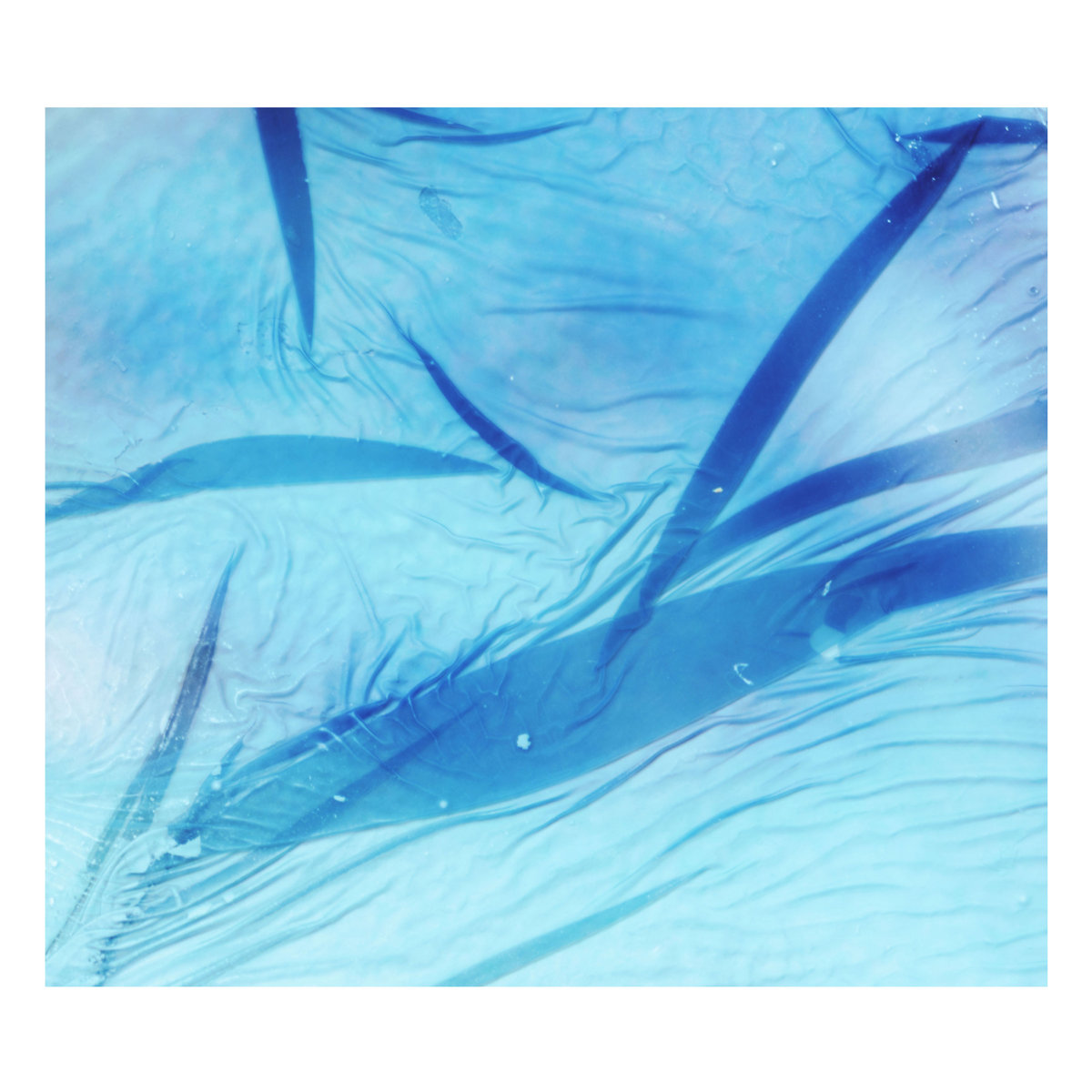
    The artwork was made as always influenced by the music and idea behind the album - originating from a photo from Brad which was then captured with analogue photography and processed here at quiet details studios.

    As usual, the album is presented on the physical edition, a custom six-panel digipack with a separate fine art print too.

    The CD also has a special long-form continuous mix of the album, created by the artist and representing the music in its purest form.
    thejewelgarden.bandcamp.com
    bradrose.bandcamp.com
     

    credits

    released July 23, 2025 


    Composed and performed by Pete Swinton
    Recorded and mixed at Studio Kaktus, Jawa Barat, Indonesia 2025
    Produced by Pete Swinton 2025
    Photo by Leo Chane on Unsplash
    Copyright 2025 Pete Swinton
    All Rights Reserved Pete Swinton 2025

    4-4-2music.com

    credits

    released July 12, 2025

    license

    all rights reserved

    tags

01 July 2025: Cressida “Asylum”; Jolanda Moletta and Karen Vogt "Sea-swallowed Wands" (Quiet Details 35); Sonologyst "Planetarium"

 Be sure to follow KMXT FreeForm Radio on Facebook and Bandcamp and Spotify.  

You can now listen to the livestream of the show through the KMXT app; it's available through the Mac App Store or Google Play. The stream is also available at www.kmxt.org

Please support FreeForm Radio and KMXT by going to www.KMXT.org and pledging your support.

The music you hear on tonight's show is available on the artists' Bandcamp pages and websites. (links below) 

We urge you to support the musicians you hear on FreeForm Radio. 

 I'll also be hosting Rural Electric right after the Island Messenger at  7 pm until 9 pm


Review by Steve Hegede
PROG REVIEWER
5 starsCRESSIDA's "Asylum" is a wonderful example of early British symphonic progressive rock. This 1971 release mixes catchy Paul McCartney-esque vocals with adventurously colorful instrumental passages. The new listener will probably notice singer Angus Cullen, whose voice comes close to McCartney's (not totally, but close). His vocal melodies are some of the finest I've heard in 70s English prog, and the subtle British storytelling style in the lyrics is amusing to listen to. The instrumental sections are equally good, and tend to be typical of early 70s prog rock. A fair amount of the music is driven by Hammond organ (dirty, and mellow), piano, bass, guitar, and drums; a small orchestral band also adds violins, and other orchestral instruments (cellos, trumpets, timpanis, etc) to the arrangements. Most of the first side of the LP seems to deal with the title of the album, "Asylum", and ends with a short filler track. That filler track features one of weirdest topics for a rock songs that I've heard. The second side of the LP features a couple more short filler tracks, and a high-quality epic. One of the short tracks, on Side B, turns a bit cheesy when the singer starts to yell "Survivor!!!!", in a 70s broadway sort of way, but after those few scary seconds the band returns to their classic sound. Overall, "Asylum" is a classic. 
 
                                            Jolanda Moletta and Karen Vogt:  Sea-swallowed Wands
 
From Alex at Quiet Details:
Delighted to say that up next with a beautiful and totally unique vocal interpretation of quiet details, is a collaboration by the wonderful pair of Jolanda Moletta and Karen Vogt, with Sea-swallowed Wands.

Two musicians with the ability to conjure transcendent sound-worlds through the use of their incredibly expressive vocal talents - together they’ve created something that takes all their individual creativity and makes a new and deeply ethereal universe.

Their previous release together on the excellent Longform Editions was a stunning introduction to this collaboration, Sea-swallowed Wands evolves from there with sublime effect.

Jolanda has a string of releases, self-released and on labels such as Whitelabelrecs and Ambientologist; and Karen is prolific, self-releasing and on labels such as Waxing Crescent, Wayside and Woodland, Coriolis Sound, Stella Frequencies, and more; plus her part as co-founder and vocalist of the dream-pop band Heligoland.

Sea-Swallowed Wands is a true meeting of kindred spirits - the connection here feels so profound, and this mutual creative understanding leads to the most enchanting musical articulation.

Layers of wordless choral beauty build up over time to create complex harmony, that’s at once both almost infinitely expansive and light as a feather.

The vocal orchestration is the mark of two musicians with highly-tuned intuition and elemental knowledge of symphonic structure.

Huge washes of emotive waves flow across the album - vocal-only material from improvised seaside sessions combined with an emphasis on “the little noises, clicks, breaths, crackles and physical movements” to fully embrace their interpretation of quiet details.

As they say:

Vocal explorations and improvisations made while heavily under the influence of the sea and the moon

Huge thanks to Jolanda and Karen - a very special addition to the series.

The artwork was made as always influenced by the music and idea behind the album - originating from a photo from Jolanda and Karen which was then captured with analogue photography and processed here at quiet details studios.

As usual, the album is presented on the physical edition, a custom six-panel digipack with a separate fine art print too.
The CD also has a special long-form continuous mix of the album, created by the artist and representing the music in its purest form.

Credits:

Music by Jolanda Moletta and Karen Vogt
Mastered by Alex at quiet details studios
Artwork by quiet details in collaboration with Jolanda Moletta and Karen Vogt
Design by quiet details
© quiet details 2025 all rights reserved
FreeForm Radio thanks Alex for a complimentary copy of this release.

Album - https://quietdetails.bandcamp.com/album/sea-swallowed-wands 
 
                                                                Sonologyst - Planetarium
 
NASA and other space agencies have captured "sounds" from the cosmos by recording non-audible signals like radio waves, electromagnetic waves, and plasma (ionized gas that’s prevalent in space) wave fluctuations. These are converted into audio frequencies we can hear using a process called data sonification. Spacecraft like Voyager, Cassini, and Juno are equipped with special instruments (e.g., plasma wave antennas, magnetometers, radio wave receivers) to detect radio waves, plasma waves, and electromagnetic fields.

These signals can provide data on phenomena like solar wind, planetary magnetospheres, and charged particles. Since many of these signals are outside our hearing range (radio waves might have frequencies far below the audible range (20 Hz to 20 kHz) or far above it, while magnetic and plasma waves are often in the range of milliHertz (mHz) to kilohertz (kHz), also outside human hearing.), they are converted using various techniques, including frequency scaling, sampling, filtering, and amplitude modulation. Some events, like plasma wave bursts, happen over long periods. Scientists may speed up the playback so we can hear the changes in a shorter time frame.

After conversion, the resulting sounds are often enhanced to make certain patterns, pitches, or changes in intensity more noticeable. This may involve amplifying certain frequencies or adding layers to represent multi-dimensional data. This processing helps bring out subtle differences that might otherwise be hard to discern.
 

credits

releases July 10, 2025 
FreeForm Radio thanks Raffaele Pezzella aka Sonologyst for a complimentary copy of this release.

REVIEWS

Lux Athena
A sublime album that will fascinate not only music lovers but also space lovers....
luxatenea.com/2025/06/24/sonologyst-planetarium-cold-spring-records-junio-2025-resena-review/

Ver Sacrum
Planetarium is a work outside of time, outside of the market, outside of orbit. It invites us to listen not to what man has invented, but to what the universe has always been saying. It is ambient, yet it sets the scene for the inaudible. It’s an album, but it behaves like a portal. It is silent, yet it reveals the noise of cosmic reality. A creation that speaks to sonic explorers, to those who contemplate the invisible, to those who know that listening can be an act of travel. With Planetarium, Sonologyst offers us not just a record, but a vantage point for listening to the infinite.....
www.versacrum.com/vs/2025/06/sonologyst-planetarium.html

Avant Music News
Space may be largely silent to the human ear, but when its electromagnetic fragments are made audible, they resonate with the same characteristics that drive Pezzella’s explorations.
avantmusicnews.com/2025/06/08/amn-reviews-sonologyst-planetarium-2025-cold-spring-records/

Weird Bones
What’s remarkable is how ‘Planetarium’ manages to be both deeply scientific and profoundly mystical. It’s a record that could sit comfortably in a physics lecture or a séance. There’s a reverence here, a sense that Pezzella isn’t just making music, he’s communing with something vast and unknowable...
weirdbones.co.uk/now-thats-what-i-call-entropy-sonologysts-planetarium/

Side Line
www.side-line.com/sonologyst-turns-nasa-space-probe-signals-into-an-ambient-2cd-album-preview-now

Vital Weekly
www.vitalweekly.net/number-1486

Die Zukunft
diezukunft.de/news/gadget/sonologyst-planetarium

Bizarre Chats
bizarrechats.blogspot.com/2025/06/sonologygt-planetarium-music-for-space.html


Data sonification files provided by NASA.
Analogue synthesizers, sampling, and processing by Sonologyst.
Recorded and mastered at Sonologyst studio from July to November 2024.
Published by Cold Spring Records (CSR359CD).
Graphic design by Abby Helasdottir.

Album teaser by Abby Helasdottir: youtu.be/fcZpHk9VZTo
 

13 May 2025: Curved Air "Phantasmagoria"; Garybaldi "Astrolabia"; "Solaris" Music Inspired by Andrei Tarkowsky's Movie

 Be sure to follow KMXT FreeForm Radio on Facebook and Bandcamp and Spotify.  

You can now listen to the livestream of the show through the KMXT app; it's available through the Mac App Store or Google Play. The stream is also available at www.kmxt.org

Please support FreeForm Radio and KMXT by going to www.KMXT.org and pledging your support.

The music you hear on tonight's show is available on the artists' Bandcamp pages and websites. (links below) 

We urge you to support the musicians you hear on FreeForm Radio.

 I'll also be hosting Rural Electric right after the Island Messenger at  7 pm until 9 pm.

This week's Rural Electric spotlights country songs about cheatin' and lyin'     


Curved Air are an English progressive rock group formed in 1970 by musicians from mixed artistic backgrounds, including classical, folk and electronic sound. The resulting sound of the band is a mixture of progressive rock, folk rock, and fusion with classical elements. Curved Air released eight studio albums, the first three of which broke into the Top 20 in the UK Albums Chart, and had a hit single with "Back Street Luv" (1971) which reached number 4 in the UK Singles Chart.[1

 Phantasmagoria is the third studio album by Curved Air. Released in 1972, it reached No. 20 in the UK Charts[2] and is notable for its early use of the EMS Synthi 100 synthesizer to process lead singer Sonja Kristina's voice on the second side. Unavailable for many years, the album was reissued on CD in April 2007.

Reception

Professional ratings
Review scores
SourceRating
Allmusic[1]

Allmusic called Phantasmagoria "the culmination of all that Curved Air promised over the course of its predecessors" and "the band's grandest hour by far". Their review praised the vast majority of the individual tracks, especially complimenting the blending of musical styles and absence of pretentiousness.[1]

Review by Trotsky
SPECIAL COLLABORATOR Honorary Collaborator

4 stars The sound of Sonja Kristina's heavily accented vocals singing "Fire in their hands/Steel in their eyes, they rise chanting "Revolution, Vive le Nation!"" remains my abiding memory of Curved Air's outstanding album Phantasmoria. This follow-up to The Second Album, which spawned a great single Back Street Luv, contains many of Curved Air's finest compositions and most progressive moments. I heartily recommend it.

Of course, the bloodthirsty, (ahem) majestic Marie Antoinette is one of those essential art-rock songs, with rollicking piano, chants, fuzz guitar from Francis Monkman and eerie synths from Darryl Way, and Sonja Kristina presiding over it all. The beautiful folk ballad Melinda (More Or Less) is also unforgettable. With Kristina on acoustic guitar (let's not forget that this former folkie initially replaced Sandy Denny in The Strawbs!), Way's violin, Monkman's harpsichord, Mike Wedgwood's understated bas and a notable guest flute appearance from one Annie Stewart, also succeed in transporting listeners back a couple of centuries.

As great as both songs are, neither is the album-defining classic, an honour that belongs to Monkman's classic Over And Above. Oustanding moments abound in this song that resembles some of the work that Annie Haslam and Renaissance would craft in subsequent years. A swirling, multi-dimensional mini-epic, it's fuelled by astounding guest performances from vibraphonists/xylophonists Crispian Steel-Perkins, Paul Cosh and Jim Watson and also features stellar contributions from Way and Monkman, both with an otherworldly synth solo and some earthier wah-wah guitar (which is largely absent on this record) to close off the piece. With symhonic dashes, jazzy runs and even the yet-to-be-sacred tubular bells, it is arguably the most progressive song Curved Air ever recorded.

The rest of the album is not quite in the same league as this masterpiece, but is generally very strong. Not Quite The Same begins with medieval brassy sounds before evolving into a bouncy folk-jazz with a melancholic chorus, and an unusual Canterbury- influenced synth solo (both Way and Monkman play synth on this one). Cheetah is an upbeat Darryl Way instrumental sees him starring on violin, with just enough unpredictable changes to keep the piece fresh. The title track is another one of those eerie, theatrical Curved Air cuts, although I don't really like the chorus.

The one real downer is Ultra-Vivaldi, a sped up sequenced version of a song that has already been performed twice before by the group on Air Conditioning). The sequencer idea may have seemed worthwhile back in 1972, but it really stinks now. Of the three Curved Air Vivaldi pieces (Vivaldi, Vivaldi With Cannons and Ultra-Vivaldi) the original Vivaldi track is the only one I consider worth listening to. Luckily the damage is over in just 1:24! Whose Shoulder Are You Looking Over Anyway? is another experiment that sounds cool but ain't entirely convincing. The track consists of Kristina vocal tracks fed through a "PDP8/L computer and a Synthi 100 Synthesizer", and it's all edited to create a ghostly atmosphere. It's not as tacky as Ultra-Vivaldi, but does go some way towards making the album feel dated.

The totally wild, unpredictable feel of the album is emphasized by the concluding track Once A Ghost, Always A Ghost, a strange brassy cabaret song that isn't a personal favourite, but does end the album on an offbeat, yet stimulating note, thanks in part to another incredible vibraphone solo. You have to give this album and its creators marks for not resting on the laurels of the previous year's hit single, and going on to craft a daring album despite the increasing friction that developed between the group's two main songwriters.

Unfortunately, the band imploded after this excellent album, losing both Way and Monkman ... and things were never the same. But should you ever need to convince anyone of Curved Air's greatness, kindly direct them here. This is something else. ... 85% on the MPV scale 


Astrolabio is the second album by the Italian progressive rock band Garybaldi. It was produced by Maurizio Salvadori and published in 1973 by Fonit. 1]]

There are only two songs, one on each side of the disc. It is a Long Playing much appreciated by fans of the genre, present in the selection of the book "The 100 best records of the Progressive Italiano", of 2014, written by the critic Mox Cristadoro.

Review by Sean Trane
SPECIAL COLLABORATOR Prog Folk

4 stars The second album under the Garybaldi name (but the third overall from the group) is maybe their best, but be prepared for a very short track list as only two of them lasting each their own vinyl side. With this album, they only confirm the direction they had taken with the sidelong suite from their debut album. Rumours has it that keyboardist Lio Marchi played on this as a session man - he does not get any writing credits, although he is very present.

Mother Of Lost Causes starts off as a very spacey-sounding exploration, but soon develops superbly what they had promised with the Moretto Da Brescia pinnacle of Nuda. Simply superb double-tracked guitar wailing somehow reminding more of Robin Trower (another Hendrix-ey connection) and very abruptly ended by an almost sonar- echoed repeating key that is reminiscent of a great Argent track. Astounding stuff, you proheads!!! In Italy only Flea (with their Topi O Uomini album) approaches such a complete feast of guitars at the time.

The second track is recorded live and is kick-arse rock'n roll (sometimes sounding a bit like Hendrix's Voodoo Chile played by Trower) and some wild KB-guitars (Purple-like) call and response. This track is not quite as proggy as the previous one, but shows another facet (improvising) of the group. Pity these guys stopped so soon, even if Fossatti will make further records.

Easily their better album, this lengthy solo feast is never over-indulgent or gratuitous heroics and in its genre is a textbook example of its own. 


Few films in the history of cinema have achieved the haunting, meditative power of Andrei Tarkovsky’s Solaris (1972). This masterpiece of science fiction transcends the genre’s typical preoccupation with technology and speculative futures, reaching instead into the depths of human consciousness, memory, and the aching poetry of the unknown. Adapted from Stanisław Lem’s novel of the same name (in turn, one of the greatest masterpieces of speculative science fiction narrative), Solaris eschews the cold rationalism of many sci-fi narratives in favor of a contemplative, almost mystical exploration of grief, love, and the elusive nature of reality. At the heart of the film is the enigmatic ocean of the planet Solaris, a sentient and inscrutable entity that manifests the subconscious fears and desires of the scientists who orbit it. This premise, simple yet profound, serves as a canvas upon which Tarkovsky paints his philosophical inquiry into the human condition. For Tarkovsky, Solaris is less about the alien and more about humanity’s inability to reconcile with its past. The ocean reflects not only the characters' suppressed traumas but also the ineffable longing that resides within all of us, a longing for lost time, for the return of loved ones, for redemption.

Solaris unfolds slowly, its deliberate pacing inviting viewers to sink into the vast silences and lingering imagery that define Tarkovsky's cinematic language. Long tracking shots through rain-soaked landscapes and the dim corridors of the space station evoke a sense of isolation and introspection. The film's visual and aural textures work in harmony, crafting an atmosphere where memory feels as palpable as the physical environment. This immersive quality is heightened by the sparse yet evocative electronic score by Eduard Artemyev, whose droning soundscapes and abstract compositions mirror the psychological disorientation experienced by the characters.
Tarkovsky himself described the film as an attempt to explore "the moral problems of man in a space environment," but its implications extend far beyond that premise. Solaris ultimately reflects the timeless struggle to understand ourselves and our place in the universe. For this reason, Solaris has left an indelible mark on artists across disciplines, from filmmakers to musicians and writers. Its dreamlike ambience and philosophical depth resonate deeply within the world of sound art and experimental music. The sonic landscapes of Solaris have inspired countless musicians to explore the emotional terrain between the cosmic and the intimate, crafting compositions that echo the film's ethereal and introspective essence.

This compilation is a tribute to Tarkovsky’s vision, an attempt to translate the enigmatic beauty of Solaris into a sonic experience. Each track, like the planet’s ocean, reflects fragments of memory and imagination, evoking both wonder and melancholy. The music contained here draws from the textures of ambient, drone, and experimental electronics, mirroring the film's hypnotic pacing and its exploration of the liminal spaces between waking and dreaming. In these compositions, you may hear the echoes of Kelvin’s (the main character) sorrow, the undulating mystery of Solaris, and the endless dance between presence and absence. To immerse oneself in Solaris is to embark on a journey without easy answers. Likewise, this collection of music invites you to drift into the unknown, to embrace the mysteries that lie beneath the surface of sound, and to discover, perhaps, something of your own subconscious reflected back at you. Tarkovsky believed in the spiritual power of art to transcend time and space. In that spirit, let this tribute be a continuation of his search for meaning beyond the visible world.
 

credits

releases May 22, 2025 
Our thanks to Raffaele Pezzella for providing FreeForm Radio with a copy of this release.

REVIEWS

Bizarrechats
bizarrechats.blogspot.com/2025/05/eighth-towers-music-and-reflections.html
bizarrechats.blogspot.com/2025/05/eighth-towers-stories-and-reflections.html


Music by: rauðvik, Mark Hjorthoy, SÍLENÍ, Psychophysicist, Yousef Kawar, zooneman, Mario Lino Stancati, 400 Lonely Things, Kloob, Solaris, phoanøgramma, Michael Bonaventure.

Psychophysicist / Torus Apparatus: exclusive pre release composed / produced by Adi Newton 2025.

Curated and mastered by Raffaele Pezzella (a.k.a. Sonologyst).
Layout by Matteo Mariano.
Published by Eighth Tower Records (Cat. Num. ETR060).
© 2025 All rights reserved.

license

all rights reserved

tags


29 April 2025: Out of Focus "Four Letter Monday Afternoon"; Richard Begin "Déjà vu"

 Be sure to follow KMXT FreeForm Radio on Facebook and Bandcamp and Spotify.  

You can now listen to the livestream of the show through the KMXT app; it's available through the Mac App Store or Google Play. The stream is also available at www.kmxt.org

Please support FreeForm Radio and KMXT by going to www.KMXT.org and pledging your support.

The music you hear on tonight's show is available on the artists' Bandcamp pages and websites. (links below) 

We urge you to support the musicians you hear on FreeForm Radio.


Out Of Focus biography
This awesome band came from Munich and made three extraordinary albums on the super-collectable Kuckuk label plus another that never got released until recently. Hennes Herring on KB (mainly Hammond organ), Remi Dreschler on guitars, Moran Neumuller on vocals and winds, Klaus Spöri and Stefan Wisheu on drums and bass respectively made an incredibly tight unit although they were prone to a lot of improvisation moments also. Their music is somewhat similar to early British prog but will gradually evolve to a certain jazz-rock while staying very politically and socially conscious (in the typical German style of those years) although the singing does not hold a big place in their music, their third release (a double) being mostly instrumental. They released three albums on the legendary Kuckuk label, the same one that also reissued them in Cd format.

After their third album, OOF suffered their first major line-up change with keyboardist Hennes Herring leaving the band to join SAHARA (another excellent group that will release two very solid albums), and he was replaced by yet another guitarist Wolfgang Gohringer (that made double guitar and double horn attack), but if it affected the group's sound a bit, it was nothing drastic either. A fourth (excellent) album was recorded in the spring of 74, but for some reasons it was never released - until Ultima Thule/Cosmic Egg would in 99. Sadly these events lead towards a slow decline of the group who would gradually slow down activities, recording just one more single and playing their last concerts in 78.

The musicians went their way, but in the mid-80's, three of them met and participated to Kontrast and recorded one of the best Krautrock album of that decade, according to the experts. This album and its intended suite just got a second life by getting a reissue, again on the Cosmic Egg label. Among the other posthumous releases is the left-overs from FLMA albums (Rat Roads) and a Live in Palerme 72, both excellent records appearing on the great Garden Of Delight Label.

Let me quote D-E Asbjornssen in Cosmic Dreams At Play and use his final comment about OOF: "what an awesome band they were" and I fully adhere to that opinion.


: : : Hugues Chantraine, BELGIUM : : :


Highly recommended by Dag-Erik Asbjornsen in his great book Cosmic Dreams At Play, and by myself to every progheads infatuated with the early 70's way of making music. Simply awesome!

Four Letter Monday Afternoon Review by BrufordFreak
Collaborator Honorary Collaborator

5 stars The peak of achievement from this uber-talented band from München, Bundesrepublik Deutschland: a 94-minute of finely polished music. Just remember that there was at least another 94 minutes of excess music from these recording sessions that was left on the cutting room floor or studio shelves gathering dust until someone saw fit to dust them off and publish them on two albums, released in 1999 and 2002, respectively.

LP 1 (46:07): 1. "L.S.B." (17:37) very much like some evolved Big Band jazz--taking Don Ellis a bit further in terms of incorporating elements of avant/free jazz and electronics, but also quite a bit more reigned in in terms of the use of odd time signatures. Still, the song is quite entertaining for its multiple sax-connected multiple motifs covering a range of styles and tempos. There are a lot of elements of blues-rock at the core of a lot of this music (one can still hear the band that did Wake Up! just two years before). I really like the KINGSTON WALL-like vocal motif in the last third of the song. (31.75/35)

2. "When I'm Sleeping" (4:04) sounds like THE ROLLING STONES if they tried covering PETER HAMMILL song as well as a smooth Motown tune for the chorus and instrumental section. Hennse Hering's old-time saloon-like piano play in the background is a delight, as is Stephen Wishen's bass JAMES JAMERSON-like play and the sax work. I don't know why, but the recording of the drums is rather poor. This may be my favorite vocal performance from Moran. (9/10)

3. "Tsajama" (9:23) a great guitar and flute intro leads into an awesome motif with heavy organ and low bass notes weighing things down beneath the flute, guitars, and smoothly-drawn lines coming from the full horn section. Awesome in a Brian Auger/Eumir Deodato kind of way. Remigius Drechsler leads the way with his searing guitar play in the second and third minutes before Hennse's Hammond and the orgasmically-smooth horn section join in to double and back him. Such a great groove! In the second half of the sixth minute the horns, Hammond, and guitars back off and Moran enters in a singing capacity, using Japanese as his language. Interesting. Then he runs off into some poorly-synched scatting in the seventh minute before returning to leading the smoother, multi-channel melody in Japanese in the eighth. But then the band ramps up the pace and breadth of sound dynamics with a return of the horn section, inspiring Moran to gallop off with some more interesting horse-like vocalese scatting(?). (19/20)

4. "Black Cards" (9:38) a gentle weave of organ and electric guitar arpeggi opens this before flute, hand drums, and a second guitar join in. At the one-minute mark the bass jumps on board, ushering the band into a full blues-rock sound palette over which Moran turns back to his Mick Jagger voice for another vocal performance that reminds me of Mick singing his Slow Horses theme song. A return to the opening theme at the end of the third minute allows for a kind of 30-second reset from which they emerge with a VAN MORRISON "Moondance"-like motif over which Hennse solos on his Wurlitzer-sounding organ. This is a great, extended instrumental section with some gorgeous and dynamic flute soloing throughout. At the end we return to the blues swing theme for Moran to finish things off with his Moves Like Jagger. (18/20)

5. "Where Have You Been" (5:35) a gorgeous folk-rock song with one of Moran's most moving and melodic vocal performances. Powerful. Incredible flute solo in the "C" part: heart-wrenching. I know that Moran (and maybe his bandmates) had a very strong moral compass. We are so blessed to have the legacy of their passion and courage. (9.5/10)

Disc One earns itself a five star rating.

LP 2 (48:09): 6. "A Huchen 55" (9:19) opens with mutliple flutes winding and wending their way through a rondo weave for two minutes before giving way to a faded in psychedelic blues-rock jam (that was already in progress). Hammond organ takes the first solo over the bass, drums, and guitar support. At the three-minute mark, a panoply of horns join in, each playing their own melody line but securing their comraderie through mutually-respective pauses and breaks. The music coming from the rhythm section beneath kind of hits a "I'm a Man" pulse-and-let-off pattern as the horns continue their fascinating and almost humorous interplay. In the seventh minute, electric guitar and Hammond start to inject their own flourishes and melodic ideas. By the eighth minute the horn players are starting to tire--and eventually peter out for a full minute or more while the Hammond and sassy electric guitar share a quirky little conversation of quips and epithets. At the end of the ninth minute, then, the bluesy jazz music is fadeout (the same way it came in) replaced by the flute weave that opened the song. (18/20)

7. "Huchen 55, B" (14:32) opening with the flute weave from the previous song bleeding over, a new already-in- progress R&B jam is faded in. The James Jamerson-like bass play that drives the music is once again emitting waves of groovy Motown sound, but this soon fades out to be replaced by Moran's solo flute play. He sounds so much as if he's trying to imitate the breathy play of maestro Jean-Pierre Rampal. Jazz guitars, trumpet, Hammond, each take their turn joining in beneath Moran's increasingly-avat garde flute stylings. In the seventh minute trumpeter Jimmy Polivka tries usurping the lead from Moran, but it is not that easy: Moran is riding along on pure inspiration. So Jimmy gives up. Hennse and Remigius each take their own turns, trying to nudge Moran out, but Herr Hering only seems to get stronger--until the 9:00 mark: then he gives way, sits back and lets the music unfold without him. The band seem to rise to the occasion with a JEFFERSON AIRPLANE-like creativity: slowly, carefully, deliberately. Hennse's excited Hammond is kept at bay via repressed volume, which allows the horns to have their time. In the twelfth minute Remigius steps to the fore and lays out one awesome blues-rock solo. The band is really into the jam here: fully entrained with everyone clicking--expelling their full creative juices. Awesome! Despite its looseness and lack of plan or developmental structure, this song plays out with some infectious power. Moran's multi-flute weave is once again used to bridge this song with the next one. (27/30)

8. "Huchen 55, C" (24:18) What a jam! Wild and crazy: from Moran's lyrics and vocal performance (sounding like a reckless/uninhibited Mick Jagger channeling PETER HAMMILL through DAMO SUZUKI) to the reckless abandon with which everyone blasts and grooves out their passion. I mean, it feels as if everyone, all at once, is given the total green light to play whatever they feel inspired to play. This makes for some very creative and memorable solos--especially from the horn players (the multitude of saxes are of special note), percussionist, and Hennse's Hammond organ. Definitely Krautrock. Definitely hypnotic in a "Low Spark of High-Heeled Boys"-kind of way--a sound that would also seem to indicate the use of mind altering substances. The song's final three minutes are particularly entertaining for the frenetic yet-respectful free-for-all that gradually peters out, making way for yet another reprise of Moran's multi-flute weave. (45.5/50)

Disc Two earns itself a 4.5/5 star rating.

Total Time: 94:16

A-/five stars; a minor masterpiece of wonderfully-creative First Wave Jazz-Rock Fusion. One can definitely trace the influences and inspirations for each song on several levels but in the end the boys have achieved a mastery of their instruments and goals, enabling them to merge admirably their Krautrock influences with the Blues-Rock and Jazz- Rock Fusion trends they've been hearing. As with every other reviewer I've read, it's too bad this band didn't stay together.

With regards to the controversy of whether or not this album (or band) deserves to belong to the Jazz-Rock Fusion sub-genre, I will only say that over the course of the band's three album evolution it has definitely flowed toward Jazz-Rock (though it has also picked up a strong Krautrock foundation as well). This is 1972! Jazz-Rock Fusion was still in it's childhood! The dominant styles and sounds were still as-yet undecided. Herbie Hancock and Mahavishnu John McLaughlin were still evolving! Rapidly! Many bands like Out Of Focus were offering up a wide range of their own personal interpretations--which is one of the most exciting and refreshing aspects of J-R F's "First Wave." 


Déjà vu is a fleeting yet profound sensation, a moment when time seems to fold in on itself, between past and present. It is a phenomenon of memory—both elusive and deeply personal—where recognition and strangeness coexist. Few artistic mediums can evoke this liminal state as powerfully as ambient music, where repetition, decay, and texture shape sonic landscapes that mirror the ghostly presence of the past within the present.
Canadian composer Richard Bégin has been steadily building a reputation in the realm of ambient music for his explorations of memory, crafting soundscapes that feel like echoes from a distant past, lost yet eerily familiar. His latest work, centered on the concept of déjà vu, follows in the tradition of artists like Boards of Canada, Fennesz, Philip Jeck, and William Basinski—musicians who have sculpted time-worn textures, fragile loops, and sonic artifacts to capture the essence of recollection and its inevitable dissolution.
Like Basinski’s Disintegration Loops, which document the slow decay of recorded memory, or Jeck’s ghostly turntable manipulations that awaken forgotten voices from the grooves of old records, Bégin’s music invites listeners into an auditory space where time is fluid. Fennesz’s digital deconstructions and Boards of Canada’s nostalgia-tinted melodies find an echo in Bégin’s work, which similarly embraces imperfection, layering textures that drift between clarity and erosion keeping the listener between the comfort of recognition and the disquieting realization that the past is always just out of reach. 

credits

released April 16, 2025
Our thanks to Raffaele Pezzella for providing FreeForm Radio with a copy of this release.
REVIEWS

Avant Music News

avantmusicnews.com/2025/04/20/amn-reviews-richard-begin-deja-vu-2025-reverse-alignment


Music by Richard Bégin
Published by Reverse Alignment.
Mastering by Raffaele Pezzella
Cat. Num. RA69.
© 2025. All rights reserved.

license

all rights reserved

tags


18 March 2025: Steven Wilson "The Overview"; Markus Reuter "Aurora Drift"; Nerthus "The Path of the Elder Ones"

 Be sure to follow KMXT FreeForm Radio on Facebook and Bandcamp and Spotify.  

You can now listen to the livestream of the show through the KMXT app; it's available through the Mac App Store or Google Play. The stream is also available at www.kmxt.org

Please support FreeForm Radio and KMXT by going to www.KMXT.org and pledging your support.

The music you hear on tonight's show is available on the artists' Bandcamp pages and websites. (links below) 

We urge you to support the musicians you hear on FreeForm Radio. 

Steven Wilson releases his eighth studio album, The Overview, on Fiction Records on 14th March 2025. The two track, forty-two-minute​ album is his most audacious to date, inspired by the “overview effect” experienced by astronauts looking back at the Earth from space.

The Overview sees Wilson return to expansive, progressive music, a genre he helped redefine and repopularise with both his solo and Porcupine Tree releases. The two wildly ambitious tracks are each made up of distinctive musical sections that flow from one to the other, playing out as unique and continuous pieces. Wilson’s 21st-century progressive music updates the classic ‘prog’ musical palette to incorporate everything from glistening electronics to post-rock and beyond, which brings the genre right into the beating heart of the current musical landscape.

The album also features a set of lyrics by XTC’s Andy Partridge that help drive the story in “Objects Outlive Us”.

The Overview is instantly recognisable as Steven Wilson and will stand alone as an utterly unique release for 2025. Headphones and a wide-open mind are recommended.

TRACKLIST

1. OBJECTS OUTLIVE US (23.17)
● No Monkey’s Paw
● The Buddha Of The Modern Age
● Objects: Meanwhile
● The Cicerones
● Ark
● Cosmic Sons Of Toil
● No Ghost On The Moor
● Heat Death Of The Universe

2. THE OVERVIEW (18.27)
● Perspective
● A Beautiful Infinity I
● Borrowed Atoms
● A Beautiful Infinity II
● Infinity Measured In Moments
● Permanence


Please consider joining my Bandcamp subscription: markusreuter.bandcamp.com/vip-membership

Click here to see the videos for Volumes 1-6: shorturl.at/L0ddJ

This is Vol. 7, "Aurora Drift":

"Where is this place? This temple? This ancient choir? These memories, faces, beings? What is this magic? This spell? The cast is strong, hypnotic, and then it ends as mysteriously as it began..."
(midKnight_Muse)

"Stream for Consciousness" is a concept born from experimenting with various ways to create ethereal ambient soundscapes, targeting different moods and uses. Whether it be for meditation, relieving anxiety, music to sleep or study to, this project aims to create music to ease you into reaching a conscious state, through carefully crafted melodic pieces.

credits

released February 21, 2025

Composed and played by Markus Reuter
Recorded, mixed, and mastered by Erik Emil Eskildsen
Produced by Markus Reuter and Erik Emil Eskildsen

Markus plays Touch Guitars® AU8

Special thanks to Lindsay Jones

license

all rights reserved 
 

"The sciences, each straining in its own direction, have hitherto harmed us little; but some day the piecing together of dissociated knowledge will open up such terrifying vistas of reality, and of our frightful position therein, that we shall either go mad from the revelation or flee from the deadly light into the peace and safety of a new dark age." – The Call of Cthulhu.


Highly recommended for lovers of Lustmord, Schloss Tegal and early productions from Cold Meat Industry.

credits

FreeForm thanks Raffaele Pezzella for a complimentary copy of this release.

released December 27, 2024

REVIEWS

Avant Music News
avantmusicnews.com/2024/12/22/amn-reviews-nerthus-the-path-of-the-elder-ones-2024-eighth-tower-records

Igloo Magazine
igloomag.com/reviews/nerthus-the-path-of-the-elder-ones-eighth-tower

Ver Sacrum
www.versacrum.com/vs/2025/01/nerthus-the-path-of-the-elder-ones-dei-nerthus.html

Luminous Dash
luminousdash.be/reviews/nerthus-the-path-of-the-older-ones-eight-tower

This Is Darkness
’m a huge fan of all things Lovecraftian, so I was thrilled when I discovered that the ever awesome Eighth Tower Records were releasing this dark ambient / post-industrial album from Nerthus. With eerie, otherworldly tracks full of dark menacing soundscapes and creepy field recordings, this is a wonderfully dark album that does an amazing job of capturing the essential essence of the Lovecraft mythos. Fantastic!


Published by Eighth Tower Records.
Music and Mastering by Nerthus.
Artwork by Nerthus.
Layout by Matteo Mariano.
Cat. Num. ETR054.
© 2024. All rights reserved.

license

all rights reserved

tags