Showing posts with label keith emerson. Show all posts

04 March 2025: Emerson, Lake, & Palmer "s/t"; Ian Boddy & Harald Grosskopf "Doppelganger". (DiN91)

Be sure to follow KMXT FreeForm Radio on Facebook and Bandcamp.  

You can now listen to the livestream of the show through the KMXT app; it's available through the Mac App Store or Google Play. The stream is also available at www.kmxt.org

Please support FreeForm Radio and KMXT by going to www.KMXT.org and pledging your support.

The music you hear on tonight's show is available on the artists' Bandcamp pages and websites. (links below) 

We urge you to support the musicians you hear on FreeForm Radio.


Emerson, Lake & Palmer is the debut studio album by English progressive rock band Emerson, Lake & Palmer. It was released in the United Kingdom by Island Records in November 1970, and in the United States by Cotillion Records in January 1971. After the group formed in the spring of 1970, they entered rehearsals and prepared material for an album which became a mix of original songs and rock arrangements of classical music. The album was recorded at Advision Studios in July 1970, when the band had yet to perform live. Lead vocalist and bassist/guitarist Greg Lake produced it.

Upon release, the album went to No. 4 in the UK and No. 18 in the US.[2][3] Lake's song "Lucky Man" was released as a single in 1970 and helped the group achieve radio airplay; it peaked at No. 48 in the US. After a warm-up gig in Plymouth, the band performed songs from the album at their next, a spot at the 1970 Isle of Wight Festival which propelled them to widespread fame. In 2012, Steven Wilson prepared a special edition that features a new stereo and 5.1 surround sound mixes, plus bonus material.

Songs

Side one

"The Barbarian" is an arrangement of Béla Bartók's 1911 piano piece Allegro Barbaro, but original early pressings of the album credit the track to the group.[4][5] Bartók's widow contacted the band shortly after the album's release to request that the credit be corrected.[6]

"Take a Pebble" was penned by Lake, with the primary sections being a jazz keyboard arrangement by Emerson, and the middle section being a folk guitar work by Lake with water-like percussion effects from Palmer, plus bits of clapping and whistling.

"Knife-Edge" is based on the first movement of Leoš Janáček's orchestral piece Sinfonietta (1926),[5] with an instrumental middle section that includes an extended quotation from the Allemande of Johann Sebastian Bach's first French Suite No. 1 in D minor, BWV 812, but played on an organ rather than a clavichord or piano. Lake provided the lyrics, with assistance from Richard Fraser, a member of the group's road crew.

Side two

"The Three Fates" is a three-part "pseudo suite",[4] written and predominantly performed by Emerson. Each section is named after the three sisters of Greek mythology known as the Three Fates, or Moirai: Clotho, Lachesis, and Atropos. The "Clotho" movement was recorded at the Royal Festival Hall in London, with Emerson playing the venue's pipe organ. "Lachesis" is a short piano piece that features baroque and jazz influences, ending in grand, sweeping arpeggios. "Atropos" sees Emerson play a piano vamp in 7/8 with percussion accompaniment from Palmer.[7] An improvisational section is played on top, which transforms into a polymetrically played repeated sequence in 4/4 time. The resonance of the final chords is curtailed by the sound of explosions.

Palmer's solo spot "Tank" was composed with Emerson. The first section features Emerson on clavinet and piano, Lake on bass and Palmer on drums. The middle section is a drum solo. The final section features Emerson on clavinet and Moog synthesizer.

"Lucky Man" is a song written by Lake on the acoustic guitar when he was 12. It features an improvised Moog synthesizer solo by Emerson at the end, liberally using portamento.[8][9][10] A 5.1 surround sound mix of the song was released on a 2000 reissue of Brain Salad Surgery

Artwork

The album's cover is a painting by British artist Nic Dartnell. Although it has been said to be originally intended for the American group Spirit, and that the bald-headed man on the left of the cover is Spirit's drummer, Ed Cassidy, the artist denied this in an interview with Mike Goldstein of RockPoP:

"I'd like to take a moment and dispel a rumor that, according to Wikipedia, the image is somehow linked to the LA band Spirit. The fact is that, at the time I painted the ELP 'Bird', I also painted a portrait of Spirit which I sent to them in LA. A very similar bird was featured in the corner of that painting. I got a message from Spirit to say that if they had received their painting in time they would have put it on the back of Twelve Dreams of Dr. Sardonicus. I became friendly with Randy California over the years and I took the photograph that is on his 1982 12" EP All Along the Watchtower. The bald image in "Bird" has no connection to Ed Cassidy of Spirit and doesn't look anything like him. Ed still has the Spirit portrait – so I'm told."

— Nic Dartnell, [11]

Critical reception

Professional ratings
Review scores
SourceRating
AllMusic[12]
Christgau's Record GuideC[13]
Rolling Stone(favorable)[14]
Classic Rock RevisitedA[15]
The Daily VaultA−[16]
MusicHound Rock[17]
Sound & Vision[18]

Upon release, Loyd Grossmas at Rolling Stone enthused "this is such a good album it is best heard as a whole".[14] Reviewing in Christgau's Record Guide: Rock Albums of the Seventies (1981), Robert Christgau said: "This opens with 'The Barbarian,' a keyboard showpiece (not to slight all the flailing and booming underneath) replete with the shifts of tempo, time, key, and dynamics beloved of these bozos. Does the title mean they see themselves as rock and roll Huns sacking nineteenth-century 'classical' tradition? Or do they think they're like Verdi portraying Ethiopians in Aida? From such confusions flow music as clunky as these heavy-handed semi-improvisations and would-be tone poems."[13]

In a retrospective review, Bruce Eder at AllMusic claimed it "showcased the group at its least pretentious and most musicianly"[12] while The Daily Vault hailed it as a "dizzying mix of keyboard solos, incredible bass work, excellent vocals and powerful drums".[16] Paul Stump's 1997 History of Progressive Rock commented of the album, "Still hailed by many as the band's best effort, it established the blueprint for a musical style which, for all the bullish puffing of the band's 'progressive' credentials, they would develop hardly at all." However, he found significant shortcomings with all of the individual songs, excepting only "Atropos", which he called the album's best track.[1


9]


Ian Boddy & Harald Grosskopf | Doppelgänger | DiN91
 

Release date 21st March 2025
Limited to 500 copies Digipak CD
Bar Code 5028423250913

Available this Friday, March 7 on BANDCAMP FRIDAY, when Bandcamp waives all seller fees.

Fostering musical collaborations has been a key motivational force for DiN label boss Ian Boddy since the inception of the imprint in 1999. He has also made no secret of his musical heritage and influences, especially the 1970’s German electronic music masters such as Tangerine Dream and particularly the late, great Klaus Schulze. So when, through a chance conversation with Harald Grosskopf at a music festival in the Netherlands, the opportunity arose for them to collaborate together Boddy jumped at the chance.  Grosskopf has had an amazing career as a drummer working with many German music luminaries. Of special interest to Boddy is his work with Schulze on some of his finest mid-70’s albums and this connection forms an emotional bridge to that fervent, shared musical heritage. However Grosskopf is way more than just a percussionist and his classic Synthesist album showcases the other side to his music with his very personal use of melody and harmony.

Thus Boddy and Grosskopf combine forces in a stunning display of sequenced and groove based tracks that constitute the album Doppelgänger. The album flirts with the so called Berlin School of music but goes way beyond it’s metronomic straitjacket with Boddy serving up multi-patterns of shifting sequencer lines underpinned by Grosskopf’s mesmerising percussion grooves. There are ample examples of Boddy’s modular synth sound design on show, especially on tracks such as Boulevard Horizon and Dubnium. Elsewhere Grosskopf has a playful input on the track Livewire and indeed his keyboard playing are as much a part of this album as Boddy’s own. The album ends with the stunning title track with its grandiose chords and processional percussion.

Once again the DiN label forges into unknown sonic territory by serving up two unique musicians in collaboration creating a musical dialogue that is as inspiring as it is unexpected.

02 April 2024: Emerson, Lake, & Palmer; Seabuckthorn; Pete Swinton

 Be sure to follow KMXT FreeForm Radio on Facebook and Bandcamp.  

Please support FreeForm Radio and KMXT by going to KMXT.org and pledging your support.

The music you hear on tonight's show is available on the artists' Bandcamp pages and websites and Spotify. (links below) 

We urge you to support the musicians you hear on FreeForm Radio. 
 
 Find playlists for my shows on Spotify by searching "KMXT FreeForm Radio".
 

The First Tuesday of every month we spotlight a classic progressive rock album from the 1970s in the first half of the show.

This week we are featuring Emerson, Lake, & Palmer's classic 1971 release: Tarkus


Tarkus is the second studio album by English progressive rock band Emerson, Lake & Palmer, released on 14 June 1971 on Island Records. Following their debut tour across Europe during the second half of 1970, the group paused touring commitments in January 1971 to record a new album at Advision Studios in London. Greg Lake produced the album with Eddy Offord as engineer.

Side one features the 20-minute conceptual title track written by keyboardist Keith Emerson, the opening of which created friction between Lake and himself that almost split the group, but Lake agreed to pursue it and contributed musical ideas for it and wrote the lyrics. Side two features a collection of unrelated tracks of different styles. The artwork was designed by William Neal.

Tarkus went to number one on the UK Albums Chart, becoming the only album by the band to do so. It was a top 10 album worldwide, including the US, where it peaked at number 9. The album reached gold certification in the UK and US, the latter for 500,000 copies sold. It has been reissued and remastered several times, including a new stereo and 5.1 surround sound edition by Steven Wilson, with bonus and previously unreleased tracks from the original sessions, released in 2012. 

You will be hearing the 2012 Steven Wilson stereo mix tonight.

Read more about Tarkus here.

 Seabuckthorn - this warm, this late

So pleased to announce that next to give us their interpretation of quiet details is the supremely talented multi-instrumentalist, Andy Cartwright, here as his widely-loved alias, Seabuckthorn.

Exploring all manner of experimental techniques and genres, Seabuckthorn has a string of wonderful releases, on top-tier labels such as LAAPS/IIKKI, Eilean Rec, Fluid Audio, Lost Tribe Sound and more.
This, combined with regular international live shows and music for film, art shows and other media, makes him stand out as one of the most intriguing and forward-thinking artists of recent years.

With ‘this warm, this late’ he’s taken all this experience and deep understanding of music to create something truly stunning.
Working with double bassist and trombonist Phil Cassel, he’s crafted an album that stands unique in the quiet details series - extended guitar techniques and incredible melodic intuition leading to twelve tracks that traverse emotions in the most beautiful way.

The playing is virtuosic while retaining so much soul and feeling it’s both a breathtaking and hypnotic listen - delicate tones mix with sounds that are pushed to the edge of gorgeous harmonic distortion, guitars mixed with Andy’s ukulele, banjo, clarinet and field recordings - affected and processed into what could well be felt as transcendental experience.
Phil’s double bass and brass complements it perfectly - two musicians clearly in lock-step with each other - responding and improvising sections to become something that’s far more than the sum of its parts.
Deep drones and distant, hard to recognise shadows appear and dissolve as we move through the album - the first time I heard this I was immediately in love - hope you enjoy it as much as I do.

The artwork was made as always influenced by the music and idea behind the album - this time originating from a picture Andy sent over, which was then captured with analogue photography and processed here at quiet details studios. I dearly love this one - a wonderful juxtaposition to some of our other releases.

A very special album in every regard - huge thanks to Seabuckthorn for everything.

As usual, the album is presented on the physical edition, a custom 6-panel digipack with a separate fine art print too.
The CD also has a special long-form continuous mix of the album, representing the music in its purest form.

As a label we support the incredible Cancer Centre - Milton Keynes University Hospital and all their wonderful NHS staff.
 

Our thanks to Alex at quietdetails for providing us with a copy of this excellent release.


Recorded and mixed at Studio Kaktus, Jawa Barat, Indonesia 2024
Produced and mastered by Pete Swinton 2024
Photo by Yani Vandenbranden on Unsplash
Tinting and graphic design by Pete Swinton
Copyright 2024 Pete Swinton
All Rights Reserved Pete Swinton 2024 
 
Pete Swinton is a half Hungarian, half Polish man born in London, UK in 1961. Since 2015 he has lived in Jawa, Indonesia. He began playing guitar in the '70s. He started playing keyboards in the 2000s. He makes Ambient and Experimental music. And a cross between the 2 which he calls Insanbient music. He likes cats and motorbikes. 

4-4-2music.com

credits

released March 30, 2024

license

all rights reserved
experimental ambient deep listening electronic liminal soundscape Indonesia

17 May 2022: Lobate Scarp; litmus0001

Be sure to follow KMXT FreeForm Radio on Facebook and Bandcamp.  

Please support FreeForm Radio and KMXT by going to KMXT.org and pledging your support.

The music you hear on tonight's show is available on the artists' Bandcamp pages and websites (links below).    

We urge you to support the musicians you hear on FreeForm Radio.

We are excited to feature Lobate Scarp's new release, You Have It All on tonight's show.  This is a superb recording, destined to be a classic of contemporary progressive rock.  Our thanks to Adam Sears for providing a promotional copy of this release.

Lobate Scarp, You Have It All (Indiegogo/Bandcamp) ★★★★★ A+ 10/10

What kind of band would you get if you combined Keith Emerson on keyboards, Steve Hackett on guitar, Chris Squire on bass, Neil Peart on drums, and Robby Steinhardt on violin? That’s the best way I can try and communicate to you what the sound of Lobate Scarp is like. But don’t get me wrong; I don’t mean to suggest that Lobate Scarp is simply a pastiche of familiar sounds from ELP, Genesis, Yes, Rush, and Kansas. Not at all. What I mean is that the sound of Lobate Scarp is like some impossible dream come true.

As if it burst forth from the dream world of their cover art, Lobate Scarp does indeed have their very own unique sound. That’s the wondrous fact now firmly established by You Have It All, their second full-length album. It is a truly magnificent achievement. It instantly secures You Have It All a permanent place in the celestial upper echelon where my all-time favorite records rotate in eternal bliss.

Back in 2012, Lobate Scarp’s first CD, Time and Space, contained exquisite intimations of greatness. I am forever grateful to Adam Sears himself for boldly going where no band had gone before and introducing his work to me. I was simply floored. This band was offering something new: yes, their own sound; and who cares about fashion, we always want bravely epic prog with unlimited daring. Helmed by Adam’s visionary hand, that courageous debut album also hinted at a future greatness, because right away there was debate about the merits of the CD on this site. That’s a small clue a band just may be very special.

That kind of debate does not happen for a band that is a mere copycat nostalgia act trying to replay the glories of the era of the birth of prog. No, a band with their own sound, and doing something new and interesting, will inevitably provoke different and polarizing responses. First, Progarchy published a negative assessment, and then a positive assessment. Finally, I tried to break the deadlock at Progarchy, by myself declaring the album one of the very best albums of the year.

Over the years, I was delighted to learn of the band being quietly at work, with an occasional burst of beautiful light in 2016 and 2019. And now the patient work of a decade has come to fruition. You Have It All is an apt title for an album of such staggering ambition that actually and successfully attains all the moonshots it takes.

The first thing that has to be said about this record is just how good it sounds. It is absolutely one of the best sounding audio experiences of my life. Steven Leavitt and Rich Mouser and Michael Bernard have all done amazing work with this CD and created an audio paradise. The production and engineering investment of talent that has been lovingly poured into this record is indisputable in every note. Every penny that was crowdfunded has been spent to dazzling effect.

The startlingly immediate surround-sound of the drum kit on every track is a marvel to behold, whether it is special guest drummer Eric Moore (of Suicidal Tendencies, and Infectious Grooves) on the two epic tracks “You Have It All” (14:31) and “Flowing Through the Change” (17:25), or Jimmy Keegan (of Spock’s Beard, and Pattern Seeking Animals) or Mike Gerbrandt on the other tracks. And the various guitar tones will have you doing double takes… who is that? Is Steve Hackett on this album, or what??? And Adam Sears can be likened to Keith Emerson for his uncompromising pursuit of sound for the sake of glorious sound.

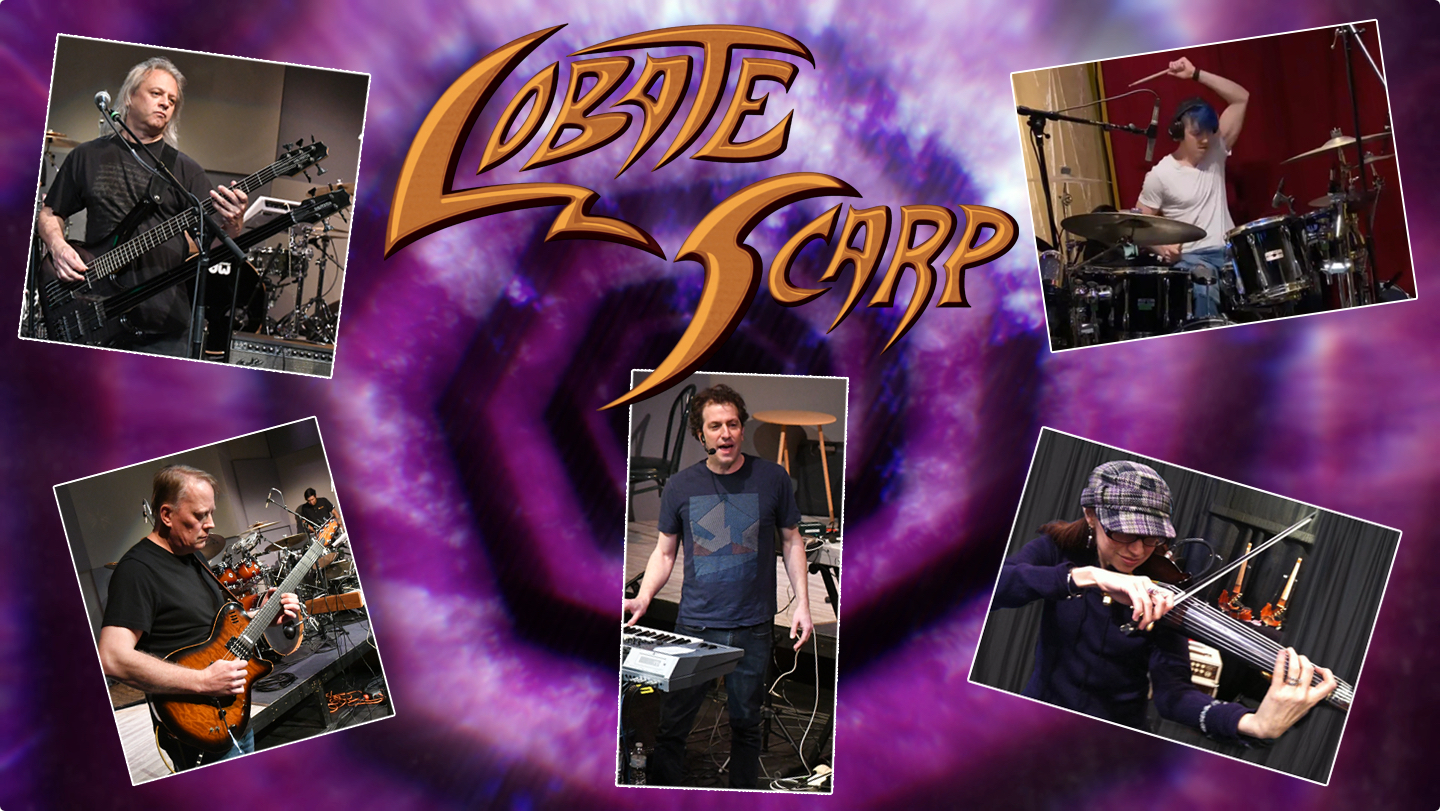
Usually, Lobate Scarp is Adam Sears (vocals/ keys), Andy Catt (bass), Peter Matuchniak (guitar), Evan Michael Hart (drums), and Christina Burbano-Jeffrey (violin), as when they performed most recently at RoSFest in April in Sarasota, Florida. But the impressive parade of studio musicians appearing on the CD recording is a testament to Lobate Scarp’s unrelenting pursuit of excellence by any means necessary. I have the impression that they will record and re-record, and collaborate and re-collaborate, again and again, in any permutation and combination of talents, regular or extraordinary, as they pursue the perfect sound and the perfect record. And gosh darn it, their diligence of a decade has paid off mightily with this release.

You Have It All has the effect of a typical Yes album on me, in that it unfailingly elevates my spirit and transforms my mood for the better just by listening. This is no small musical miracle. Yes is a band prized as rare on this earth for just that reason. Operating in that same prog tradition of making intimate contact with the listener, Lobate Scarp uses their magic power to do what only the rarest of musicians have the power to do.

As far as I can discern the story tying the album together, it goes something like this. The hero of the story is Everyman, so let’s call him Adam, since that is what the word Adam means. Adam is jamming with his prog band on “Conduit,” the opening instrumental track, with his band endlessly practicing in pursuit of perfection. But people think Prog Adam is crazy for loving to spend his precious time practicing prog music like this. This instrumental: It’s so long! Over five minutes long and there aren’t even any lyrics yet! The people are criticizing Prog Adam for his super-proggy instrumental. So, he replies in track two, telling them there is “Nothing Wrong” with his life. He’s doing what he wants to do. But just telling the haters to stop it is not enough. Prog Adam therefore goes in search of spiritual sustenance, looking for a spiritual “Life-Line” on the next track, as sustenance for his prog, and finding it. With this spiritual enlightenment attained, Prog Adam goes back to his band, and then they communicate the spiritual enlightenment by expressing its lesson in the epic track, “You Have It All.” Jon Davison even makes a guest appearance on this track, making a cameo as the voice of the universe that teaches Prog Adam what he needed to learn, so that he is then able to communicate it with the epic musical power of “You Have It All” (14:31). End of Part One.

Part Two begins with “Beautiful Light,” with Prog Adam viewing the universe on a daily basis through the mystical lens he learned about in Part One. But then, with “Test Tube Universe,” Prog Adam, either back in his day job as a scientist, or simply by making an analogy on the basis of considering a scientist in his lab, considers the thought that maybe the universe is just like an experiment that, although beautiful and supportive to us (see Part One’s lesson), does not really matter to its creator. But then in “Flowing Through the Change” (17:25), Prog Adam makes spiritual contact with the transcendent creative force behind the universe and taps into its deepest essence: namely, love. This final spiritual awakening to the fullness of love is foreshadowed with “In the Night I” and “In the Night II” which are threaded between the earlier tracks on the album, since “In the Night III” is the second movement within “Flowing Through the Change,” wherein Prog Adam sees the face of God, and thereby finds his way to the path of love.

If all this sounds a bit woo to you, what can I say except that, I’m probably making this all up, or else, if you listen to the music, it will make you into a believer in prog and love and light, and so on. The radiant power of the music on this album magically transforms whatever it comes into contact with. Unless your heart is made of stone. Or, maybe even then, too; that’s how good this music is.

So, what are you waiting for, Bandcamp Friday? It’s already here! You Have It All has everything you need.

Reviewed by C.S. Morrissey for Progarchy.com

'You Have It All ' is the second full length studio album from Lobate Scarp. Recorded from August 2021- March 2022. (Except for "Beautiful Light" and most of "Nothing Wrong"). Mixed and Mastered from March-May 2022

The album features special guests Jon Davison (Yes), Jimmy Keegan (Spock's Beard, Pattern Seeking Animals), Eric Moore (Suicidal Tendencies, Infectious Grooves), Ryo Okumoto (Spock's Beard), and Billy Sherwood (Yes).

credits

released May 6, 2022


New album by litmus0001. IMBER. Recorded in 2017. Meant to be released in 2019. Finally released in 2022 by AnubisMusic. Experimental ambient drone improvisation looping krautrock kosmichemusic post-rock.  This is exceptionally good ambient music and an excellent addition to the FreeForm Radio playlist.

Free download link available on Bandcamp and Facebook.   Imber and other releases are available on the Internet Archive.


22 March 2022: McDonald and Giles; Beggars Opera

KMXT is live broadcasting the Kodiak City Council work session which may run past 9 pm.  

The show will begin as soon as the work session ends.

Be sure to follow KMXT FreeForm Radio on Facebook and Bandcamp.  

Please support FreeForm Radio and KMXT by going to KMXT.org and pledging your support.

The music you hear on tonight's show is available on the artists' Bandcamp pages and websites (links below).    

We urge you to support the musicians you hear on FreeForm Radio.

McDonald and Giles is an album released by British musicians Ian McDonald and Michael Giles in 1970. The album was first issued on Island Records (ILPS 9126) in the UK and Cotillion Records (SD 9042), a division of Atlantic Records, in the US. (The album was released on Atlantic itself in several countries.) The album was recorded at Island Studios between May and July 1970. Although McDonald and Giles remains popular among King Crimson fans,[2] its commercial success was limited. The duo did not record a second album. 

Ian McDonald and Michael Giles were members of the original King Crimson line-up, and were featured performers on the band's debut album, In the Court of the Crimson King (1969). Both left the group at the end of its first United States tour in 1969, although Giles appeared on the second King Crimson album, In the Wake of Poseidon (1970), as a session musician. Two other King Crimson members also worked on McDonald and Giles: Peter Giles and Peter Sinfield.

The music on McDonald and Giles contains many of the pastoral and musically complex elements of King Crimson, while generally avoiding that band's darker tendencies. The song "Flight of the Ibis" has a melody and rhythm similar to King Crimson's "Cadence and Cascade," with different lyrics. The album contains a guest appearance by Steve Winwood, playing organ and piano on "Turnham Green". Winwood's group Traffic were working on John Barleycorn Must Die at Island Studios at the same time.

Michael Giles' drum solo in "Tomorrow's People – The Children of Today" has been sampled by a number of rap and hip-hop artists, most notably the Beastie Boys, on the track "Body Movin'" from the album Hello Nasty


 Beggars Opera was a Scottish progressive rock band from Glasgow, Scotland, formed in 1969 by guitarist Ricky Gardiner, vocalist Martin Griffiths, and bassist Marshall Erskine. The line-up consisted of Ricky Gardiner (guitar/vocals) (born 31 August 1948, Edinburgh, Scotland), Alan Park (keyboards) (born 10 May 1951, Glasgow, Scotland), Martin Griffiths (vocals) (born 8 October 1949, Newcastle upon Tyne) Marshall Erskine (bass/flute) and Raymond Wilson (drums). After working together building parts of the M40 Motorway near Beaconsfield, the lads moved back to Glasgow to look for an organist and drummer and found Alan Park and Ray Wilson. After an intensive time in rehearsal they took up residency at Burns Howff club/pub in West Regent Street in the center of Glasgow. Tours of Europe followed and the band found success in Germany, appearing on German TV's legendary Beat-Club, then at the First British Rock Meeting in Speyer in September 1971.

 From ALLMUSIC:

Act One Review

by Dave Thompson

Defiantly cast in the shadow of the then-recently defunct Nice, but brimming with their own ideas and imagination, Beggars Opera emerged in 1970 with a debut album that still stands as one of the crown jewels of prog. Five tracks long in its original (Vertigo label) form, but bolstered with both sides of their debut single for the Repertoire CD, Act One is an audacious blending of hard riffs, Heep-esque vocals, and crazed organ and Mellotron, and it's those latter elements that most distinctly flavor the album. The opening "Poet and Peasant," based on Franz Von Suppe's overture of the same name, sets the scene with its multiple shifts in tone and tempo; the same composer's "Light Cavalry" then closes the disc in similarly dramatic style. "Raymond's Road" is the climax, however. An 11-minute orgy of sound that rides a "Rondo" rhythm, then sets a slew of classical snatches dancing above it. It's a breathtaking effort, a cross between a mad medley and a free festival freakout that so firmly establishes Beggars Opera's credentials that it seems impossible to believe that things never got any better for them.


01 June 2021: Dave Kerzner "New World"

 Be sure to follow KMXT FreeForm Radio on Facebook and Bandcamp.  

Please support FreeForm Radio and KMXT by going to KMXT.org and pledging your support.

Tonight we feature the Deluxe, two-cd edition of this release:


From Wikipedia:

New World is the debut solo album by American musician, songwriter, producer and sound designer Dave Kerzner.[6] This is Kerzner's first album since his departure from the band Sound of Contact, and was developed in 2014.[6] The album features numerous collaborations with established artists such as Fernando Perdomo, Steve Hackett, Nick D'Virgilio, Durga McBroom and Keith Emerson.[3] Two versions of the album were developed: a standard edition and a two-disc double album deluxe edition.[7] The former was released in December 2014, and the latter was released in January 2015.

The album was produced and mixed by Kerzner. Most of the album was recorded remotely with reference tracks developed by Kerzner using music software technology from his sound production company Sonic Reality. The tracks were then re-recorded by other artists at remote locations and sent back to Kerzner's studio in Miami for mixing.[8] Veteran mixing engineer Tom Lord-Alge mixed the album's first single release, "Stranded."[3]

New World is a concept album. The story takes place in a future world consisting primarily of hazardous desert terrain where numerous biodomes of massive scale contain and protect the global populace. The album revolves around a character known as The Traveler; stranded in the desert and clinging to life, he embarks on a journey to return to the biodome from which he originates while recounting the events that led him to his fatal situation.[8]

The story serves as an allegory for one's own spiritual and subconscious evolution. The Traveler, in his struggle for survival, undergoes a metamorphosis from the position of victim to a figure of immense capacity and conquers his own personal demons, empowered through his discovery of the light amidst a shroud of darkness and uncertainty.[8][9]

Disc One

No.TitleWriter(s)Length
1."Stranded, Pts. 1-5
  • Part One:  Isolation
  • Part Two:  Delirium
  • Part Three:  March of the Machines
  • Part Four:  Source Sublme
  • Part Five:  The Darkness" (Instrumental)
Dave Kerzner11:28
2."Into the Sun"Kerzner9:19
3."The Lie"Kerzner5:05
4."The Traveler" (Instrumental)Kerzner2:02
5."Secret"Kerzner8:09
6."Reflection"Kerzner1:44
7."Under Control"Kerzner6:12
8."Premonition Suite
  • Part One:  Premonition
  • Part Two:  Resilience I
  • Part Three:  Subtle Signs Of Life
  • Part Four:  Altered State
  • Part Five:  Illuminessence"
  • Kerzner, Dunnery8:55
    9."In The Garden"Kerzner6:16
    10."The Way Out"Kerzner5:24
    11."Recurring Dream"Kerzner4:30   

    Disc Two


    No.
    TitleWriter(s)Length
    1."Biodome" (Instrumental)Dave Kerzner1:31
    2."Crossing of Fates" (Instrumental)Kerzner4:49
    3."Theta"Kerzner4:01
    4."My Old Friend"Kerzner5:18
    5."Ocean of Stars"Kerzner6:41
    6."Solitude"Kerzner5:00
    7."Nothing"Kerzner, Perdomo6:17
    8."Erased" (Instrumental)Kerzner2:03
    9."Realign"Kerzner5:04
    10."Nexus" (Instrumental)Kerzner5:38
    11."New World"Kerzner5:44
    12."Redemption (Stranded, Pts. 6-10)
    • Part Six:  The Oasis
    • Part Seven:  Resilience II
    • Part Eight:  High On The Dunes
    • Part Nine:  Mirage Of The Machines
    • Part Ten:  To The Light"


    22 March 2016: Keith Emerson Tribute & Canvas Solaris

    So much has been written about Keith Emerson that there is little that I can add.  I saw ELP in concert in the mid-70s and he was phenomenal, combining virtuosity with showmanship.  The first half of tonight's show will be cuts selected to showcase his keyboard wizardry.  May he R.I.P.
    Playlist:
    Tarkus
    Take a Pebble
    Karn Evil 9: 2nd Impressio
    Medley:  Fanfare for the Common Man/America/Rondo
    Abaddon's Bolero


    Canvas Solaris were an American progressive metal band from Statesboro, Georgia, formed in 1999, and disbanded in 2011.[1] Though they first played with vocals, they moved on to instrumental, drawing influence from bands as diverse as Cynic, Rush, King Crimson, Death, Watchtower, and The Mars Volta.[2]