12 April 2022: Big Sleep; Out of Focus; Sound & Shape


KMXT is live broadcasting the Kodiak City Council work session which may run past 9 pm.  

The show will begin as soon as the work session ends.

Be sure to follow KMXT FreeForm Radio on Facebook and Bandcamp.  

Please support FreeForm Radio and KMXT by going to KMXT.org and pledging your support.

The music you hear on tonight's show is available on the artists' Bandcamp pages and websites (links below).    

We urge you to support the musicians you hear on FreeForm Radio.


ALSO:Tonight at 7:15 pm I'll play a track from Lobate Scarp's upcoming album You Have It All.


Neither their 1968 debut Crossroads of Time nor their proggier, Quincy Jones produced follow-up In Fields of Ardath brought the commercial success Eyes of Blue so sought. Although the Welsh quintet were losing hope, their label head and manager Lou Reizener wasn't throwing in the towel yet. In his view, only a new moniker stood in the way of stardom; thus Eyes were renamed Big Sleep and set to work on their third and final album, 1971's Bluebell Wood.

Even in a time of feverish experimentation, the group had an incredibly unique hybrid sound that seamlessly stitched together pop elements, classical, R&B and blues, psychedelia and rock with incredibly tight and egalitarian arrangements. That latter was important, as every bandmember was a virtuoso, and thus each deserved the space to shine. Unusually, the group boasted two keyboardists, but forget comparisons to the likes of ELP, as Big Sleep's numbers often counterpointed lavish organ passages with R&B styled piano or electric keyboard, underpinning their numbers with a jazzy or bluesy aura. Acoustic guitars further enhanced the rich atmospheres, and usually followed the organ's lead. The electric guitars arrived well into the pieces, a further musical counterpoint that accentuated psychedelic organ passages or pulled the numbers into rock. Although there's an improvisational feel to it all, the songs are, in fact, very tightly structured, including the fiery guitar solos that wind around the keyboards. The band's pop sensibilities are evident too, especially on the catchy chorus of "Aunty James," passages within "Death of a Hope," and particularly on the clap along R&B of "When the Sun Was Out."

However, it was the epic eleven-plus-minute title track that sent prog rock fans wild, a showcase of Big Sleep's many styles and talents. Filled with the kind of dynamics that any modern emo band would die for, quiet passages give way to grand up-tempo segments, downbeat blues shift into raging psychedelia, and strings pile onto ballads before the band breaks into rock and the splendid vocals fill the air: Bluebell Wood had it all. Yet the album still failed to excite the masses. The band never even took the stage under their Big Sleep name, and folded soon after the set's release. So much talent would eventually find homes elsewhere (notably with Gentle Giant and Man), but it's no wonder the album has been long sought after by collectors. Now remastered and sporting its original artwork, everyone can venture back into this stunning Wood. 


Out Of Focus is a German Krautrock rock fusion band, formed in late-1968 in Munich with Hennes Herring on keyboards (mainly the Hammond organ), Remigius Drechsler on guitars, Moran (his civil name is Hans-Georg Neumüller) on vocals and winds, Klaus Spöri on drums and Stefan Wisheu on bass.

Out of Focus took their name from a Blue Cheer track, but had also been influenced by Soft Machine and Xhol Caravan, and rapidly established a distinctive style blending rock, jazz and psychedelic overtones. The band's music was known for the socio-political commentary present in Moran Neumüller's songs. Although typically Munich styled (with Embryo and Sahara connections) they are often compared to Canterbury fusion and Scandinavian jazz-rock acts. After Out of Focus split up, bandleader Remigius Drechsler joined Embryo in the fall of 1979 for about one year before establishing his own project, Kontrast.

Not Too Late Review

by Rolf Semprebon

Recorded in early 1974, and finally released in 1999, Not Too Late finds Out of Focus moving even further from their progressive rock roots and into progressive jazz fusion, with mostly long instrumentals, fluid rhythms, and a greater reliance on the horns. The lineup is slightly different, with the addition of an extra guitarist and saxophonist and no organ, a distinct feature on earlier records by the group. The dueling saxophones get quite complex, especially on "X," even as the rhythm section pumps out complex jazz-funk grooves similar to previous works by the band. For a bit of diversity, there is the short track "The Way I Know Her," a pastoral folk piece with acoustic guitars and flute, that perhaps reflects the musicians' move from the city of Munich to the countryside. Otherwise, from the McLaughlin-styled guitar fusion of "Y" to the crunchy rhythm workout that ends "Spanish Lines" to the wild opener "That's Very Easy," Out of Focus is in top form. Not Too Late does not venture as far into experimentation as Four Letter Monday Afternoon, and the vocal tracks, "That's Very Easy" and "The Way I Know Her," are lighter and less biting than earlier Out of Focus songs, though Neumuller's singing does flow more with the music. However, this one is still an exceptional record, full of the creative Krautrock jamming for which Out of Focus is known, and the band neither falls back on the same old sound, nor do they compromise their sound for commercial appeal. 


SOUND & SHAPE – Disaster Medicine (self-released)

This Tennessee trio touches a lot of bases on their latest full length, from polyrhythmic post-punk to an aggressive chugging heaviness to romantic ballads and back again. At their core, though, singer/guitarist Ryan Caudle, bassist Pat Lawry, and drummer Ben Proctor seem most comfortable positioned just slightly left of the mainstream, playing melodic modern rock that wouldn’t leave listeners discomfited slotted between the Foo Fighters and Imagine Dragons.  That’s not to sully the group’s DIY credentials, just to suggest that on the next family road trip, you and mom might both enjoy a track like “Don’t Tell Momma I’m A Sinner.”

 The Disaster Medicine trailer is here.

Sound & Shape on Bandcamp.


05 April 2022: Agitation Free; Tarkus; Gnidrolog

Be sure to follow KMXT FreeForm Radio on Facebook and Bandcamp.  

Please support FreeForm Radio and KMXT by going to KMXT.org and pledging your support.

The music you hear on tonight's show is often available on the artists' Bandcamp pages and websites (links below).    

We urge you to support the musicians you hear on FreeForm Radio.

I'll also be hosting the Rural Electric show from 7-9 pm this evening.


 Agitation Free is a German experimental krautrock band, formed in 1967 by Michael "Fame" Günther (bass guitar), Lutz "Lüül" Ulbrich (guitar), Lutz Ludwig Kramer (guitar) and Christopher Franke (drums).  (Agitation Free website)

Agitation Free's music is psychedelic, experimental krautrock with elements of spaced-out ambient, experimental electronic and drone. The music for the most part consists of driving organ-patterned drone-like rock; seamless psychedelic cosmic musical textures with intricate musicianship and musical variety; hard, driving rock similar to Amon Düül II; and jamming that occasionally invokes the interplay and styles of Garcia, Weir and Lesh of The Grateful Dead and hints at a blues rock base not unlike The Allman Brothers Band. Many of their songs have a trance-inducing, psychedelic feel with sections of driving rock fueled by fiery and melodic moving guitar lines and solid, propelling and intricate drumming and a prominent bass line. All of Agitation Free's songs are instrumental apart from some recitation on "Haunted Island". 

Their first album Malesch is cosmic, aggressive, psychedelic, creative, ethnically flavored (mainly by short interludes of recordings from Egypt), mysterious and densely packed with ideas whereas their second, titled 2nd is more laid-back and upbeat, with longer structure, much more of an emphasis on traditional styled jamming à la the Grateful Dead and a warmer and more straightforward sound. On Malesch the songs blend together to make a seamlessly flowing, tangential and uninterrupted musical journey, whereas on 2nd songs are more predictably structured, more varied in their sound and stand more as independent works.

Their sound is similar to, but fairly distinguishable from, other contemporary Krautrock bands such as Ash Ra Tempel, Amon Düül II, Guru Guru, Brainticket, Yatha Sidhra and Kalacakra, as well as the mixed-influence blues-based jam rock of The Grateful Dead and The Allman Brothers noticeable on 2nd, and slightly later and more symphonic bands like Asia Minor and Anyone's Daughter. 


Review by evenless
PROG REVIEWER

4 stars The 2004 re-issue of this 2002 album "A Gaze Between The Past And The Future" contains the bonus track "Hold Me Now".

Since I'm really into progressive Rock music for a few years now and I have a Brazilian wife I though I should explore more Brazilian Prog-Rock bands and till now I'm not disappointed at all! Even though Progressive Rock is probably one of Brazil smallest musical genres, all instrumentation is great! Those guys really know how to play prog- rock like they invented it. Let me review this album track by track.

1. Exit from Calcutta (10:43)

Great instrumental opening containing many instruments like guitars, bass guitar, drums, mandolin and flutes! The flutes remind me of the Dutch band FOCUS a bit. Vocals are all sung in English and voice is easy to listen to. This is probably one of the best (and one of the longest) tracks of the album. 5 stars.

2. You Want The Real Me (6:32)

Again all instruments are represented on this track along with the flutes. After the first two verses there's a great drum section followed by the chorus and flutes. 4 stars.

3. Fragments from Dies Irae (5:30)

Soft piano intro followed by great electrical lead guitars accompanied by bass and drum. The guitar is played like it is "singing" the chorus already. Vocals are a bit more "rough" than on the previous tracks. Is this also Valdir Zamboni singing or is it one of his fellow band members who's normally one of the backing vocalists? If it is Valdir he really knows how to change his voice! Instrumentation on this track is all superb again! 5 star track.

4. Blue Light (5:42)

Soft acoustic guitar intro followed by flutes. Not a very long track, but probably track with the most lyrics of this album. Vocals are sung again "normal". This is a very soft track, almost a ballad. I must say I enjoy their somewhat heavier and complex tracks more. Nevertheless a nice track to take a breath. 3 stars.

5. The Raft of Medusa (12:36)

According to Greek Mythology Medusa used to be a beautiful girl, who lived in a country where the sun wasn't shining. She begged Athena to let her sail to a sunny continent. But when Athena refused, Medusa said this was only because the she would not be the most beautiful woman anymore when people would see her! Great instrumentation on this track capturing the dramatic mood of the story. 5 stars.

6. Hold Me Now* (6:32)

Starting out as a softer track in the same style of "Blue Light". Acoustic guitars, flutes accompanied by soft vocals. Later on the song gets more up-tempo ending and slipping away softly. 4 stars.

All instruments are played really well by TARKUS especially the flutes. The flutes are really nice on the entire album and almost a "Tarkus trademark" like they used to be a trademark of FOCUS. All and all a very nice album indeed.

My rating: 5 + 4 + 5 + 3 + 5 + 4 = 26/6 = 4,3 stars. 


 Gnosis is the fourth album by the British progressive rock band, Gnidrolog. The album's title, Gnosis, means divine or spiritual knowledge and understanding. It is their third studio album and the first to be recorded in 27 years. The album was mostly recorded at Select Sound Studios, Cairns, Australia, where it was engineered and produced by Nigel Pegrum. "Repent Harlequin", "Two Helens" and the title track were all recorded at Music City Studios, London, engineered by Joe Suarez and produced by Nessa Glen, in courtesy of Sarastro Music. The album was mostly published by Kempyre Music, except "Two Helens", which was published by Sarastro Music. Chris Copping of Procol Harum played his Hammond B3 Organ for a couple of tracks, which were recorded in Woodstock Studios, Melbourne and engineered by Tim Dudfield. Post production is credited to David J Burrows and Stewart Goldring. The album was mastered by David J Burrows at Disques rue Bis. The album is noted to be eclectic not only for its transcontinental recording but also for the use of traditional instruments such as the Australian aboriginal, didgeridoos. The album marks the band's comeback, which had also prompted the release of the Live 1972 album. In order to release some of the Goldring brothers' original material, the album was a renewed cooperation with the other 1970s Gnidrolog members, with the addition of Rick Kemp of Steeleye Span and Nessa Glen.


29 March 2022: Eyes of Blue; Sonologyst: McDonald & Giles


Be sure to follow KMXT FreeForm Radio on Facebook and Bandcamp.  

Please support FreeForm Radio and KMXT by going to KMXT.org and pledging your support.

The music you hear on tonight's show is often available on the artists' Bandcamp pages and websites (links below).    

We urge you to support the musicians you hear on FreeForm Radio.

I'll also be hosting the Rural Electric show from 7-9 pm this evening.


UK psychedelia moved into prog rock with spices of hard rock in the late sixties, some even coined a new label to describe the strong textures resulting of the mixture of rockier blues sounds, jazz, revolutionized freakbeat and the hardest side of popsike - ‘heavy psych’. Amongst the best works of the era were the two splendid LPs recorded by Welsh band Eyes Of Blue. The Eyes Of Blue where formed in 1966 and soon won the Melody Maker Beat Contest, a fact that secured them a recording deal with Deram records. The label issued their first 45s, they were good but -due to company pressure- more Blue Eyed Soul or even bubblegum oriented. By the time they released their first LP, on Mercury, their real sound had surfaced, showing influences by some of the coolest bands from the US West Coast like The Doors or Love, and also counted on the help of Graham Bond. Originally released in 1969, In Fields Of Ardath was the follow up to their superb debut LP, expanding the path of heavy Hammond based psychedelic progressive rock at its best with their aim of experimentation. This album contains also material they recorded for the movie Toy Grabbers in collaboration with Quincy Jones. Members of Eyes Of Blue would later join Man, Pete Brown & Piblokto! and Gentle Giant. 
 

 Our thanks to Sonologyst for providing us with a promotional copy of this release.
 
The new Sonologyst album, "Interdimensional", explores the paraphysical dimension of cosmic music. It completes the dilation process of his sound, which began with the albums "Silencers" and "Ancient Death Cults And Beliefs", which now form an ideal trilogy inspired by what is beyond the boundaries of science.

"Interdimensional" is inspired by the scientist Michio Kaku who theorized what could be the remote future of the human species; beyond matter, the stars, and known dimensions. A future that could lead us to the victory over the end of everything, beyond the foreseen and inevitable death of the universe known to us.

Also a cosmic record in terms of sound, "Interdimensional" is pervaded by a sense of stasis reminiscent of Thomas Köner's isolationist electronics, but still characterised by the use of electrified instruments, analogue synthesizers and recordings of resonant metal objects. Unlike the previous albums, however, the typical dark experimental / post industrial sound of Sonologyst is filtered through hazy warping reverberations and infinite delays, which musically depict the intergalactic journey of a civilization in search of a possible future beyond death.

Music ad astra.

credits

releases April 8, 2022

Sonologyst: Analogue synthesizers, electronics, dronin.

Mastered by Sonologyst
Graphic Design by Abby Helasdottir

Released by Cold Spring Records

license

all rights reserved

experimental avant-garde drone musique concrete sound art Italy


Last week the meeting ran over so we weren't able to play McDonald & Giles; we'll play some tracks from their 1969 release if we have time this evening.  See last week's blog post for information about this album. 


22 March 2022: McDonald and Giles; Beggars Opera

KMXT is live broadcasting the Kodiak City Council work session which may run past 9 pm.  

The show will begin as soon as the work session ends.

Be sure to follow KMXT FreeForm Radio on Facebook and Bandcamp.  

Please support FreeForm Radio and KMXT by going to KMXT.org and pledging your support.

The music you hear on tonight's show is available on the artists' Bandcamp pages and websites (links below).    

We urge you to support the musicians you hear on FreeForm Radio.

McDonald and Giles is an album released by British musicians Ian McDonald and Michael Giles in 1970. The album was first issued on Island Records (ILPS 9126) in the UK and Cotillion Records (SD 9042), a division of Atlantic Records, in the US. (The album was released on Atlantic itself in several countries.) The album was recorded at Island Studios between May and July 1970. Although McDonald and Giles remains popular among King Crimson fans,[2] its commercial success was limited. The duo did not record a second album. 

Ian McDonald and Michael Giles were members of the original King Crimson line-up, and were featured performers on the band's debut album, In the Court of the Crimson King (1969). Both left the group at the end of its first United States tour in 1969, although Giles appeared on the second King Crimson album, In the Wake of Poseidon (1970), as a session musician. Two other King Crimson members also worked on McDonald and Giles: Peter Giles and Peter Sinfield.

The music on McDonald and Giles contains many of the pastoral and musically complex elements of King Crimson, while generally avoiding that band's darker tendencies. The song "Flight of the Ibis" has a melody and rhythm similar to King Crimson's "Cadence and Cascade," with different lyrics. The album contains a guest appearance by Steve Winwood, playing organ and piano on "Turnham Green". Winwood's group Traffic were working on John Barleycorn Must Die at Island Studios at the same time.

Michael Giles' drum solo in "Tomorrow's People – The Children of Today" has been sampled by a number of rap and hip-hop artists, most notably the Beastie Boys, on the track "Body Movin'" from the album Hello Nasty


 Beggars Opera was a Scottish progressive rock band from Glasgow, Scotland, formed in 1969 by guitarist Ricky Gardiner, vocalist Martin Griffiths, and bassist Marshall Erskine. The line-up consisted of Ricky Gardiner (guitar/vocals) (born 31 August 1948, Edinburgh, Scotland), Alan Park (keyboards) (born 10 May 1951, Glasgow, Scotland), Martin Griffiths (vocals) (born 8 October 1949, Newcastle upon Tyne) Marshall Erskine (bass/flute) and Raymond Wilson (drums). After working together building parts of the M40 Motorway near Beaconsfield, the lads moved back to Glasgow to look for an organist and drummer and found Alan Park and Ray Wilson. After an intensive time in rehearsal they took up residency at Burns Howff club/pub in West Regent Street in the center of Glasgow. Tours of Europe followed and the band found success in Germany, appearing on German TV's legendary Beat-Club, then at the First British Rock Meeting in Speyer in September 1971.

 From ALLMUSIC:

Act One Review

by Dave Thompson

Defiantly cast in the shadow of the then-recently defunct Nice, but brimming with their own ideas and imagination, Beggars Opera emerged in 1970 with a debut album that still stands as one of the crown jewels of prog. Five tracks long in its original (Vertigo label) form, but bolstered with both sides of their debut single for the Repertoire CD, Act One is an audacious blending of hard riffs, Heep-esque vocals, and crazed organ and Mellotron, and it's those latter elements that most distinctly flavor the album. The opening "Poet and Peasant," based on Franz Von Suppe's overture of the same name, sets the scene with its multiple shifts in tone and tempo; the same composer's "Light Cavalry" then closes the disc in similarly dramatic style. "Raymond's Road" is the climax, however. An 11-minute orgy of sound that rides a "Rondo" rhythm, then sets a slew of classical snatches dancing above it. It's a breathtaking effort, a cross between a mad medley and a free festival freakout that so firmly establishes Beggars Opera's credentials that it seems impossible to believe that things never got any better for them.


15 March 2022: Tone Science Module No.6 Protons and Neutrons (DiN:TS06) The Body Of Horror - Music Inspired By The Cinema Of David Cronenberg

 Be sure to follow KMXT FreeForm Radio on Facebook and Bandcamp.  

Please support FreeForm Radio and KMXT by going to KMXT.org and pledging your support.

The music you hear on tonight's show is available on the artists' Bandcamp pages and websites (links below).    We urge you to support the musicians you hear on FreeForm Radio.

Our thanks to Ian Boddy and DiN for providing a promotional copy of this release.

Tone Science sub-label, from DiN records, continues to explore the world of modular synth music with Tone Science Module No.6 Protons and Neutrons (DiN:TS06)

Following the success and critical acclaim of the first five Tone Science compilation albums, DiN label boss Ian Boddy has collated another nine tracks from musicians of varying backgrounds working in the realms of modular synthesis.

One of the things that is so delightful about artists working with modular synthesisers is the sheer variety of styles on show. These instruments more than any other can be personalised for each musician who can then express themselves within their own sonic world.

When compiling these volumes it’s always interesting how certain tracks sonically migrate to each other to form a cohesive section and this is certainly the case with the trio of pieces that open this album. “Prisms” by James Bernard, “Vänta” by Elin Piel and “Eddy Currents” by Field Lines Cartographer all have a beautiful organic warmth with beguiling simple sequencer lines that weave in and out.

These three tracks show one approach to working with modular synthesis whereas “Contradictory Forecasts” by Sarah Belle Reid changes the mood completely with an adventurous gestural performance on her Buchla system. Things are brought down to a calm, more introspective mid- point on the album by “Waving in Harmony” by Adrian Beasley, who is a member of the Berlin School inspired synth trio Air Sculpture.

Mirroring the opening trio of tracks the next three pieces again show a certain uniformity of purpose albeit with a more uptempo feel with the sequencers featuring more to the foreground. “Upward” by Elinch slowly builds to quite a crescendo whereas the intricate patching on “Random Possibilities” by ambient pioneer Steve Roach indeed shows how randomness can instil a forever changing vibe to a track. Finally in this section “In The Shadow Of Giants” by Ombient is a full on Berlin School sequencer work out including radio voices from some distant galaxy.

The album draws to a close with “The Mutation Trio” from Doug Lynner which literally pauses for breath. Quoting “sound for sounds sake” in his liner notes the track certainly explores the totally abstract possibilities of his Mystery Serge system.

“Tone Science Module No.6 Protons and Neutrons” continues the journey down the rabbit hole of possibilities and sound worlds inhabited by artists and musicians working in this ever fascinating and varied musical field.
 

credits

releases March 18, 2022

1. James Bernard - Prisms - 8:11
Warm and comforting trio of synth voices, structured around a simple melodic motif with varying shifts in tonality and rhythmic patterns. Live performance recorded in one take using a small Eurorack modular system.
linktr.ee/jamesbernard

2. Elin Piel - Vänta - 6:59
Vänta is recorded live with Lyra 8, a small Eurorack system and Analog Heat. It's based around four different sequences evolving around each other coming in and out of focus.
elinpiel.bandcamp.com

3. Field Lines Cartographer - Eddy Currents - 8:54
Tiny loops of electrical current, ever changing, ebbing & flowing under the influence of a magnetic field. Realised on ARP 2600 & Eurorack modular synths.
fieldlinescartographer.bandcamp.com

4. Sarah Belle Reid - Contradictory Forecasts - 8:23
A driving pulse, a teetering moment, a fragile heartbeat, a blinding light, a frenetic foxtrot, a mischievous gremlin, a wailing whisper.
sarahbellereid.com

5. Adrian Beasley - Waving In Harmony - 7:15
A Eurorack of wavetables wash against a duophonic lead. Ebbing and flowing, the pair of lead notes reveal their harmonic relations.
adrianbeasley.bandcamp.com

6. Elinch - Upward - 7:28
If you dream you can ascend and fly amongst the tree tops. A live composition with a small modular system (Strega, TTMC, Disting Ex for Loops) and Buchla Easel Command.
youtube.com/c/Elinch

7. Steve Roach - Random Possibilities - 6:29
Performed and recorded in real time on Large Format Analog and Eurorack Modulars.
Created live in the studio after a strong cup of morning coffee. The machines were calling out for a spontaneous workout in random mode.
steveroach.bandcamp.com

8. Ombient - In The Shadow Of Giants - 6:32
Lattices of evolving sound and rhythm, recorded at the Electronic Music Education and Preservation Project (emeapp.org) with a large Synthesizers.com Modular and an EMS Synthi AKS.
Ombient.com

9. Doug Lynner - The Mutation Trio - 9:01
Inspired by my earliest interactions with classic electronic music, this piece follows three sound blocks through a series of mutations, or developments, affirming the notion of sound for sound’s sake.
neatnetnoise.com

license

all rights reserved

Our thanks to Raffaele Pezzella (Sonologyst) and Eighth Tower Records for providing a promotional copy of this release.

Eighth Tower Records is proud to release a compilation of music inspired to the cinema of the Canadian legendary director David Cronenberg.
More than a cult filmmaker, a true legend of the contemporary cinema, Cronenberg inspired an unimaginable number of artists all over the world and in every field of the artistic expressions. Cronenberg’s signature is a mix of graphic sex and violence broadly known as “body horror.” His early works exploited special effects to provoke audiences with bugs and parasites invading the body, exploding heads and images of genitalia intersecting violently with technology. His later films became more introspective and existential, often drawing upon Freudian theory and literary sources to consider the relationship between body, mind and technology. His work explores human fears and desires not commonly expressed in cinema, such as disease, aging, mental illness, and sexual fetishism. Cronenberg approaches the human condition through the unconscious and physical processes of the thinking animal, with an extreme existentialism that celebrates the body (in all its disgusting glory) while admitting the horror of the individual consciousness trapped within ever decaying flesh. These themes are present in Cronenberg’s early genre work, and he continues to explore them through the adaptation of postmodern literature.
“I'm just observing the world. I was born into it, like you were, and then I found out there were some really disturbing aspects to being alive, like the fact that you weren't going to be alive forever - that bothered me.”
“Everybody's a mad scientist, and life is their lab. We're all trying to experiment to find a way to live, to solve problems, to fend off madness and chaos.”
David Cronenberg

Previously unreleased music by:
Sigillum S (Italy), Desiderii Marginis (Sweden), Sonologyst (Italy), Mario Lino Stancati, Schloss Tegal (US), dodenskald (Iran), UNCODIFIED (Italy), Jarl (Sweden), Mortar Devotions (Italy /Finland), Kloob (Spain). To all of them our deep thanks for joining the project.
 

credits

released March 4, 2022

REVIEWS

Bonewitchpunk
bonewitchpunk.com?fbclid=IwAR25BkAImHo7M1ds3itBnlzzMdJ-EmimV_ABUd-4AxkI1QeKkQCdRS89nZI


Edited by Eighth Tower Records
Mastered by Raffaele Pezzella (Sonologyst)
Artwork by John Chadwick
jdchadwickdesign@gmail.com
eighthtowerrecords.bandcamp.com
© 2022. All rights reserved

license

all rights reserved

15 February 2022: Ian McDonald Tribute (In the Court of the Crimson King); Ian Boddy et al DiN Sampler iNDEX07 (DiN70)

Be sure to follow KMXT FreeForm Radio on Facebook and Bandcamp.  

Please support FreeForm Radio and KMXT by going to KMXT.org and pledging your support.

The music you hear on tonight's show is available on the artists' Bandcamp pages and websites (links below).    We urge you to support the musicians you hear on FreeForm Radio.


In tribute to Ian McDonald who passed away recently, we'll feature an album which highlights his many talents, an album that is arguably the best progressive rock album ever. Read more about Ian here.

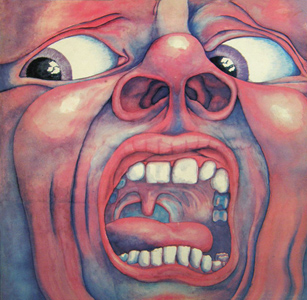
In the Court of the Crimson King (subtitled An Observation by King Crimson) is the debut studio album by English rock band King Crimson, released on 10 October 1969 by Island Records. The album is one of the earliest and most influential of the progressive rock genre, where the band combined the musical influences that rock music was founded upon with elements of jazz, classical, and symphonic music.

The album reached number five on the UK Albums Chart and number 28 on the US Billboard 200, where it was certified Gold by the Recording Industry Association of America. It was reissued several times in the 1980s and 1990s using inferior copies of the master tapes. After the original masters were discovered in the Virgin archives in 2002, the album was remastered again by Simon Heyworth and reissued in 2004. A 40th anniversary edition of the album was released in 2009 with new stereo and 5.1 surround sound mixes by Steven Wilson. In 2019 there was a 50th Anniversary 3CD/1BD box set, which contained remasters, remixes, instrumentals and expansions of the original album. 


iNDEX07 is the seventh DiN compilation album and includes two tracks each from the titles DiN61 - 69. The artists on show this time are Ian Boddy, Nigel Mullaney, Dave Bessell, Scanner, Lyonel Bauchet and collaborations between Dave Bessell & Parallel Worlds and Ian Boddy & Markus Reuter.

As with the previous six DiN samplers label boss Ian Boddy has mixed and cross-faded the 18 tracks into a continuous ambient mix that not only showcases the albums featured on the release but presents an exciting and varied title in its own right. It also highlights the varied and intriguing music that the DiN label offers on its releases from deep analogue synth grooves through vibrantly melodic instrumentals to powerful, epic ambient atmospheres. An intoxicating mix of the old and new beautifully presented in a slimline cardboard wallet with an extra flap which just adds to the value and collectibility of this release.

Since the previous sampler album, iNDEX06 (DiN60) released in July 2019, DiN has not only celebrated its 20th anniversary but has also released its 100th album with “Nevermore” from label boss Ian Boddy. These are significant milestones for a niche independent electronica label with DiN finally getting some of the recognition it so justly deserves.

Our thanks to Ian Boddy for providing a promo copy of this release for airplay tonight.

credits

releases February 18, 2022

This compilation edited from the original tracks by Ian Boddy September 2021.
all rights reserved


08 February 2022: Jethro Tull; Anthology of Experimental Music from Japan

 Be sure to follow KMXT FreeForm Radio on Facebook and Bandcamp.  

Please support FreeForm Radio and KMXT by going to KMXT.org and pledging your support.

The music you hear on tonight's show is available on the artists' Bandcamp pages and websites (links below).    We urge you to support the musicians you hear on FreeForm Radio.

KMXT is live broadcasting the Kodiak City Council work session which may run past 9 pm.  

The show will begin as soon as the work session ends.

Tonight we feature Jethro Tull's latest release The Zealot Gene, released 28 January 2022.

From Wikipedia:

The Zealot Gene is the 22nd studio album by the British rock band Jethro Tull, released on 28 January 2022 by Inside Out Music.[1][2] Nearly five years in production, it is their first studio album since The Jethro Tull Christmas Album (2003), and their first of all original material since J-Tull Dot Com (1999), marking the longest gap between the band's studio albums.

The album entered the UK Albums Chart at number 9, becoming Jethro Tull's first UK top ten album since 1972.

The album originated in January 2017, when vocalist and flautist Ian Anderson started to write new songs and how a new album would take shape. Early into the process, he decided that it was to be a Jethro Tull album because the line-up of the group at that time had become the longest lasting in its history, but had not been involved on a studio recording under its name.[3] It was a productive time, and seven tracks were recorded in March of that year. Further work on the album was put on hold in order for Anderson and the band to finish touring commitments in 2018 and 2019, and Anderson felt it would have been unfair to have the group back in the studio during the small amounts of down time.[3] Following the outbreak of the COVID-19 pandemic and subsequent lockdowns, in early 2021 Anderson "gave up hope" and decided to put down his parts to the remaining five songs alone at his home studio.[3] These last five songs are acoustic based and without drums, partly because Hammond was unable to record at home. The band recorded their individual parts in a similar manner, leaving Anderson to assemble the various tracks to form a complete song. By July 2021, the album was complete and delivered to Inside Out.[3]

The Zealot Gene is the first Jethro Tull studio album to feature an entirely new line-up (other than Anderson), with guitarist Florian Opahle (who left the band between its recording and release), bassist David Goodier, keyboardist John O'Hara, and drummer Scott Hammond replacing four-fifths of The Jethro Tull Christmas Album lineup–Martin Barre, Jonathan Noyce, Andrew Giddings and Doane Perry respectively. It is also the first album since This Was (1968) not to involve Barre in any capacity, as he was not asked to return when Anderson reformed Jethro Tull. 


Our second featured new release this week is Anthology of Experimental Music from Japan. 

Our thanks to Raffaele Pezzella (Sonologyst) for providing us with a copy of this release.

 Modern-day noise music has escaped the preserve of academics and avant-garde thinkers, uniting conservatory-trained and untutored participants from the worlds of punk, jazz, metal, contemporary classical, electronic music, and sound art in an exuberant and egalitarian collision. While noise conjures up the image of a cacophonous maelstrom of sound, contemporary improvisers utilize a much broader tonal palate, often offsetting abrasive textures with environmental sound, field recordings, and even silence. This is especially true in Japan, which has become a global center for the genre. Artists including Haino Keiji, Merzbow, Ōtomo Yoshihide, and Hijōkaidan rank among the scene’s most respected and influential names. So synonymous, in fact, is the country with this style of music that the term “Japanoise” was coined to provide a convenient catch-all. Some of the elements of traditional Japanese music seem to a novice like mere “noise” and have clear parallels in modern experimental music: a relative absence of harmony; the dissonant tonal clusters produced by banks of shō mouth organs in the court music called gagaku; the spluttering, wheezing, trills and flutter-tonguing of the shakuhachi; the stop-start rhythms, droning, repetitive vocals, and shrill, unmelodious flute of nō and kyōgen drama; the strident, uartertone jōruri narration and plink-plonk samisen that accompany bunraku puppet theater; and the gaping silences and austere arpeggios plucked out on traditional string instruments like the koto and biwa. No wonder a music coming from the merging of such tradition with new music developments from the West had to take its direction to something “other”.


David McMahon

This anthology of experimental music from Japan showcases the young generation of musicians alongside established names and provides an insight into the current experimental scene, confirming the adventurous character of the Japanese music research.
 

credits

released February 4, 2022

Edited by ©Unexplained Sounds Group

Co-curated by Raffaele Pezzella and Farabi Toshiyuki Suzuki
Mastered by Raffaele Pezzella (Sonologyst)
sonologyst.com
Cover image: “Fine Wind, Clear Morning” by Katsushika Hokusai
unexplainedsoundsgroup.bandcamp.com
© 2022. All rights reserved

license

all rights reserved

tags

01 February 2022: Astra (2012), Serú Girán (1978), Il Rovescio della Medaglia (1973)

  Be sure to follow KMXT FreeForm Radio on Facebook and Bandcamp.  

Please support FreeForm Radio and KMXT by going to KMXT.org and pledging your support.

The music you hear on tonight's show is available on the artists' Bandcamp pages and websites (links below).    We urge you to support the musicians you hear on FreeForm Radio.

This Friday, February 4,  is "Bandcamp Friday" when Bandcamp waives all seller fees, so 100% of sales revenues goes directly to the artist.  Plan to purchase music this Friday.


The Black Chord is an album by American progressive rock band Astra. It is their second album, released in the United States on March 27, 2012 on Metal Blade Records, and on April 16 in the United Kingdom on the independent label Rise Above Records.

The album inspired positive reviews upon release, and was praised for its even more psychedelic and space rock feel as well as higher production values compared to their debut The Weirding. The heavy metal review at About.com stated "San Diego maestros Astra craft expansive suites that hearken back to the original root of mind-expanding, unrestrained and genuinely progressive rock. Rich with hallucinogenic and hypnotic promise, and slathered in layers of vintage, billowing instrumentation, the band's stunning sophomore album, The Black Chord, expertly evokes the spirit, tone and vision of '70s cosmic prog."[1] Ytsejam.com described the album as "combining the dark grooves of Sabbath, with the improvisational tangents of King Crimson, the moods of the early eras of both Yes and Genesis, as well as hints of space rock from Hawkwind… the use of crunched guitars, brass [sic], woodwinds, a variety of Mellotron sounds and Moog/analog synths, syncopated jazz drumming, and growling bass… yield honest results as everything sounds organic…."[4] According to Sound Colour Vibration, there is a "depth and reality that a lot of progressive rock bands fail to obtain."[5]


Serú Girán was an Argentine rock supergroup. Formed in 1978, the group consisted of Charly García (keyboards, synthesizers and vocals), David Lebón (guitars and vocals), Pedro Aznar (electric and fretless bass and vocals) and Oscar Moro (drums and percussion).[1] It is considered one of the best in the history of rock en español, both musically and conceptually, including the staging according to the band's biographer Mariano del Mazo.[2]